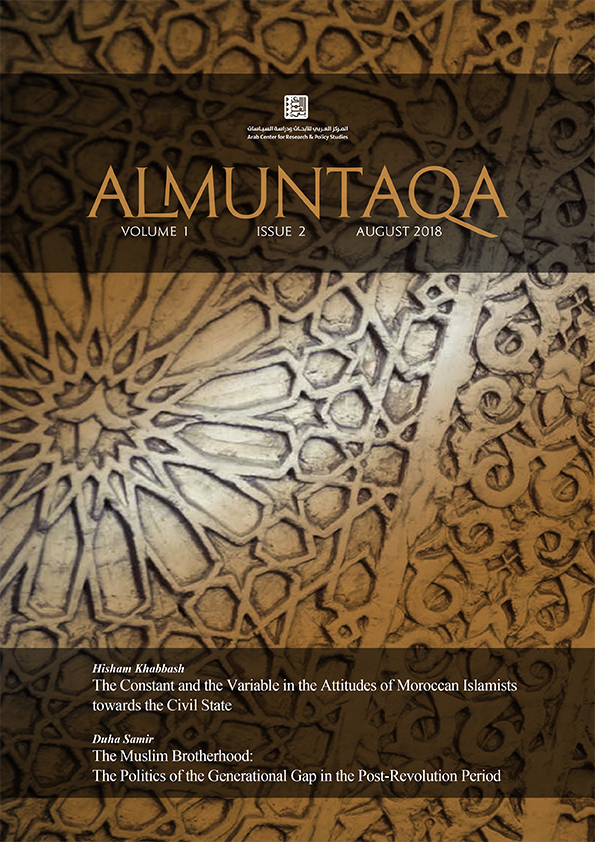
The Muslim Brotherhood's Generational Gap: Politics in the Post-Revolutionary Era
DOI:
https://doi.org/10.31430/almuntaqa.1.2.0032الملخص
This paper examines the internal dynamics of the Muslim Brotherhood. It uses a sociological approach that focuses on the interactions between different generational sections within the movement. Generation, however, is conceived through different currents of intellectual thought and not strictly by age. This is justified by an examination of the views and opinions of the Muslim Brotherhood's youngest generation in the wake of the January 25, 2011 revolution, which are diverse. The positions of this group are explored across a number of issues: the organizational structure, the decision-making process, the culture of obedience, proselytizing (daawa) and politics, political party life, and reform. It relies on focused or semi-structured interviews with current and former members of the movement as well as selected biographies, Facebook groups, and video recordings made and published by the movement's members. The sample of members taken into account for the study was based on two criteria. The first is the position occupied by a Muslim Brotherhood member and the experience they have in or outside the movement. The second is their position in the revolutionary-conservative binary, or the degree to which he/she accepts or rejects the discourse of the movement and its leadership. The latter factor indicates diversity among Muslim Brotherhood youth in terms of vision, cultural makeup, and political experience.
المراجع
مقالات مُستشهِدة من مصادر خارجية (2)
- Carmen Fulco, Mohammed El-Sayed Bushra (2025) An organizational perspective on fading system-ness: Insights from Ennahda’s post-specialization period (2016–2021). https://doi.org/10.1017/S1755048325000070
- Limor Lavie (2023) The Ambiguity of the Quest for Mastership of the World: The Concept of Ustāḏiyyat al-ʿĀlam in the Doctrine of the Muslim Brotherhood. https://doi.org/10.3390/rel14091144
المصادر: Crossref Cited-by، ومراجع مقالات دوريات المركز (الهوامش وقوائم المراجع)
التنزيلات
منشور
إحصاءات الاستخدام
إصدار
القسم
الرخصة
الحقوق الفكرية (c) 2018 المنتقى

هذا العمل مرخص بموجب Creative Commons Attribution-NonCommercial 4.0 International License.