Policies without Sovereignty: Palestinian Electricity under Occupation in Gaza
الكلمات المفتاحية:
Electricity Sector، Palestinian Authority، The Gaza Strip، the Israeli Occupation، Public Poilcyالملخص
This study sheds light on the electricity sector in the Occupied Palestinian Territories since 1967, with a focus on the Gaza Strip. It explores the determinants of public policies regulating this sector following the establishment of the Palestinian Authority in 1993. The study addresses the outcomes of these policies and their impact on the electricity sector under occupation, and the repercussions of liberalizing the sector, which began with the establishment of the Oslo Accords’ economic parameters and took root after 2008. The study proposes strengthening reliance on alternative energy sources for electricity production, and restructuring the electricity sector by centralizing production, distribution, and management through a national, public, and social corporation.
المراجع
- “Isrāʾīl: Lan Nuʿīd al-Kahrubāʾ wa-l-Māʾ ilā Ghazzah ilā Baʿd Iʿādat al-Rahāʾin wa-l-Mukhtaṭafīn,” Al-Hurra , 10/12/2023, accessed on 10/1/2024, at: https://2u.pw/YuRszda
- “Masʾūl: Khasāʾir Shabakat Kahrubāʾ Ghazzah Tajāwazat 30 Milyūn Dūlār,” Al-Arabiyya , 22/10/2023, accessed on 10/1/2024, at: https://2u.pw/Ul6lhki
- “Milḥim: 70% min Shabakāt Naql wa-Tawzīʿ al-Kahrubāʿ Tadammarat bi-Sabab el-ʿUdwān ʿalā Ghazzah,” Wafa , 8/11/2023, accessed on 10/1/2024, at: http://tinyurl.com/y8bpz3nk
- “Ghazzah bi-Dūn Māʾ Wa-Lā Kahrubāʾ wa-Lā Ghithāʾ: Mā Mawqif al-Qānūn al-Dawlī,” BBC , 17/10/2023, accessed on 10/1/2024, at: http://tinyurl.com/md3kfa2n
- “Azmat al-Kahrubāʾ fī Qiṭāʿ Ghazzah: al-Ḥulūl al-Mumkina bayn al-Muwallidāt al-Tijāriyya wa-l-ʿAddād al-Dha kī,” Fact Sheet , Al-Meezan Center, accessed on 27/1/2024, at: http://tinyurl.com/5739kf5w
- Palestinian Energy and Natural Resources Authority, Taqrīr al-Ṭāqa al-Kahrubāʾiyya fī Filasṭīn 2016-2019 (Ramallah: 2020), accessed on 10/2/2021, at: https://bit.ly/3eVmDmS
- Ali Al-Jarbawi, “al-Tanmiya fī al-Arāḍī al-Filasṭīniyya al-Muḥtallah: Shurūṭ al-Ilḥāq wa-Shurūṭ al-Inṭilāq,” Palestinian Affairs , no. 235-236-237 (November-December 1992), pp. 3-14.
- Tariq Dana, “Madkhal li-Fahm al-Iqtiṣād al-Siyāsī lil-Arāḍī al-Filasṭīniyya al-Muḥtallah,” Omran , vol. 8, no. 30 (Fall 2019), pp. 57-80.
- S. S. Elmusa & M. El-Jaafari, “Power and Trade: The Israeli-Palestinian Economic Protocol,” Journal of Palestine Studies , vol. 24, no. 2 (1995), pp. 14-32.
- Melki Suleiman, “Naḥw 20 Milyār Shīkil Khasirathā ‘al-Maqāṣṣah’ Khilāl ʿAqdayn bi-Sabab Band ‘Istithnāʾī’,” Al-Hayat Al-Jadida , 16/11/2021, accessed on 8/18/2022, at: https://bit.ly/3bQooD6
- Jeremy Wildeman & Alaa Tartir, “Can Oslo’s Failed Aid Model Be Laid to Rest?,” Al-Shabaka , 18/9/2013, accessed on 23/7/2022, at: https://bit.ly/3peDCF7
- Hiba Jaffal, “Waqf al-Musāʿadāt al-Amīrkiyya lil-Sulṭa al-Filasṭīniyya wa-l-Baḥth ʿan Qiyāda Badīla,” Situation Assessment , Masarat Center, 2019, accessed on 16/2/2021, at https://bit.ly/3lXmstk
- Ashraf Abu Musa, “Wāqiʿ al-Nazāha wa-l-Shafāfiyya wa-l-Musāʾalah fī Idārat Qiṭāʿ al-Kahrubāʾ fī Qiṭāʿ Ghazzah,” Report Series , no. 203, Aman, 2021.
- “Azmat al-Kahrubāʾ fī Qiṭāʿ Ghazzah.”
- Mark Griffiths & Mikko Joronen, “Governmentalizing Palestinian futures: uncertainty, anticipation, possibility,” Geografiska Annaler: Series B, Human Geography , vol. 103 , no. 4 (2021), pp. 352-366.
- “Jinīn: al-Ḥamdallah Yudashin Maḥaṭat Taḥwīl al-Ṭāqa al-Kahrubāʾiyya fī al-Jalamah,” Wafa , 10/7/2017, accessed on 11/2/2021, at: https://bit.ly/3EsaMdk
- “Muʿālajat Azmat al-Kahrubāʾ fī Qiṭāʿ Ghazzah,” Policy Analysis , Masarat Center, 11 January 2023, accessed on 12/1/2024, at: https://2u.pw/laqqhRw
- Nasr Abdel Karim, “Wāqiʿ al-Dayn al-ʿĀm wa-Mutaʾakhkharāt al-Qiṭāʿ al-Khāṣ fī Filasṭīn,” Report , Aman Coalition, 2019, accessed on 24/7/2022, at: https://bit.ly/3Ex9yNJ
- In an online meeting with journalists held on 12 April 2020, Palestinian Finance Minister Shukri Bishara stated that the Monetary Authority was about to reduce the mandatory reserve for the banking sector from 9% to 5% with the aim of providing liquidity of up to about US$ 520 million. See: “Bishāra: Qarār Qarīb Li-Sulṭat al-Naqd Bi-Shaʾn al-Iḥtiyāṭī al-Ilzāmī,” aliqtisadi , 12/4/2020, accessed on 27/1/2024, at: https://bit.ly/3T56Zqj
- “Bashār Maṣrī Yuʿlin ʿan Mashrūʾ Badiku ‘Ṭāqat Amal’ Li-Tawlīd al-Kahrubāʾ fī Ghazzah,” Padico , 21/9/2023, accessed on 5/1/2024, at: https://2u.pw/5JODAbE
- Sarah Roy, The Gaza Strip: The Political Economy of De-development (Beirut: Institute for Palestine Studies, 1995), p. 192.
- Yousef Sayegh is a Palestinian economist and researcher, and former member of both the Palestinian National Council and the Executive Committee of the Palestine Liberation Organization. Sayegh helped establish the Palestinian Planning Center, which he managed until 1971, after which he served as director of the Palestinian National Fund.
- Palestine Liberation Organization - Department of Economic Affairs and Planning, al-Barnāmij al-ʿĀm li-Inmāʾ al-Iqtiṣād al-Waṭanī al-Filasṭīnī lil-Sanawāt 1993-2000 (Tunis: 1993), pp. 899-925.
- World Bank, Developing the Occupied Territories: An Investment for Peace (Washington DC: The World Bank, 1993), V5.
- Palestinian Energy and Natural Resources Authority.
- “ Qānūn Raqm (12) Li-Sanat 1995 Bi-Shaʾn Inshāʾ Sulṭat al-Ṭāqā al-Filasṭīniyya,” al-Muqtafi , accessed on 18/2/2021, at: https://bit.ly/3VgZWg8
- Muayyad Afaneh, Ṣāfī al-Iqrāḍ.. Muʿḍillah Tastanzif al-Muwāzannah al-ʿĀmma Bi-Milyār Shīkil Sanawiyyan (Ramallah: Aman Foundation,
- Ibid. Source: Muayyad Afaneh, Ṣāfī al-Iqrāḍ.. Muʿḍillah Tastanzif al-Muwāzannah al-ʿĀmma Bi-Milyār Shīkil Sanawiyyan (Ramallah: Aman Foundation, 2017).
- Qānūn Raqm (13) Li-Sanat 2009 Bi-Shaʾn Qānūn al-Kahrubāʾ al-ʿĀm,” al-Muqtafi , accessed on 19/2/2021, at: https://bit.ly/3ST8Y18
- AHLC is the main body responsible for coordinating aid to the Palestinian Authority. Established in 1993, it meets periodically in Brussels or New York. It is chaired by the Kingdom of Norway and consists of 15 members, including key donors from the European Union, Arab countries, the United States and Japan, in addition to relevant international institutions.
- Hadil Qazzaz, al-Musāʿadāt al-Dawliyya fī al-Ḍaffa al-Gharbiyya wa-Qiṭāʿ Ghazzah (Beirut: Institute for Palestine Studies, 2016), p. 57.
- Palestinian Energy and Natural Resources Authority,.
- Ibrahim al-Shaqaqi & Joanna Springer, “Faṣl al-Ḥukm ʿan al-Iqtiṣād fī Filasṭīn: Waṣfa Fāshila li-Dawla Fāshila,” Position Paper , Palestinian Policy Network, 2015, accessed on 21/2/2021, at: https://bit.ly/3eZ4FA8
- UNCTAD, al-Takālīf al-Iqtiṣādiyya lil-Iḥtilāl al-Isrāʾīlī ʿalā al-Shaʿb al-Filasṭīnī: Imkāniyyāt al-Nifṭ wa-l-Ghāz al-Ṭabīʿī al-Latī Lam Tataḥaqaq (New York: United Nations, 2019), accessed on 22/2/2021, at: https://bit.ly/3Eviljm
- Palestinian Energy and Natural Resources Authority.
- “Badiku Taftatiḥ Mashrūʿ Tawlīd al-Ṭāqa al-Kahrubāʾiyya fī Ghazzah,” Wafa , 10/3/2021, accessed on 21/7/2021 at: https://bit.ly/3VivTod
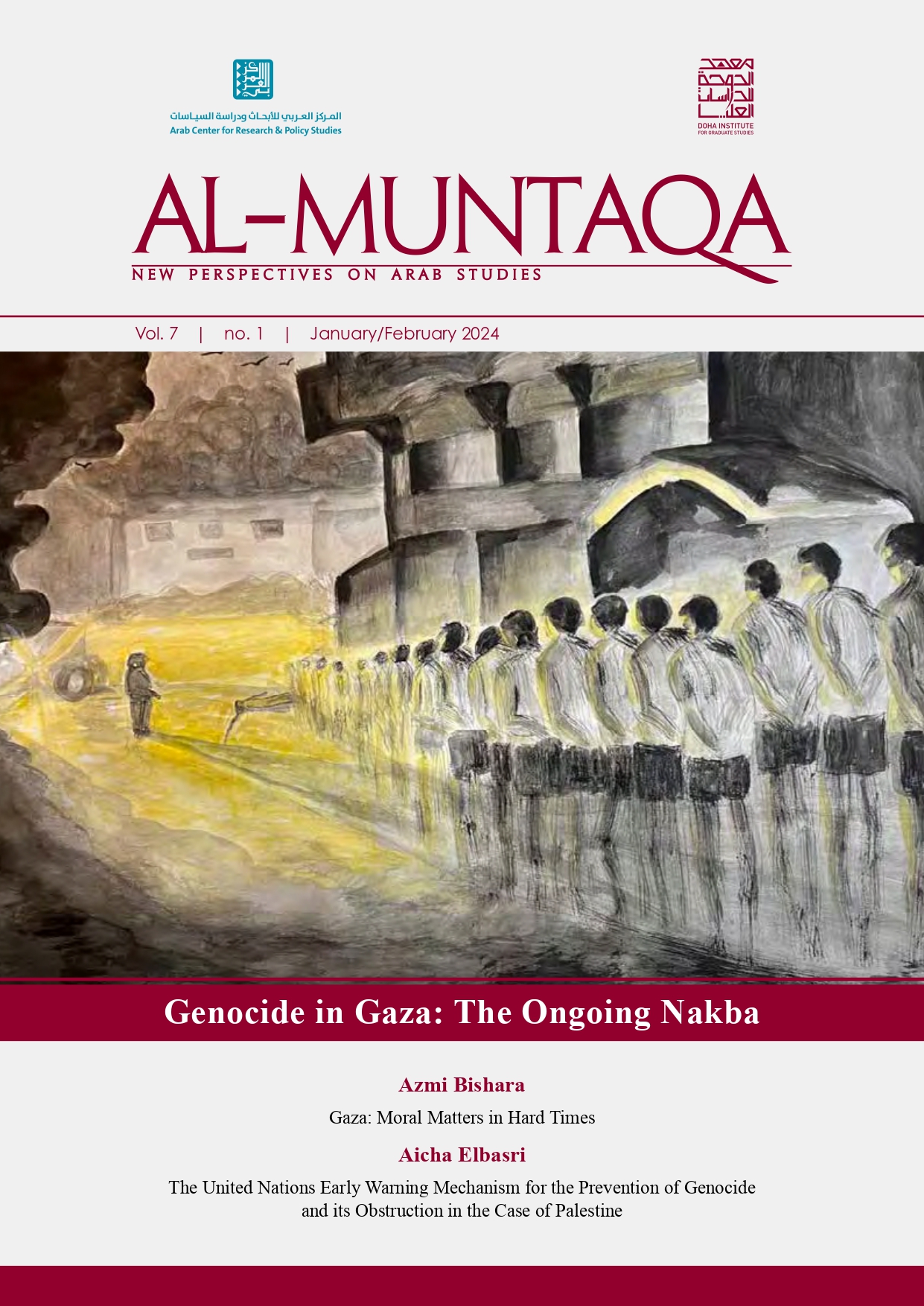
التنزيلات
منشور
إحصاءات الاستخدام
إصدار
القسم
الرخصة
الحقوق الفكرية (c) 2024 المنتقى

هذا العمل مرخص بموجب Creative Commons Attribution-NonCommercial 4.0 International License.
