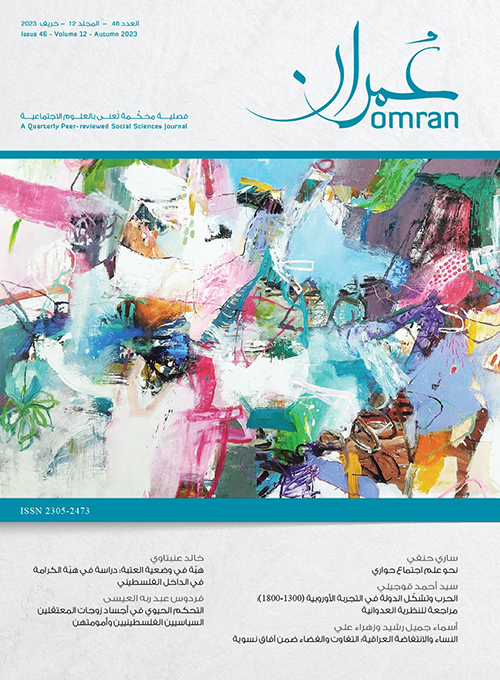
الحرب وتشكّل الدولة في التجربة الأوروبية (1300-1800): مراجعة للنظرية العدوانية
DOI:
https://doi.org/10.31430/iizf1776الكلمات المفتاحية:
الحرب، تشكل الدولة، النظرية العدوانية، السوسيولوجيا التاريخية، البيروقراطيةالملخص
تُعدّ مقولة إن "الحرب صنعت الدولة، والدولة شنّت الحرب" من أشد المقولات إثارة للجدل في العلوم الاجتماعية المعاصرة. اختصرت المقولة الفرضية الأساسية ل "النظرية العدوانية" التي تنطلق من دور الحرب المركزي في عملية تشكّل الدولة. تجادل الدراسة في أنّ النظرية العدوانية يمكن أن تكون أقوى تفسيريًا وأشد تماسكًا منطقيًا إذا ركزت على ثلاثة متغيرات متدخّلة أساسية، وهي الاستخراج الضريبي والمركزة والبرقطة. وتقترح مجموعة من الفرضيات المشتقة من المتغيرات الثلاثة، وتختبرها على دراسة حالة تاريخية تشمل تاريخ صنع الدولة في التجربة الأوروبية في المدة 1300-1800.
المراجع
- Charles Tilly, "Reflections on the History of European State–Making," in: Charles Tilly (ed.), The Formation of National States in Western Europe (Princeton: Princeton University Press, 1975), p. 42.
- للاطلاع على عيّنة من أحدث الدراسات حول الموضوع، ينظر على سبيل المثال: Yuval Feinstein & Andreas Wimmer, "Consent and Legitimacy: A Revised Bellicose Theory of State–Building with Evidence from around the World, 1500–2000," World Politics , vol. 75, no. 1 (January 2023), pp. 188–232; Agustín Goenaga, Oriol Sabaté & Jan Teorell, "The State does not Live by Warfare Alone: War and Revenue in the Long Nineteenth Century," The Review of International Organizations , vol. 18 (2023), pp. 393–418; Gurminder K. Bhambra, "Relations of Extraction, Relations of Redistribution: Empire, Nation, and the Construction of the British Welfare State," The British Journal of Sociology , vol. 73, no. 1 (2022), pp. 4–15. وقد أصدرت مجلة العلاقات الدولية المرموقة التنظيم الدوليعددًا خاصًا في عام 2023، تناول موضوع الحرب وتشكّل الدولة، ينظر خصوصًا: Lars–Erik Cederman et al., "War Did Make States: Revisiting the Bellicist Paradigm in Early Modern Europe," International Organization , vol. 77, no. 2 (Spring 2023), pp. 324–362; Eric Grynaviski & Sverrir Steinsson, "Wisdom is Welcome Wherever it Comes From: War, Diffusion, and State Formation in Scandinavia," International Organization , vol. 77, no. 2 (Spring 2023), pp. 294–323.
- ينظر على سبيل المثال: Lars Bo Kaspersen & Jeppe Strandsbjerg (eds.), Does War Make States? Investigations of Charles Tilly’s Historical Sociology (Cambridge: Cambridge University Press, 2017); Ernesto Castañeda & Cathy Lisa Schneider (eds.), Collective Violence, Contentious Politics, and Social Change: A Charles Tilly Reader (New York: Routledge, 2017); María J. Funes Lanham (ed.), Regarding Tilly: Conflict, Power, and Collective Action (Lanham: University Press of America, 2016).
- للاطلاع على عيّنة حديثة من هذا النوع من الاختبارات، ينظر مثلً: Laura D. Young, "Testing Tilly: Does War Really Make States?" Social Evolution & History , vol. 21, no. 1 (March 2022), pp. 175–199; Cameron G. Thies, "Domestic Processes, External Threats, and Latin American State–Building: From Comparative Historical Analysis to Comparative Hypothesis Testing," Journal of Historical Political Economy , vol. 2, no. 1 (2022), pp. 135–157.
- Tilly, "Reflections on the History of European State–Making," p. 24.
- Ibid., pp. 38–39.
- Vivek Swaroop Sharma, "War, Conflict and the State Reconsidered," in: Kaspersen & Strandsbjerg (eds.), p. 185.
- وجدت تانيشا فازال أن هناك 66 دولة ماتت من أصل 207 دول منذ عام 1816. من بين الدول ال 66 التي ماتت، 50 دولة منها ماتت بسبب الحرب والعنف. ينظر: Tanisha M. Fazal, State Death: The Politics and Geography of Conquest, Occupation, and Annexation (Princeton: Princeton University Press, 2007), p. 3.
- في عام 1969، كلّفت لجنة السياسة المقارنة التابعة لمجلس أبحاث العلوم الاجتماعية SSRC مجموعة من الباحثين بإعداد دراسة حول موضوع الدولة في أوروبا الغربية. خوفًا من أن تصبح أوروبا موضوعًا هامشيًا في حقل السياسة المقارنة، ورغبة في منح نظرية الأنساق Theory Systems جرعة حياة بعد الركود الذي شهدته في بداية سبعينيات القرن العشرين، قرّرت اللجنة إصدار مجلد ثامن ضمن سلسلتها الشهيرة "دراسات في التنمية السياسية"، وكلّفت سبعة باحثين، يقودهم غابرييل ألموند وتشارلز تيلي، بتصميم خطّة بحثية حول مسألة الدولة وبناء الدولة في أوروبا الغربية. كُلّلت أشغال تلك المجموعة بتنظيم ورشة عمل في صيف 1970 في "مركز دراسات العلوم السلوكية المتقدّمة"، انبثقت منها الأوراق التي شكّلت محتوى كتاب تشكل الدولة القومية في أوروبا الغربية. للاطلاع على الكتاب، ينظر: Tilly (ed.)؛ وللمزيد من المعلومات حول اللجنة وأعمالها، ينظر: Kevin P. Clements, "Towards a Radical Comparative Sociology: Or Whatever Happened to the Committee on Comparative Politics?" Political Science , vol. 27, no. 1–2 (July–December 1975), pp. 124–130.
- أحد فروع ما يعرف بالمؤسساتية الجديدة، وتعرف بأسماء أخرى أيضًا، مثل المؤسسية التاريخية والفيبرية الجديدة والسوسيولوجيا الكلّية والتوريخ البنيوي. ويختلف هذا الفرع عن السوسيولوجيا الكلاسيكية في أمرين: أوّلهما هو الاهتمام بالتغيير والسياق التاريخيين، وثانيهما هو التركيز على التحليل التاريخي المقارن للبنى الاجتماعية، بدلً من السرد الوصفي للأحداث وإعادة تفسير الروايات الفردية. للمزيد من المعلومات عن النظرية، ينظر: Philip Abrams, Historical Sociology (New York: Cornell University Press, 1982); Gerard Delanty & Engin F. Isin (eds.), Handbook of Historical Sociology (Thousand Oaks, CA: SAGE Publications, 2003); Richard Lachmann, What is Historical Sociology? (Cambridge: Polity, 2013).
- للاطلاع على بعض الانتقادات المبكرة، ينظر: Eric A. Nordlinger, "The Return to the State: Critiques," American Political Science Review , vol. 82, no. 3 (1988), pp. 875–885; Paul Cammack, "Review Article: Bringing the State Back In?" British Journal of Political Science , vol. 19, no. 2 (1989), pp. 261–290; Bob Jessop, State Theory (Cambridge: Polity, 1990), pp. 283–288.
- تضمّ هذه الفئة الأعمال الآتية على سبيل المثال لا الحصر: Reinhard Bendix, Kings or People: Power and the Mandate to Rule (Berkeley, CA: University of California Press, 1978); Gianfranco Poggi, The Development of The Modern State: A Sociological Introduction (Stanford: Stanford University Press, 1978); Theda Skocpol, States and Social Revolutions: A Comparative Analysis of France, Russia, and China (Cambridge: Cambridge University Press, 1979); Peter B. Evans, Dietrich Rueschemeyer & Theda Skocpol (eds.), Bringing the State Back In (Cambridge: Cambridge University Press, 1985); Michael Mann, The Sources of Social Power , vol. 1: A History of Power from the Beginning to A.D. 176O (Cambridge: Cambridge University Press, 1986); John A. Hall, Powers and Liberties (Harmondsworth: Penguin, 1986); Joel S. Migdal, Strong Societies and Weak States: State–Society Relations and State Capabilities in Third World (Princeton: Princeton University Press, 1988); Margaret Levi, Of Rule and Revenue (Berkeley: University of California Press, 1988); Robert Putnam, Making Democracy Work: Civic Traditions in Modern Italy (Princeton: Princeton University Press, 1993); Hendrik Spruyt, The Sovereign State and Its Competitors (Princeton: Princeton University Press, 1994).
- مبدأ الشح (أو القصد)، أو ما يعرف ب: شيفرة أوكام Occam’s Razor، هو الوصف الذي يطلق على النظرية التي تستطيع أن "تفسّر أكبر قدر ممكن من الظواهر باستخدام الحدّ الأدنى من المتغيرات التفسيرية". هذا الاقتصاد في المتغيرات هو ما يدعوه العلماء ب "مبدأ الشح"، ويعتبر أحد مؤشرات النظرية الجيدة. لمزيد من المعلومات عن هذا المبدأ، ينظر: سيد أحمد قوجيلي، "ما قلّ ودل: مبدأ الشح والنزعة الميثودية في البحوث السياسية"، سياسات عربية، العدد 41 (تشرين الثاني/ نوفمبر 2019)، ص.54–36
- الفرق بين الإيرادات والإنفاق الحكومي على مدى فترة زمنية معينة، حيث تكون الإيرادات أكبر من الإنفاق؛ أي يمكن عدّها أرباحًا تراكمية للحكومة، وقد كانت من العوامل التي أدت إلى تراكم الثروة في أيدي الملوك ابتداءً من عام.1500
- Bruce D. Porter, War and the Rise of the State: The Military Foundations of Modern Politics (New York: Free Press, 1994), p. 24.
- المقصود هو أنّ التزام الباحث بالشّح يكلّفه خسارة "القوّة التفسيرية" و"العمومية". ويفترض هذا الطرح وجود مقايضة دائمة بين الشّح وهذين المعيارين، ويقضي تحقيق أحدهما، بالضرورة، التضحية بالآخر. ل طاا عاا على المزيد من التفاصيل حول الموضوع، ينظر: Alexander George & Andrew Bennett, Case Studies and Theory Development in the Social Sciences (Cambridge, MA: MIT Press, 2004), p. 31.
- للاطلاع على شرح ممتاز لهذه المعضلة، ينظر: Gary King, Robert O. Keohane & Sidney Verba, Designing Social Inquiry (Princeton: Princeton University Press, 1994), pp. 104–105.
- من الصعب إحصاء الباحثين الذين يمثلون النظرية العدوانية بدقة. لكن الأعمال الآتية تمثّل عيّنة جيدة، ينظر مثلً: Otto Hintze, "A Military Organization and the Organization of the State," in: Felix Gilbert (ed.), The Historical Essays of Otto Hintze (New York: Oxford University Press, 1975); Geoffrey Parker & Lesley M. Smith, The General Crisis of the Seventeenth Century (London: Routledge, 1978); Charles Tilly, Coercion, Capital, and European States, AD 990– 1990 (Cambridge, MA: Basil Blackwell, 1990); Brian M. Downing, The Military Revolution and Political Change: Origins of Democracy and Autocracy in Early Modern Europe (Princeton: Princeton University Press, 1992); Karen A. Rasler & William R. Thompson, War and State Making: The Shaping of Global Powers (London: Unwin Hyman, 1989); Michael Barnett, Confronting the Costs of War: Military Power, State, and Society in Egypt and Israel (Princeton: Princeton University Press, 1992); Levi; Spruyt.
- تسمّى أيضًا "نظرية محورية الحرب في تشكّل الدولة" Bello–centric Theory of State–formation، أو "بردايم الحرب" في نظرية الدولة. للاطلاع على دراسة حديثة حول النظرية، ينظر: Cederman et al..
- Max Weber, Economy and Society , Guenther Roth & Claus Wittich (eds.) (Berkeley: University of California Press, 1978); Norbert Elias, The Civilizing Process: State Formation and Civilization , vol. 2 (Hoboken, NJ: Wiley–Blackwell, 2000); Gilbert (ed.); في الواقع كان أحد انتقادات النظرية العدوانية يتمحور حول اعتمادها المفرط على أفكار هينتز وماكس فيبر وغيرهما في إنتاج نسخة شمولية Machtstaat للدولة. ينظر مثلً: Cornelia Navari, "Introduction: The State as A Contested Concept in International Relations," in: Cornelia Navari (ed.), The Condition of States (Milton Keynes: Open University Press, 1991), pp. 8–10; Jan Aart Scholte, International Relations of Social Change (Milton Keynes: Open University Press, 1993), p. 23.
- Lars Bo Kaspersen, Jeppe Strandsbjerg & Benno Teschke, "Introduction: State Formation Theory: Status, Problems, and Prospects," in: Kaspersen & Strandsbjerg (eds.), pp. 1–22.
- Kenneth N. Waltz, Theory of International Politics (Reading, MA: Addison–Wesley, 1979); Robert G. Gilpin, War and Change in World Politics (New York: Cambridge University Press, 1981).
- Evans, Rueschemeyer & Skocpol (eds.).
- Luis L. Schenoni, "Bringing War Back In: Victory and State Formation in Latin America," American Journal of Political Science , vol. 65, no. 2 (2021), pp. 405–421.
- نستخدم مصطلح لاكاتوش بأسلوب إيضاحي، من دون أن نتبنى إطاره النظري للمعرفة. يتكوّن القلب الصلب لأي نظرية من مجموع الفروض والمتغيرات الأساسية التي تجعل محتواه ثابتًا وغير قابل للتغيير، حيث يعتبر حذف أو تغيير إحدى تلك الفرضيات أو المتغيرات بمنزلة تغيير النظرية برمّتها. ينظر: Imre Lakatos, The Methodology of Scientific Research Programmes , John Worrall & Gregory Currie (eds.), Philosophical Papers, vol. I (Cambridge: Cambridge University Press, 1978), p. 47.
- المتغيرات المتدخّلة الموضحة في الجدول هي مجرّد عيّنة انتقائية وليست شاملة. المصدر: من إعداد الباحث.
- المعيار المعتمد في التفضيل هو الشّح، حيث يستخدمه المتخصصون في الإبستيمولوجيا معيارًا للاختيار من بين النظريات والتفسيرات المتنافسة؛ فإذا كانت لدينا نظريتان تفسّران ظاهرة معيّنة بالقدر نفسه من الكفاءة، وكانت إحداهما بسيطة والأخرى معقّدة، فإنّ النظرية الأبسط والأسهل منهما هي الأفضل. ينظر: W. V. Quine, "On Simple Theories of a Complex World," in: W. V. Quine, The Ways of Paradox and Other Essays (New York: Random House, 1966), p. 242; Craig DeLancey, "Does a Parsimony Principle Entail a Simple World?" Metaphysica , vol. 12, no. 2 (2011), p. 88. المصدر: من إعداد الباحث.
- يختلف المؤرخون وعلماء الاجتماع حول تأريخ بداية حقبة تشكّل الدولة ونهايتها، لكنّ هناك تيارًا واسعًا داخل نظرية الدولة يعتبر نهاية العصر الإقطاعي نقطة بداية عملية تشكّل الدولة، أمّا نهايتها، ففي أواخر القرن الثامن عشر. للمزيد من التفصيل ينظر: المطلب الثالث من المبحث الثالث من هذه الدراسة.
- يقول تيلي: "لم يكن أحد يسعى لتصميم المكوّنات الرئيسة للدول القومية، مثل الخزانات والمحاكم والإدارات المركزية، وغيرها؛ إنّما هي تشكّلت غالبًا باعتبارها نتائج عرضية وغير مقصودة للجهود المبذولة لتنفيذ المهمات الأشد إلحاحًا، خاصّة خلق القوة المسلحة وتعزيزها". وهذا ما ذهب إليه جورج سورنسن أيضًا بالقول إنّ "القدرة على الاستعداد للحرب، وشنّها بعد ذلك، تتطلب من أصحاب السلطة القيام بالأعمال التي تؤدّي إلى صنع الدولة أيضًا"، ينظر: Tilly, Coercion, Capital, and European States , p. 26; Georg Sørensen, "War and State–Making: Why doesn’t it Work in the Third World?" Security Dialogue , vol. 32, no. 3 (2001), p. 341.
- المصدران الآخران للاستخراج هما: 1) التجنيد، الذي يُستخرج من الفئات المجتمعية المخوّلة بأداء الخدمة العسكرية وحمل السلاح؛ 2) الموارد الأولية، التي تُستخرج من الثروات الطبيعية المتوافرة للدولة. وإضافة إلى هذين الموردين، يمكن أن تستخرج الدولة من بيئتها الخارجية أيضًا (خارج حدودها)، أو ما دعاه بعضهم "الاستخراج الخارجي" Extraction External، سواء أكان ذلك بطريقة مباشرة عبر نقل الموارد الخارجية إلى الدولة في ذاتها، أم بطريقة غير مباشرة عبر نقل تلك الموارد إلى المجتمع المحلّي، ثمّ تقوم الدولة باستخراجها منه. للمزيد حول الاستخراج الخارجي، ينظر: Michael Mastanduno, David A. Lake & John G. Ikenberry, "Toward a Realist Theory of State Action," International Studies Quarterly , vol. 33, no. 4 (1989), p. 464.
- Rudolf Braun, "Taxation, Sociopolitical Structure, and State–Building: Great Britain and Brandenburg–Prussia," in: Tilly (ed.), p. 244; Lorenz von Stein, "On Taxation," in: Richard A. Musgrave & Alan T. Peacock (eds.), Classics in the Theory of Public Finance (New York: Macmillan, 1958), pp. 202–213.
- Edward Ames & Richard T. Rapp, "The Birth and Death of Taxes: A Hypothesis," The Journal of Economic History , vol. 37, no. 1 (March 1977), p. 161.
- Karl Fritz Mann, "The Sociology of Taxation," The Review of Politics , vol. 5, no. 2 (1943), pp. 225–235.
- اقترح شومبيتر في بدايات القرن العشرين تأسيس السوسيولوجيا المالية حقلً مستقلً يهتم بدراسة التاريخ المالي والنظم المالية، ودعا إلى أن يكون محورها ما سمّاه "دولة الضريبة" التي توقّع بنفسه أن تكون "مثمرة جدًّا لنظرية الدولة". ينظر: Joseph Schumpeter, "The Crisis of the Tax State," in: Richard Swedberg (ed.), The Economics and Sociology of Capitalism (Princeton: Princeton University Press, 1991 [1918]), pp. 101, 110.
- Rudolf Goldscheid, "A Sociological Approach to Problems of Public Finance," in: Musgrave & Peacock (eds.), pp. 28–36.
- يقول كاميرون ثيس إنّ الحرب وتهديداتها، والمنافسة العسكرية من الدول الأخرى، كانت العجلة التي قادت الاستخراج. ينظر: Cameron G. Thies, "State Building, Interstate and Intrastate Rivalry: A Study of Post–Colonial Developing Country Extractive Efforts, 1975–2000," International Studies Quarterly , vol. 48, no. 1 (March 2004), p. 68.
- مقتبس من: Porter, p. 14.
- يعتبر غولدشيد المالية العامّة "علم الحرب وليس علم السلام". مقتبس من: Braun, p. 311.
- يقول جيفري هيربست: "إنّ تأثير الحرب الأشد بروزًا في التاريخ الأوروبي هو دفع الدولة إلى زيادة قدرتها على تحصيل المزيد من المداخيل بكفاءة كبيرة ومقاومة عامّة صغيرة". ينظر: Jeffrey Herbst, "War and the State in Africa," International Security , vol. 14, no. 4 (Spring 1990), p. 119.
- Tilly, "Reflections on the History of European State–Making," p. 27.
- Spruyt, chap. 8.
- Tilly, Coercion, Capital, and European States , pp. 23–24.
- ينظر مثلً: Ibid., pp. 68–69; Dietrich Rueschemeyer & Peter B. Evans, "The State and Economic Transformation: Toward an Analysis of the Conditions Underlying Effective Intervention," in: Evans, Rueschemeyer & Skocpol (eds.), pp. 46–47; R. M. Maclver, The Modern State (Oxford: Oxford University Press, 1926), p. 22; S. N. Eisenstadt, The Political Systems of Empires: The Rise and Fall of the Historical Bureaucratic Societies (New York: Free Press, 1969), p. 5.
- Weber, vol. 1, p. 54.
- يعرّفها بأنها "منظمة سياسية تنظم سيطرتها على نحو إقليمي وقادرة على تعبئة وسائل العنف لإدامة تلك السيطرة". ينظر: Anthony Giddens, The Nation–State and Violence , vol. II: Of A Contemporary Critique of Historical Materialism (Cambridge: Polity Press, 1985), p. 20.
- Michael Mann, States, War and Capitalism: Studies in Political Sociology (Oxford: Blackwell Publishers, 1988), p. 74; Michael Mann, The Sources of Social Power , vol. 2: The Rise of Classes and Nation–states, 1760–1914 (Cambridge: Cambridge University Press, 1993), p. 55.
- Joel S. Migdal, "Researching the State," in: Mark Ivring Lichbach & Alan S. Zuckerman (eds.), Comparative Politics: Rationality, Culture, and Structure , 2 nd ed. (Cambridge: Cambridge University Press, 2009), pp. 162–163.
- Migdal, "Researching the State," pp. 162–163.
- Tilly, Coercion, Capital, and European States , p. 68.
- Charles Tilly, "War Making and State Making as Organized Crime," in: Evans, Rueschemeyer & Skocpol (eds.), p. 175; Giddens, vol. II, pp. 181–182.
- لا يوافق بعض العلماء على فرضية أنّ لدى المركز (الدولة) القدرة على امتصاص الأطراف (المجتمع الريفي)، فهم يعتقدون أنّ الدول (خاصة في العالم الثالث اليوم) أخفقت في العديد من المرّات في تشكيل مجتمعاتها وإنجاز الحدّ الأدنى من الاستخراج في مواجهة المقاومة الشديدة للمجموعات الاجتماعية أو الرجال الأقوياء. ينظر مثلً: Barnett; Joel S. Migdal, "Strong States, Weak States: Power and Accommodation," in: Myron Weiner & Samuel P. Huntington (eds.), Understanding Political Development (New York: Harper Colins, 1987), pp. 391–434.
- Weber, vol. I, p. 981.
- يرى تيلي أنّه "ابتداءً من عام 990 م فصاعدًا، وفّرت تعبئة الحرب المناسبات الرئيسة التي خلقت ووسّعت ودعمت فيها الدول. Tilly, Coercion, Capital, and European States , pp. 70, 75:أشك لً جديدة من التنظيم السياسي". ينظر
- Mann, The Sources of Social Power , vol. 2, pp. 109–130.
- Mann, States, War and Capitalism , p. 110. أشار جون بريور في كتابه المعروف حول الدولة البريطانية إلى أنّ معظم الإصلاحات والابتكارات الإدارية التي حدثت في أواخر القرنين السابع عشر والثامن عشر كانت تهدف في الأساس إلى تعزيز قدرة الحكومة على شن الحرب. ويرى أن الضرائب والبيروقراطية والحرب عناصر أساسية لتفسير نموّ الحكومة المركزية في تلك الحقبة. ينظر: John Brewer, The Sinews of Power: War, Money and the English State, 1688–1783 (London: Unwin Hyman, 1989).
- Weber, vol. I, p. 968.
- Tilly, Coercion, Capital, and European States , p. 98.
- Tilly, "Reflections on the History of European State–Making," p. 74.
- Karen A. Rasler & William R. Thompson, "War Making and State Making: Governmental Expenditures, Tax Revenues, and Global Wars," The American Political Science Review , vol. 79, no. 2 (1985), p. 493.
- John Boardman et al. (eds.), The Cambridge Ancient History , vol. 3, part 2: The Assyrian and Babylonian Empires and Other States of the Near East (Cambridge: Cambridge University Press, 1991).
- Henri J. M. Claessen & Peter Skalník (eds.), The Early State (The Hague: Mouton Publishers, 1978); Elman R. Service, Origins of the State and Civilization (New York: Norton, 1975), chap. 10–12.
- Tilly, Coercion, Capital, and European States , p. 5.
- لمزيد من المعلومات حول هذه الحقبة، ينظر: Joseph R. Strayer, On the Medieval Origins of the Modern State (Princeton: Princeton University Press, 1970); Poggi, chap. 2; Porter, pp. 24–26.
- يقول مارتن فان كريفلد: "بقي نظام الحكومة الذي ظهر في أوروبا بين عامي 1337 و 1648 نظامًا شخصيًا على نحو كامل في معظم النواحي؛ إذ لم تكن الدولة، بوصفها منظّمة، مجرّدة بشخصيتها الخاصّة، ولم تكن منفصلة عن الحاكم الموجود في ذلك الوقت". ينظر: Martin Van Creveld, The Rise and Decline of the State (Cambridge: Cambridge University Press, 1999), p. 126.
- Ernest Gellner, Nations and Nationalism (Hoboken, NJ: Blackwell Publishers, 1983), pp. 8–18.
- كانت المجالس مشكّلة من ث ث طبقات: رجالالدين (الطبقة الأولى)، والنب ءاا (الطبقة الثانية)، وعوام الشعب (الطبقة الثالثة). وقد شكلت جمعية تمثيلية للطبقات الثلاث، وامتلكت سلطات تشريعية محدودة. وكانت المجالس شائعة في العديد من الدول الأوروبية بأسماء وصلاحيات متشابهة أحيانًا، ومختلفة أحيانًا أخرى.
- أشار براون إلى أنّ "المحاولات كلها لفرض ضريبة منتظمة على عقارات الإمبراطورية وجمع الرسوم الجمركية في حدود الإمبراطورية فشلت، أو كانت محدودة في أحسن الأحوال"، ينظر: Braun, p. 249.
- Gabriel Ardant, "Financial Policy and Economic Infrastructure of Modern States and Nations," in: Tilly (ed.), pp. 173–174.
- Schumpeter, p. 104.
- Ibid., p. 102; Braun, p. 253.
- السياسة الحديثة Politics Modern، مصطلح يرد بكثرة في النظرية السياسية، ويشير إلى الحقبة بين نهاية الحروب الدينية واندلاع الثورة الفرنسية، حيث تشكلت بذور ما يسمى السياسة/ الدولة الجماهيرية المعاصرة.
- Porter, p. 24; ذكر جون راغي أيضًا أنّ "الانتقال من القرون الوسطى إلى النظام الدولي الحديث مثّل التغيير السياقي الأشد أهمية في السياسة الدولية طوال هذه الألفية". ينظر: John Gerard Ruggie, "Continuity and Transformation in The World Polity: Toward A Neorealist Synthesis," in: Robert O. Keohan (ed.), Neorealism and Its Critics (New York: Columbia University Press, 1986), p. 441.
- Tilly, Coercion, Capital, and European States , p. 81.
- Tilly, Coercion, Capital, and European States , p. 54.
- Tilly, "Reflections on the History of European State–Making," p. 42. هناك العديد من الأمثلة عن الوحدات السياسية التي تسبّبت الحرب في اختفائها، مثل بولندا الحالية وساكسونيا وبافاريا، إضافة إلى بعض الكيانات الوطنية الثانوية المستقلة، مثل آراغون ونافار وبيرغوندي وبريتاني وسافوي وفرانش وكومتي، والأعضاء الخمسة. Mann, States, War and Capitalism , p. 109; Porter, p. 15:والثلاثين في الاتحاد الألماني. ينظر
- John Watts, The Making of Polities: Europe, 1300–1500 (Cambridge: Cambridge University Press, 2009), p. 224; يحتوي الكتاب الذي حرّره ريتشارد بوني على مجموعة من الدراسات التاريخية القيّمة عن صعود دولة الضريبة في أوروبا. ينظر: Richard Bonney, The Rise of the Fiscal State in Europe, C.1200–1815 (Oxford: Oxford University Press, 1999).
- Schumpeter; Porter, pp. 33–34.
- Richard Bean, "War and the Birth of the Nation State," The Journal of Economic History , vol. 33, no. 1 (March 1973), p. 220.
- Tilly, "Reflections on the History of European State–Making," p. 42.
- Ames & Rapp, p. 177.
- Ibid., pp. 247–248; Ames & Rapp, p. 161.
- Ardant, pp. 175, 194.
- Theda Skocpol, "France, Russia, China: A Structural Analysis of Social Revolutions," Comparative Studies in Society and History , vol. 18, no. 2 (April 1976), p. 178.
- Tilly, Coercion, Capital, and European States , p. 70.
- Ibid., pp. 69–70; Lawrence Stone, The Crisis of the Aristocracy, 1558–1641 (Oxford: Clarendon Press, 1965); Tilly, "Reflections on the History of European State–Making," p. 24.
- Mann, States , War and Capitalism , pp. 5–6.
- William H. McNeill, The Pursuit of Power: Technology, Armed Force, and Society since A.D 1000 (Chicago: The University of Chicago Press, 1982), p. 144; يعتقد فيبر أن برقطة الجيش جرت عبر نقل الخدمة العسكرية من الملّك (باعتبارها امتيازًا شرفيًا) إلى الأشخاص غير الملّك، ومن الطبقات المالكة الحضرية إلى الطبقات المالكة الريفية (بسبب ملاءمة الأخيرة لأعمال الجندي الخشنة). ينظر: Weber, vol. I, p. 981.
- تتجلّى القوة الإدارية في تخزين المعلومات والسيطرة عليها، ويعتبرها غيدنز "الوسيلة الأساسية لتركيز الموارد السلطوية المشتركة في تشكيل الدولة القومية". ينظر: Giddens, vol. II, p. 52.
- Tilly, "Reflections on the History of European State–Making," p. 24.
- Michel Foucault, Surveiller et punir: Naissance de la prison (Paris: Gallimard, 1975), chap. 1–2.
- Mann, States, War and Capitalism , pp. 5–6.
- Tilly, "Reflections on the History of European State–Making," pp. 19–20.
- التهدئة الداخلية هي المصطلح الذي أطلقه غيدنز على ممارسة المراقبة باعتبارها شكلً من أشكال القوة الإدارية، ينظر: Giddens, vol. II, pp. 181–182; وللمزيد حول تاريخ تطور الشرطة في أوروبا، ينظر: David H. Bayley, "The Police and Political Development in Europe," in: Tilly (ed.), pp. 328–379.
- Migdal, "Strong States, Weak States: Power and Accommodation," pp. 391–434; Barnett.
- Weber, vol. I, p. 54.
- McNeill, p. 161.
- Hintze, pp. 180–215.
- Parker & Smith, p. 14.
- Porter, p. 31; للاطلاع على تاريخ المركزة في أوروبا، ينظر: Ronald Batchfelder & Herman Freudenberger, "On the Rational Origins of the Modern Centralized State," Explorations in Economic History , vol. 20, no. 1 (1983), pp. 1–13.
- على الرغم من أنّ الابتكارات الجديدة في الأسلحة زادت في تركّز السلطة في الدول، فإنّها لم تقرّر من الطرف المستفيد من هذه التغيرات العسكرية أو صاحب الامتياز داخل السلطة؛ فقد استطاع التاج في فرنسا وإسبانيا السيطرة على السلطة من أجل فرض الضريبة، بينما احتفظت بها في هولندا وإنكلترا الهيئات الانتخابية، وبقيت في أيدي ملّك الأراضي في أوروبا الشرقية. لمزيد من التفصيل، ينظر: Bean, p. 221.
- توقيت بداية الثورة ونهايتها متنازع عليهما. يعتقد روبرتس أنّ الثورة حدثت خلال المدة 1660–1560. وانتقد جيوفري باركر هذا التأريخ وجادل في أنّها حدثت ما بين عامي 1550 و 1800:. ينظر M. Roberts, The Military Revolution, 1560–1660: An Inaugural Lecture Delivered Before the Queen’s University of Belfast (Belfast: M. Boyd, 1956); Geoffrey Parker, "The 'Military Revolution,' 1560–1660: A Myth?," The Journal of Modern History , vol. 48, no. 2 (1976), pp. 195–214; Geoffrey Parker, The Military Revolution: Military Innovation and the Rise of the West, 1500–1800 (Cambridge: Cambridge University Press, 1988).
- يعتبر كتاب برايان داونين من أفضل المصادر عن الثورة العسكرية في أوروبا بين القرون الوسطى والقرن الثامن عشر، ينظر: Downing؛ وللاطلاع على مراجعة تاريخية مفيدة حول الموضوع، ينظر: Jeremy Black, A Military Revolution? Military Change and European Society 1550–1800 (London: Macmillan Press,
- ينظر مثلً: Frank Tallett, War and Society in Early–modern Europe, 1495–1715 (London: Routledge, 1992), ch. 2.
- Porter, pp. 65–66.
- Jack S. Levy & William R. Thompson, The Arc of War: Origins, Escalation, and Transformation (Chicago: The University of Chicago Press, 2011), p. 141.
- David Parrott, "From Military Enterprise to Standing Armies: War, State, and Society in Western Europe, 1600– 1700," in: Frank Tallett & D. J. B. Trim (eds.), European Warfare, 1350–1750 (Cambridge: Cambridge University Press, 2010), pp. 74–95.
- Giddens, vol. II, p. 110.
- Tilly, Coercion, Capital, and European States , p. 84.
- Janice E. Thomson, Mercenaries, Pirates, and Sovereigns: State–Building and Extraterritorial Violence in Early Modern Europe (Princeton: Princeton University Press, 1994), p. 10.
- استأجرت إنكلترا وفلورنسا وسافوي وميلان وبيسا السير الإنكليزي الجشع جون هاوكيود الذي تقاضى أمولً طائلة مقابل بيعه خدماته القتالية لهذه الدول، وحصل على المواطنة المشرفة من فلورنسا، مع راتب تقاعدي مدى الحياة واستثناء من الضريبة. وعندما مات في عام 1394 لم تشرّفه الحكومة بجنازة مهيبة من نفقات المال العام فحسب، بل خلّدت اسمه برسم على حائط الواجهة الداخلية للكاتدرائية، يظهر فيه على صهوة الجواد، حاملً درعًا حربية. ينظر: p. 80 , Coercion, Capital, and European States Tilly,.
- Ibid., pp. 82–83.
- لمزيد من المعلومات عن التنظيم العسكري والتغير الاجتماعي، ينظر: Stanislav Andreski, Military Organization and Society (Berkeley: University of California Press, 1968); M. S. Anderson, War and Society in Europe of the Old Regime, 1618–1789 (New York: St. Martin’s Press, 1988).
- Poggi, pp. 66–67; Bean, p. 221.
- Levy & Thompson, p. 137; Porter, p. 32.
- Hendrik Spruyt, "War and State Formation: Amending the Bellicist Theory of State Making," in: Kaspersen & Strandsbjerg (eds.), p. 82.
- Tilly, "War Making and State Making as Organized Crime," p. 170.
- Barry Posen, "Nationalism, the Mass Army, and Military Power," International Security , vol. 18, no. 2 (1993), pp. 80–124.
- Michael Biggs, "Putting the State on the Map: Cartography, Territory, and European State Formation," Comparative Studies in Society and History , vol. 41, no. 2 (April 1999), p. 377.
- Jordan Branch, The Cartographic State: Maps, Territory, and the Origins of Sovereignty (Cambridge: Cambridge University Press, 2014), p. 6.
- Jeppe Strandsbjerg, "The Space of State Formation," in: Kaspersen & Strandsbjerg (eds.), p. 139.
- Branch, p. 5; Strandsbjerg, p. 139.
- Strandsbjerg, p. 128; Biggs, p. 380.
- Gianfranco Poggi, State: Its Nature, Development and Prospects (Oxford: Polity Press, 1990), p. 22.
- J. B. Harley, "Reconstructing the Map," in: Trevor J. Barnes & James S. Duncan (eds.), Writing Worlds: Discourse, Text, and Metaphor in the Representation of Landscape (London: Routledge, 1992), p. 247.
- Levy & Thompson, p. 141.
- Mann, The Sources of Social Power , vol. 2, p. 445.
- Van Creveld, pp. 131–132.
- Mann, The Sources of Social Power , vol. 2, p. 444.
- قدّم فان كريفلد مجموعة من الأرقام حول أمثلة التوسع البيروقراطي للدولة الحديثة، فعلى سبيل المثال، امتلكت فرنسا، التي راوح عدد شعبها بين 18 و 20 مليون نسمة، ما يزيد على 12000 مسؤول في عام 1505، و 25000 في عام 1610، وربّما 50000 في السنوات الأولى لحكم لويس الرابع عشر. وكانت أهمّ سمة في نموّ عدد المسؤولين هي ارتفاع كمّية العمل الكتابي نتيجة لاختراع المطبعة؛ ففي عام 1580 دام تحقيق واحد في شؤون حاكم ملكي ثلاث عشرة سنة، واستهلك 49545 ورقة. أمّا بافاريا، فقد أصبحت في عام 1771 أول بلاد حديثة أجرت إحصاءً شاملً للسكان، على الرغم من إجرائه على نحو مفكك واستغراقه عشرة أعوام للاكتمال. يستنتج كريفلد من خلال أرقامه أنّ "عصر البيروقراطية الحديثة حلّ بالفعل". ينظر: Van Creveld, p. 513.
- Porter, pp. 13–14.
- Youssef Cohen, Brian R. Brown & A. F. K. Organski, "The Paradoxical Nature of State Making: The Violent Creation of Order," The American Political Science Review , vol. 75, no. 4 (December 1981), p. 902.
- Porter, pp. 8, 37.
- Herbst; Andrew Kirby & Michael D. Ward, "Modernity and the Process of State Formation: An Examination of 20th Century Africa," International Interactions , vol. 17, no. 1 (1991), pp. 113–126; Miguel Angel Centeno, Blood and Debt: War and the Nation–State in Latin America (Pennsylvania: Pennsylvania University Press, 2002); Richard Stubbs, "War and Economic Development: Export–Oriented Industrialization in East and Southeast Asia," Comparative Politics , vol. 31, no. 3 (1999), pp. 337–355; Emizet F. Kisangani & Jeffrey Pickering, "Rebels, Rivals, and Post–colonial State– Building: Identifying Bellicist Influences on State Extractive Capability," International Studies Quarterly , vol. 58, no. 1 (2014), pp. 187–198.
- Dietrich Jung, "War and State in the Middle East: Reassessing Charles Tilly in a Regional Context," in: Kaspersen & Jeppe (eds.), p. 223.
التنزيلات
منشور
2023-10-01
تواريخ المقالة
الاستلام: فبراير 24, 2022 التعديل: أغسطس 20, 2023 القبول: أغسطس 25, 2023
إحصاءات الاستخدام
41 مشاهدة 74 تنزيل
إصدار
القسم
دراسات
الرخصة
الحقوق الفكرية (c) 2023 عمران للعلوم الاجتماعية والإنسانية

هذا العمل مرخص بموجب Creative Commons Attribution-NonCommercial 4.0 International License.
