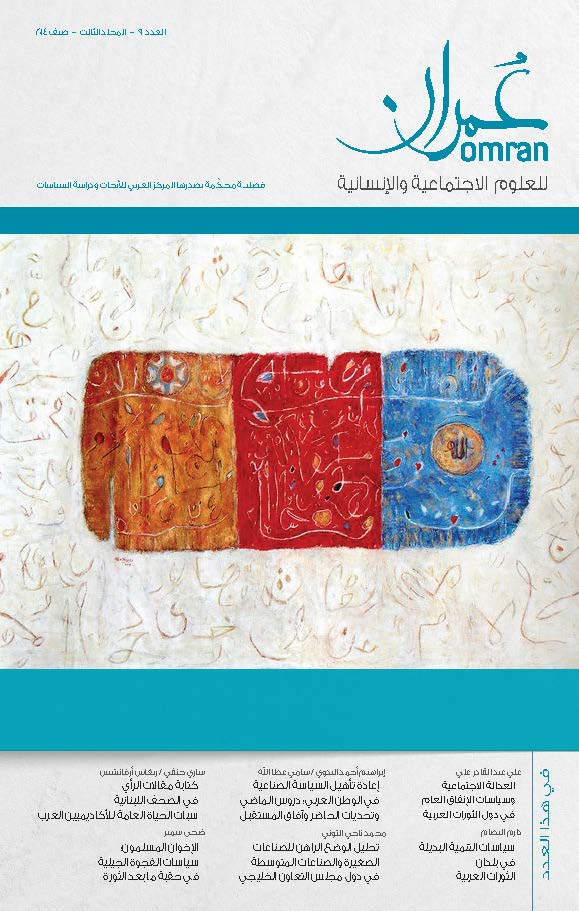
Social Justice and Public Expenditure in Arab Spring States
DOI:
https://doi.org/10.12816/0007301Keywords:
Social Justice, Public Expenditure, Arab revolutions, International Monetary Fund (IMF), Middle ClassAbstract
This paper examines the challenges faced by Arab spring states when formulating public expenditure policies that meet the revolutions’ demands. In an attempt to establish democratic regimes, the Arab revolutions dictated the creation of pluralist political institutions with concomitant implications for economic institutions. The paper suggests that the challenge of formulating a public expenditure policy in line with the revolutions’ aspirations for social justice lies in the inability of international development agencies, such as the IMF, to propose new and innovative ideas for formulating development policy. However, there are successful applied examples of distributive public expenditure policies for creating social justice. The paper reviews these examples in addition to the results of a survey identifying the size of the middle class in samples of Arab spring states. The survey demonstrates that the middle class represents a majority of population in these countries, suggesting that the transition to electoral democracy requires adopting distributional public expenditure policies in which the middle class voter occupies a central role.
References
- Paul Krugman, "Phony Fear Factor," New York Times , 8/8/2013.
- M. Kalecki, "Political Aspects of Full Employment," Political Quarterly , vol. 14, no. 4 (October 1943).
- Gerald M. Meier, Biography of a Subject: An Evolution of Development Economics (Oxford; New York: Oxford University Press, 2005).
- Unlocking the Employment Potential in the Middle East and North Africa: Toward a New Social Contract , MENA Development Report. Orientations in Development Series (Washington, DC: World Bank, 2004), pp. 2-4. دراﺳﺎت اﻟﻌﺪاﻟﺔ اﻻﺟﺘﻤﺎﻋﻴﺔ وﺳﻴﺎﺳﺎت ا' ﻧﻔﺎق اﻟﻌﺎم ﻓﻲ دول اﻟﺜﻮرات اﻟﻌﺮﺑﻴﺔ
- Daron Acemoglu and James A. Robinson, Why Nations Fail: The Origins of Power, Prosperity and Poverty (London: Pro ¿ le, 2012). اﻟﻌﺪد ٩ / ٣. ½ÞºaiÚ{[eUÐ (Á)
- Douglass C. North, "Institutions," Journal of Economic Perspectives , vol. 5, no. 1 (Winter 1991), pp. 97-112.
- Dani Rodrik, One Economics, Many Recipes: Globalization, Institutions, and Economic Growth (Princeton, NJ; Woodstock: Princeton University Press, 2007), pp. 153 and 154. ¾"¾ÅpR}_eUÐUnLºéĆ@SIpe@}>º |a`TÐíß|dTÐífTÐXÚ|XëmhÎíÒ|@ÓmGjXow|@ogdeTÐ ºÉnh>ÚnYÌ (Ä).(½""¿ºÑÐØùÐíëfaUÐípRnbdUfJUÐdeUÐqxcUÐ) دراﺳﺎت اﻟﻌﺪاﻟﺔ اﻻﺟﺘﻤﺎﻋﻴﺔ وﺳﻴﺎﺳﺎت ا' ﻧﻔﺎق اﻟﻌﺎم ﻓﻲ دول اﻟﺜﻮرات اﻟﻌﺮﺑﻴﺔ. ÀÀ - À½ÞºaiÚ{[eUÐ (¼") éíØRh]dUqA}ôSÐUÐdcUÐØn[SøÐÓnHnhHdLëYnhdxíë@ngbdJ̤]fIÐíçnRíÓnHnhH¯pY~Aphe> (¼¼) Uí{UÐ{bfUÐçí{fÉíUí{UÐfUÐnghdLRÐíUÐíºneUÐë}bUÐÓnhfh_HpxngiRëx{UÐpYÛÌâø{iÐÒÐ{Qphfh>ĆUÐnT}hYÌ }^iÐ. phT}hYúÐpeÉn_UÐRnwÚnbY b>UÐphT}hYúÐpiÐ~UÐÒÚÐÛíí John Williamson, "The Strange History of the Washington Consensus," Journal of Post Keynesian Economics , vol. 27, no. 2 (Winter 2004), pp. 195-206.
- William Easterly, "National Policies and Economic Growth: A Reappraisal," (Working Paper; 27, Center for Global Development, Washington, DC, 2003). SÚdeUÐíº¼Á - ¼ÀÞº (½"¼¾xnY Únx̺Uí{UÐ{bfUÐçí{fÉ) ¤ºehdSøÐØn[SøÐçnRËÓÐ{Y¯UÐÐðØnfHÐ (¼¾) . î}BúÐph=}_UÐÓÐÚUÐéíØÊÐØú (¼) Únx̼ú (pxØn[SøÐÒ|RnfUÐ) Uí{UÐ{bfUÐçí{fÉî{fY) ¤ºÈïØn[SÐ h=}U=}_UÐUn_UÐÕnxÐÙneU¯ºhaIqe_i (¼¿) .(½"¼½xnY دراﺳﺎت اﻟﻌﺪاﻟﺔ اﻻﺟﺘﻤﺎﻋﻴﺔ وﺳﻴﺎﺳﺎت ا' ﻧﻔﺎق اﻟﻌﺎم ﻓﻲ دول اﻟﺜﻮرات اﻟﻌﺮﺑﻴﺔ }=TÌ éíúÐx}Z>¼Äº (pxØn[SøÐÒ|RnfUÐ) Uí{UÐ{bfUÐçí{fÉî{fY) " º=}_UÐ h=}UÐYìnfed_>nY¯º{eAÌØ_Y (¼À)
- Simon Kuznets, "Economic Growth and Income Inequality," American Economic Review , vol. 45, no. 1 (March 1955), pp. 1-28. دراﺳﺎت اﻟﻌﺪاﻟﺔ اﻻﺟﺘﻤﺎﻋﻴﺔ وﺳﻴﺎﺳﺎت ا' ﻧﻔﺎق اﻟﻌﺎم ﻓﻲ دول اﻟﺜﻮرات اﻟﻌﺮﺑﻴﺔ
- Branko Milanovick, "Determinants of Cross-Country Income Inequality: An Augmented Kuznets’ Hypothesis," (Policy Research Working Paper; 1246, World Bank, Washington, DC, 1994).
- Ales Bul t r, "Income Inequality: Does In À ation Matter " ," IMF Staff Papers , vol. 48, no. 1 (December 2001) pp. ÕÙeip]HÐ=ÒÚ{beUÐd>Lngýnid>UUÐíî}`[UÐÓn_=}eUÐÕÙeip]HÐ=ÒÚ{beUÐpUØn_edU}hU=}^iÐ (½Â) phýn[AüÐ - Ópehb=) "¸¿½¼ - phLne@øÐÓĆxUÐ}h`YYn_ôYUnUÐfUÐdLng>ĆYn_YqinTUÐphdýnHUÐÓÐ}öh`eUÐ ÓĆYn_YqinT{SíÐ|w.(ø½¼pbd]eUÐphýn[AüÐ - Ópehb=). "¸½¾ - ên_UÐân]bUÐRh`ZUÐ}h`YYn_ôYíº (¾¸ÄÁpbd]eUÐ pbd]eUÐphýn[AüÐ - Ópehb=) ½¸Ã¼ - í (½¸¾phýn[AüÐ - Ópehb=) ¿¾¸¾¾_h=}>íØ}adUbhbUÐB{UÐxÚnQU}h`Y.(¾) SÚéí{Uк¼¿"ÞºaiÚ{[eUÐ}^iк~iÛTffYØ@í{xk>sýniwíºUÐUÐdL (½¸À¾
- A. A. G Ali, "The State and Social Justice in an Era of Globalization: An Arab Regional Perspective," in: Samir Radwan and Manuel Riesco, eds., The Changing Role of the State (Cairo: Economic Research Forum, 2007). اﻟﻌﺪد ٩ / ٣ Rnðx{AsýnfUÐì|wÓ{Tj> (½Ä) Jorge Martínez-Vázquez, Violeta Vulovic and Blanca Moreno Dodson, "The Impact of Tax and Expenditure Policies on Income Distribution: Evidence from a Large Panel of Countries," Review of Public Economics , vol. 200, no. 1 (March 2012).
- Daron Acemoglu and James A. Robinson, Economic Origins of Dictatorship and Democracy (Cambridge; New York: Cambridge University Press, 2006). دراﺳﺎت اﻟﻌﺪاﻟﺔ اﻻﺟﺘﻤﺎﻋﻴﺔ وﺳﻴﺎﺳﺎت ا' ﻧﻔﺎق اﻟﻌﺎم ﻓﻲ دول اﻟﺜﻮرات اﻟﻌﺮﺑﻴﺔ. ½Á¼ - ½ÀÀÞºaiÚ{[eUÐUÎâ@}UÐcexºsýnfUÐì|wUÎéÉdUphfaUÐÓĆh[aUÐëjZ= (¾¼)
- y = x. H + k. (1 – H)
- Martin Ravallion, Shaohua Chen and Prem Sangraula, "Dollar a Day Revisited," (Policy Research Working Paper; 4620, World Bank, Washington, DC, May 2008), on the Web: . دراﺳﺎت اﻟﻌﺪاﻟﺔ اﻻﺟﺘﻤﺎﻋﻴﺔ وﺳﻴﺎﺳﺎت ا' ﻧﻔﺎق اﻟﻌﺎم ﻓﻲ دول اﻟﺜﻮرات اﻟﻌﺮﺑﻴﺔ
- M = H(z *) – H(z)
- R = (1 – H – M) = (1-H(zi))
- v = (y – x.H – k.R)/m ¼éíz!Ð og<|^TÐÓÐÚTÐéíØoeögK9çm`hüÐwÛ= owþXnhÓÐDY^TÐoZhÌ w اﻟﻌﺪد ٩ / ٣ . <http://iresearch.worldbank.org> ©íGcUüÐ SCÐDLºéncR=Óninh=Ò{LnS ÚzZBÐ
- Amartya Sen, "Development: Which Way Now " ," Economic Journal , vol. 93, no. 372 (December 1983), pp. 745-762. دراﺳﺎت اﻟﻌﺪاﻟﺔ اﻻﺟﺘﻤﺎﻋﻴﺔ وﺳﻴﺎﺳﺎت ا' ﻧﻔﺎق اﻟﻌﺎم ﻓﻲ دول اﻟﺜﻮرات اﻟﻌﺮﺑﻴﺔ ¼) cBÐ ½"¼"½"""og<|^TÐÓÐÚTÐéíØoeögK9 öLbTÐØmZRøÐÊÐØÌ.(½"¼¾xnY Únx̺<í{UÐ{bfUÐçí{fÉ) " ºehdSøÐØn[SøÐçnRËÓÐ{Y¯Yq ôA ÚzZBÐ ½) cBÐ ;íØ?|XogXmeTÐéízTÐ9AzTÐwÛ=oTÐzKoTm@
- Francesca Bastagli, David Coady and Sanjeev Gupta, "Income Inequality and Fiscal Policy," (IMF Staff Discussion Note, SDN/12/08, International Monetary Fund, 28 June 2012), appendix table 1, pp. 25-27, and Francisco H. G. Ferreira and Martin Ravallion, "Global Poverty and Inequality: A Review of the Evidence," (Policy Research Working Paper; 4623, World Bank, Washington, DC, May 2008).
- K. Deininger and L. Squire, " Measuring Inequality: A New Data-Base ," World Bank Economic Review , vol. 10, no. 3 (September 1996), pp. 565-591, and Hongyi Li, Lyn Squire and Heng-fu Zou, "Explaining International and Intertemporal Variations in Income Inequality," Economic Journal , vol. 108, no. 446 (January 1998), pp. 26-43. ¾) cBÐ ;íØ?|X½"¼"oeTAzTÐwÛTeg?Xm^ôXodgRn
Downloads
Published
Usage statistics
Issue
Section
License
Copyright (c) 2014 Omran for Social Sciences and Humanities

This work is licensed under a Creative Commons Attribution-NonCommercial 4.0 International License.
