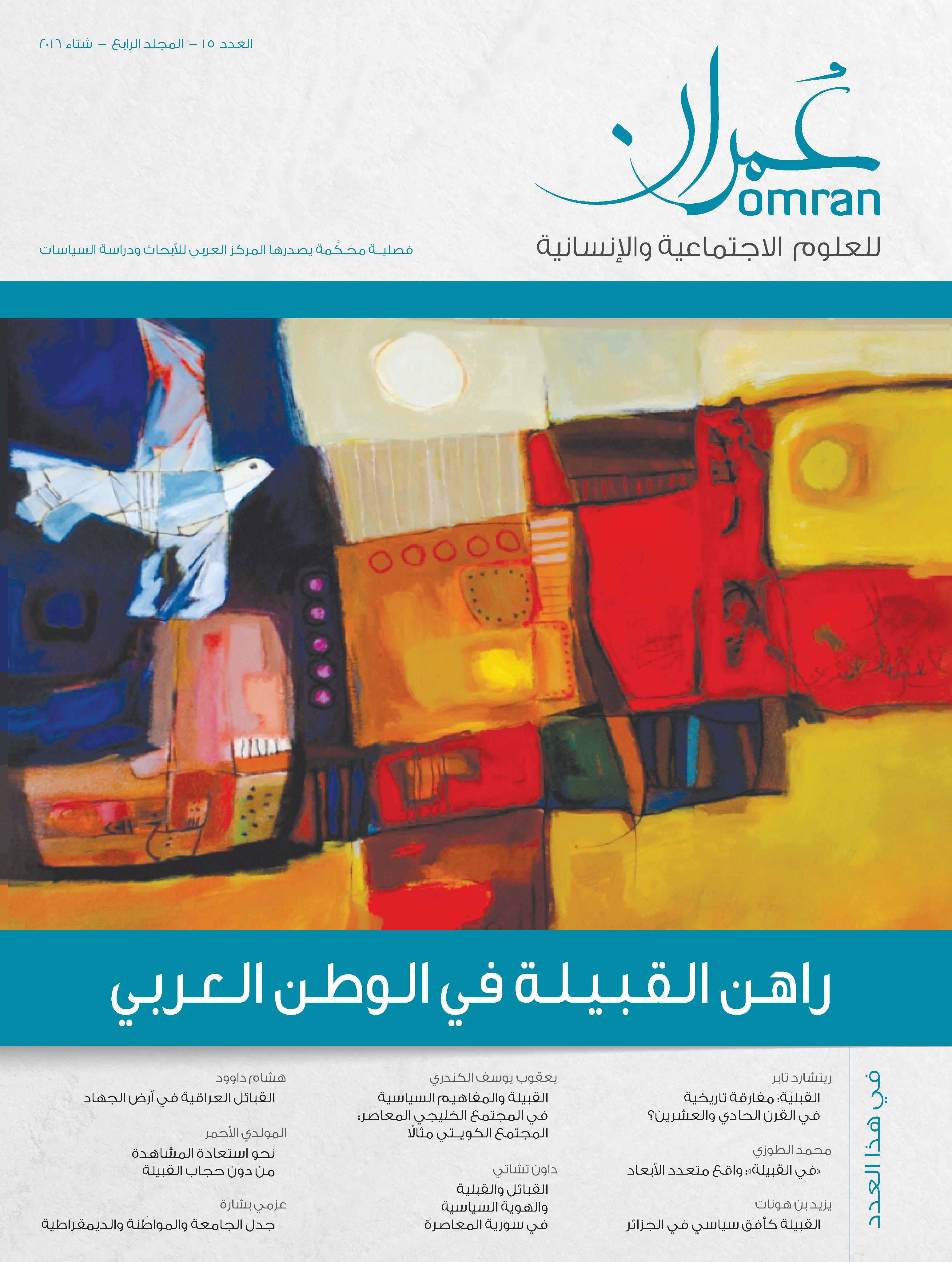
Tribalism - A Twenty-first Century Anachronism?
DOI:
https://doi.org/10.12816/0028985Keywords:
Tribe, State, Social Change, Communications, Afghanistan, TalibanAbstract
Anyone who follows Middle Eastern politics today is aware that tribes and tribalism still play an important role in many countries. Half a century ago, few would have anticipated this. But are today’s tribes the same kind of groups as they were then? Have not the tribes too been changed by the revolutionary changes in military and communications technologies and in the nature of world economics, politics and society since the mid- 20th century? This article surveys not merely these changes, but how the term tribe has always been applied to very different kinds of social groups, living in very different kinds of states. An examination of the contrasting histories of tribes in Afghanistan and Iran shows how, in a situation of conflict and insecurity, tribalism retains important ‘survival value’ for the people, but where the state is strong, tribes are likely to survive, if at all, as tourist attractions.
References
- Richard Tapper, "Introduction," in: Richard Tapper, ed., The Conflict of Tribe and State in Iran and Afghanistan (London: Croom Helm; New York: St. Martin’s Press, 1983), pp. 74-75.
- O. Schell, "Another Tribe without a State," New York Times , 7/9/2003.
- David Berreby, Us and Them: Understanding your Tribal Mind (New York: Little, Brown and Co., 2005).
- Kurt M. Campbell, Derek H. Chollet, "The New Tribalism: Cliques and the Making of U.S. Foreign Policy," Wash- ington Quarterly , vol. 30, no. 1 (Winter 2006-2007), pp. 193-203.
- Norman Pollack , "Race, Religion and the Denial of Class," Counterpunch Weekend Edition (22 August 2014), on the Web: <http://www.counterpunch.org/2014/08/22/race-religion-and-the-denial-of-class/>.
- Amatzia Baram, "Victory in Iraq, One Tribe at a Time," New York Times , 28/10/2003.
- Shoib Najafizada, "Afghan vote reflects ethnic fault lines," Agence France Presse (Website), 26 October 2004.
- Anonymous, Iran Daily, 20 October 2004.
- Rodney Needham, "Polythetic Classification: Convergence and consequences," Man (New Series), vol. 10, no. 3 (September 1975), pp. 349-369.
- لاطاع على أمثلة من إيران وأفغانستان، انظر: Ambiguous Relations: Kin, Class, and Conflict Daniel Bradburd, among Komachi Pastoralists , Smithsonian Series in Ethnographic Inquiry (Washington: Smithsonian Institution Press, 1990); B. Glatzer, "Political Organization of Pashtun Nomads and the State," pp. 212–232, and M. Yapp, "Tribes and states in the Khyber 1838-42," pp. 150-191, in: Tapper, ed., The Conflict of Tribe.
- Richard Tapper, "Change, Cognition and Control: The Reconstruction of Nomadism in Iran," in: C.M. Hann, ed., When History Accelerates: Essays on Rapid Social Change, Complexity, and Creativity (London; Atlantic Highlands, NJ: Athlone Press, 1994), pp. 188-211.
- William Irons, "Nomadism as a Political Adaptation: The Case of the Yomut Turkmen," American Ethnologist , vol. 1, no. 4: Uses of Ethnohistory in Ethnographic Analysis (November 1974), pp. 635-58, and Glatzer, "Political Or- ganization of Pashtun Nomads".
- Richard Tapper, "Golden Tent-Pegs: Settlement and Change among Nomads in Afghan Turkistan," in: Shirin Akin- er, ed., Cultural Change and Continuity in Central Asia (London; New York: Kegan Paul; Central Asia Research Forum, School of Oriental and African Studies, 1991), pp. 198-217.
- Richard Tapper, "Historians, Anthropologists and Tribespeople on Tribe and State Formation in the Middle East," in: Philip S. Khoury and Joseph Kostiner, eds., Tribes and State Formation in the Middle East (Berkeley: University of California Press, 1990), pp. 48-73.
- William Lancaster, The Rwala Bedouin Today , Changing Cultures (Cambridge, [Cambridgeshire]; New York: Cambridge University Press, 1981), pp. 32 ff.
- Richard Tapper, "The Organization of Nomadic Communities in Pastoral Societies of the Middle East," in: L’Equi- pe écologie et anthropologie des sociétés pastorals, ed., Pastoral Production and Society = Production pastorale et société: Proceedings of the International Meeting on Nomadic Pastoralism, Paris 1-3 Dec. 1976 (Cambridge, [Eng.]; New York: Cambridge University Press, 1979), pp. 43-65.
- Philip C. Salzman, "Does Complementary Opposition Exist?," American Anthropologist , vol. 80 (1978), pp. 53‑70.
- <http://onfaith.washingtonpost.com/postglobal/2006/09/what_to_do_with_tribes/all.html>. غير أن السنة الاحقة شهدت صدور مجموعة كبيرة من المقالات التي وقع فيها التنديد بالقبلية بصفتها تمثل "عدوًا حقيقيًا."
- Tapper: "Introduction," and "Historians, Anthropologists and Tribespeople on Tribe".
- Ghulām Ḥusayn Sāʻidī, Tūp, dāstān [The Canon: A Story] ([Tihran: Sāzimān-i Intishārāt-i Ashrafī, 1968]).
- Nancy Tapper, Bartered Brides: Politics, Gender, and Marriage in an Afghan Tribal Society , Cambridge Studies in Social and Cultural Anthropology; 74 (Cambridge [England] ; New York: Cambridge University Press, 1991).
- 2تمكّن بعض مضامين هذه الدراسة من البقاء ليُنشر في المقال التالي وقد اعتمدته في صياغة الفقرات الاحقة: Richard Tapper, "Studying Pathans in Barth’s Shadow," in: Benjamin Hopkins and Magnus Marsden, eds., Beyond Swat: History, Society and Economy along the Afghanistan-Pakistan Frontier (London: C. Hurst, 2013), pp. 221-38.
- Fredrik Barth, Political Leadership among Swat Pathans , Monographs on Social Anthropology; 19 (London: Uni- versity of London, Athlone Press, 1959).
- Thomas H. Johnson and M. Chris Mason, "Understanding the Taliban and Insurgency in Afghanistan," Orbis , vol. 51, no. 1 (Winter 2007), pp. 1–19.
- E.g. the now-defunct, English-language websites: <http://www.ummah.net/taliban/taliban/i-taliban.htm>, and <http://www.taleban.com/taleban.htm>.
- "Understanding Afghan Culture: Analyzing the Taliban Code of Conduct: Reinventing the Layeha," (Program for Culture and Conflict Studies (CCS), Department of National Security Affairs, Naval Postgraduate School, Monterey, CA, 6 August 2009), on the Web: .
- Antonio Giustozzi, ed., Decoding the New Taliban: Insights from the Afghan Field (New 2(انظر على سبيل المثال:York: Columbia University Press, 2009).
- عولج هذا الموضوع وفحص بطريقة مفصّلة، مع الوصول في شأنه إلى خاصات مختلفة، ومثال ذلك: Thomas J. Barfield, Weapons of the not so Weak in Afghanistan: Pashtun Agrarian Structure and Tribal Organization for Times of War and Peace, Agrarian Studies Colloquium series, Hinterlands, Frontiers, Cities and States: Transactions and Identities, Yale University, February 23, 2007, on the Web: <http://www.yale.edu/agrarianstudies/colloqpapers/19barfield.pdf>; Johnson and Mason, "Understanding the Taliban"; Graeme Smith, "Talking to the Taliban," Globe and Mail , 22/3/2008, and Anand Gopal: "The Battle for Afghanistan: Militancy and Conflict in Kandahar," (Counterterrorism Strategy Initiative Policy Paper, New America Foundation, November 2010), and No Good Men Among the Living: America, the Taliban, and the War through Afghan Eyes (New York: Metropolitan Books; Henry Holt and Company, 2014).
- Antonio Giustozzi, Koran, Kalashnikov, and Laptop: The Neo-Taliban Insurgency in Afghanistan (London: C. Hurst, 2007); Joshua Foust, "The Myth of Taliban Tribalism," (Registan, 15/7/2008), on the Web: http://www.registan. net/index.php/2008/07/15/the-myth-of-taliban-tribalism/, and Thomas Ruttig, "How Tribal Are the Taleban?: Afghani- stan’s Largest Insurgent Movement between its Tribal Roots and Islamist Ideology," (AAN Thematic Report; 04/2010, Afghanistan Analysts Network, Kabul, Afghanistan, 2010).
- Mountstuart Elphinstone, An Account of the Kingdom of Caubul, and its Dependencies, in Persia, Tartary, and India; Comprising a View of the Afghaun Nation and a History of the Dooraunee Monarchy , 2 vols., 3 rd ed. (London: Richard Bentley, 1842), vol. 2, book 3: Passim.
- انظر في هذا الصدد ببليوغرافيا الماّ عمر الصادرة عن طالبان في نيسان/أبريل 0152 تتضمن إعانه بفخر انتماءه إلى قبيلة هوتاك: http://shahamat-english.com/index.php/paighamoona/53792-commemorating-the-nineteenth-anniversary-of-the- < historical-gathering-and-selection-of-ameer-ul- >, وببليوغرافيا خلفه الملّ أختر أحمد منصور ولا يُذكر فيها أصول انتمائه إلى قبيلة اسحقزي: <http://www.rferl.org/content/afghanistan-taliban-issues-mansur-biography/27221027.html >.
- Richard Tapper, "Personal Reflections on Anthropology of and in Iran," in: Shahnaz R. Najdmabadi, ed., Concep- tualizing Iranian Anthropology: Past and Present Perspectives (Oxford: [s. n.], 2010), pp. 225-241.
- Tapper, "Change, Cognition and Control".
Downloads
Published
Usage statistics
Issue
Section
License
Copyright (c) 2016 Omran for Social Sciences and Humanities

This work is licensed under a Creative Commons Attribution-NonCommercial 4.0 International License.
