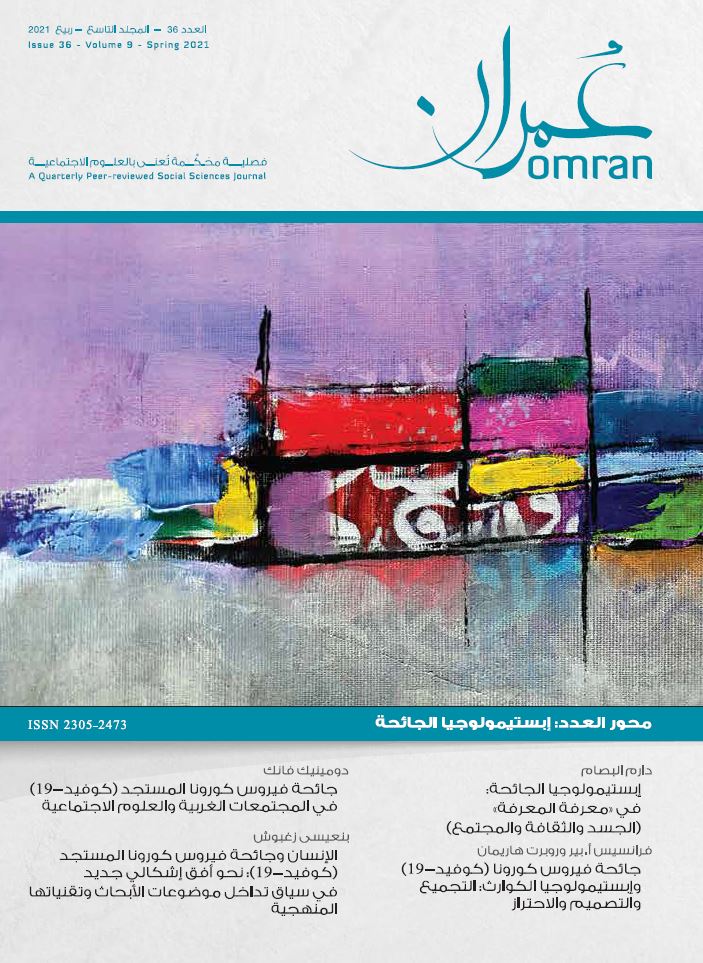
Epistemology of the Pandemic: On “Knowledge of Knowledge” (Body, Culture and Society)
Keywords:
Paradigm, Pandemic, Epistemology, Sociological ImaginationAbstract
The study aims at developing a sociological inquiry guided by reflexive sociology to articulate the COVID19 pandemic, as social phenomena within its complex, adaptive, and societal contexts. The pandemic which has thrown us into a living laboratory requires a different mode of thinking: one that overcomes the epistemological barriers of prior world vision and transcending the dictates of the scientific logic of conventional paradigms. The current historical transformation constitutes a rupture with the core way of paradigm thinking. The virus is a portal, a gateway between one world and the next. As a portal, it forces a re-imagination of the social. The study strives for internal consistency and logical structuring to discuss in sequence: 1) the pandemic and the conventional sociological imagination; 2) Systems modality for bridging the gaps in sociological analysis; 3) building alternative theoretical architecture of pandemic epistemology; and 4) utilizing practice theory of sociology for analysis and interpretation of pandemic epistemology.
References
- Nassim Nicholas Taleb, The Black Swan: The Impact of the Highly Improbable (New York: Penguin Books, 2008 [2007]), pp. xvii–xviii.
- Francis Heylighen, Paul Cilliers & Carlos Gershenson, "Philosophy and Complexity," in: Jan Bogg & Robert Geyer (eds.), Compllexity, Science and Society (London: Routledge, 2007), pp. 117–134.
- Wolf Singer, "Understanding the Brain: How Can Our Intuition Fail so Fundamentally When it Comes to Studying the Organ to Which it Owes Its Existence?", EMBO Reports , no. 8, sup. 1 (July 2007), pp. 16–18.
- Talcott Parsons, The Social System (London: Routledge and Kegan Paul, 1951).
- Andrew Whiten et al., "The Extension of Biology Through Culture," Proceedings of the National Academy of Sciences of the United States of America , vol. 114, no. 30 (July 2017), p. 7775.
- John Scott & Gordon Marshall (eds.), A Dictionary of Sociology, 3 rd ed., revised (Oxford: Oxford University Press,
- Maurizio Meloni, "How Biology Became Social, and What it Means for Social Theory," The Sociological Review , vol. 62, no. 3 (August 2014), p. 598.
- Catherine Panter–Brick & Carol M. Worthman (eds.), Hormones, Health and Behavior: A Socio–Ecological and Lifespan Perspectives (Cambridge: Cambridge University Press, 1999), pp. 6–7.
- التفكير المضاد للنزعة الطبيعية Anti–Naturalism كان واضحًا عند الرواد الأوائل. دوركهايم بإصراره على مكانة "الاجتماعي" كنظام سببي قائم في حد ذاته مع رفض قاطع للمحتمات البيولوجية للحياة الاجتماعية. وكذلك الأمر مع ماكس فيبر الذي جسد من خ لاا فرضياته المنهجية القائمة على الكانتية الجديدة عدم جدوى اعتماد المقاربة المتجذرة في البيولوجيا وإقحامها في العلوم الإنسانية. وأخيرًا مقاربات غرامشي ولوكاش التي تفصل بين الأنثروبولوجيا طبيعية التوجه، وبين معنى الطبيعة البشرية كناتج للعلاقات الاجتماعية المعقدة.
- Ted Benton, "Biology and Social Sciences: Why the Return of the Repressed Should be Given (Causious) Welcome," Sociology , vol. 25, no. 1 (February 1991), pp. 12–13.
- Jonathan H. Turner, Russell K. Schutt & Matcheri S. Keshavan, "Biology and American Sociology, Part II: Developing a Unique Evolutionary Sociology," The American Sociologist , vol. 51, no. 4 (December 2020), p. 471.
- Fritjof Capra & Pier Luigi Luisi, The System View of Life: A Unifying Vision (Cambridge: Cambridge University Press, 2014).
- Omar Lizardo, "Improving Cultural Analysis: Considering Personal Culture in its Declarative and Nondeclarative Modes," American Sociological Review , vol. 82, no. 1 (February 2017), p. 94. ينظر أيضًا: Omar Lizardo, "Pierre Bourdieu as Cognitive Sociologist," in: Wayne H. Brekhus & Gabe Ignatow (eds.), The Oxford Handbook of Cognitive Sociology (New York: Oxford University Press, 2019), pp. 65–80.
- Chris Shilling, "Sociology and the Body: Classical Traditions and New Agendas," The Sociological Review , vol. 55, no. 1–sup (May 2007), pp. 1–18.
- Jonathan H. Turner, "Academic Journals and Sociology’s Big Divide: A Modest but Radical Proposal," The American Sociologist , vol. 47, no. 2–3 (September 2016), p. 295.
- هنالك مقاربات سوسيولوجية عديدة لتحديد وفهم المضمار الاجتماعي، منها مساهمات ماكس فيبر وكرت ليفين وبيرغر ولوكمان، ولكنني أفضل الاعتماد على مقاربات بيار بورديو، وإن كنت لا أتفق كليًا مع تعميماته المطلقة وكما سيتضح ذلك لاحقًا، فإن فكره يبقى الأقرب نسبيًا إلى التفكير النسقي من خلال تركيزه على "سوسيولوجيا الممارسة"، وبشكل يعمل على تجسير الفجوة بين مستويين: "البنية والفاعل الاجتماعي".
- اعتمدنا تسمية Habitus بالمألوف المستبطن على عبد الرحمن بن خلدون، والذي نعدّه أول من جاء بهذا المصطلح، إذ يذكر في مقدمته "الإنسان ابن عوائده ومألوفه، لا ابن طبيعته ومزاجه، فالذي ألف من الأحوال حتى صار خلقًا وملكة وعادة تنزل منزلة الطبيعة والجبلة".
- Peter L. Berger & Thomas Luckmann, The Social Construction of Reality: A Treatise in the Sociology of Knowledge (London: Penguin Books, 1967 [1966]), p. 23.
- Gaston Bachelard, La formation de l’esprit scientifique (Paris: Librairie philosophique J. Vrin, 1993).
- Ayse K. Uskul, "Socio–cultural Aspects of Health and Illness," in: David French et al. (eds.), Health Psychology , 2 nd ed. (Hoboken, NJ: Wiley–Blackwell, 2010), p. 350.
- Pierre Bourdieu, Practical Reason: On the Theory of Action (Cambridge: Polity, 1998), p. 121.
- Diane Reay, "‘It’s All Becoming a Habitus’: Beyond the Habitual Use of Habitus in Educational Research," British Journal of Sociology of Education , vol. 25, no. 4 (September 2004), p. 438.
- خلافنا هنا مع بيار بورديو، هو أننا ننظر إلى المألوف المستبطن ليس باعتباره وظيفية كامنة فبدل من ذلك ننظر إليه من مدخل "التعقّد"، إذ إن ذلك المألوف المستبطن باعتباره تشبيك ا اجتماعيًا تصبح عملية إعادة إنتاجه غير مضمونة في كل الحالات، حيث لا يمكن إبقاؤه "حيًا" باستمرار. آلياته ذاتية بالنسبة إلى النسق، ولا تجعله دائمًا قابلً لمواجهة التعقّدات التي يفرضها المحيط. وعليه فإن الأبعاد المختلفة للتواصل تتزاحم في عملية انتقاء السلوك التكيفي، مما ينتج أحيانًا إعادة تموضع في شكل قناعات أو سلوك بازغ إلى حد التخلي الكلي عن قيم المألوف المستبطن.
- Marcel Mauss, "Techniques of the Body," Economy and Society , vol. 2, no. 1 (1973), pp. 70–88.
- Darim Al–Basam, "The Coronavirus: Sociology of a Pandemic," Gulf Times , 21/3/2020, accessed on 21/3/2021, at: https://bit.ly/3w6mHqA
- Mark Schaller, "The Behavioral Immune System and the Psychology of Human Sociality," Philosophical Transactions of the Royal Society B: Biological Sciences , vol. 366, no. 1583 (December 2011), p. 3419.
- Clifford Geertz, The Interpretation of Cultures , Robert Darnton (Fore.), 3 rd ed. (New York: Basic Books, 2017).
- Darim Al–Basam, "Coping with the Pandemic," Gulf Times , 20/4/2020, accessed on 28/3/2021, at: https://bit.ly/2PcTN7z
- Jay L. Garfield, "Why There is No Self: A Buddhist View of the West," IAI News , 21/2/2018, accessed on 28/3/2021, at: https://bit.ly/3cv9wb6
- Harry C. Triandis, Individualism and Collectivism New York/ London: Routledge, 1995), p. 23.
- Mason Durie, "Maori Perspectives on Health and Illness," in: John Spicer, Andrew Trlin & Jo Ann Walton (eds.), Social Dimensions of Health and Disease: New Zealand Perspectives (Palmerston North: Dunmore Press 1994), p. 198.
- Sama Kubba, "The Importance of Culture in Societal Responses to COVID 19," Harvard Political Review , 14/10/2020, accessed on 28/3/2021, at: https://bit.ly/3syRDxm
- Al–Basam, "Coping with the Pandemic."
- Jay Garfield, "Beyond Catastrophe," IAI News , no. 87, accessed on 28/3/2021, at: https://bit.ly/3lZL1FT تلازم متفرد للسياسة بعلاقتها بالحياة والسلطة في علاقتها بالحياة يكون قد غاب عن تحليلات ميشال فوكو. ولو كان قد تناوله في حفرياته لأدخل التحوير على العديد من فرضياته المبنية أساسًا لمناقشة المجتمع الليبرالي الذي أحدث القطيعة مع الموروث، وأصبحت "الحداثة" في نظره هي "الحياة" في معناها "العقلاني". في الثقافات الجماعية التي نهضت في وقت قياسي الموروث كان أساس المعمار الحداثي.
- Al–Basam, "Coping with the Pandemic."
- Glenn Adams, "The Cultural Grounding of Personal Relationship: Enemyship in North American and West African Worlds," Journal of Personality and Social Psychology , vol. 88, no. 6 (June 2005), pp. 948–968.
- Daphna Oyserman & Spike W.S. Lee, "Does Culture Influence What and How We Think? Effects of Priming Individualism and Collectivism," Psychological Bulletin , vol. 134, no. 2 (March 2008), p. 312.
- Darim Al–Basam, "Is the Invisible Hand Becoming Visible Again?," Gulf Times , 4/4/2020, accessed on 28/3/2021, at: https://bit.ly/2O0ySnz
Downloads
Published
Usage statistics
Issue
Section
License
Copyright (c) 2021 Omran for Social Sciences and Humanities

This work is licensed under a Creative Commons Attribution-NonCommercial 4.0 International License.
