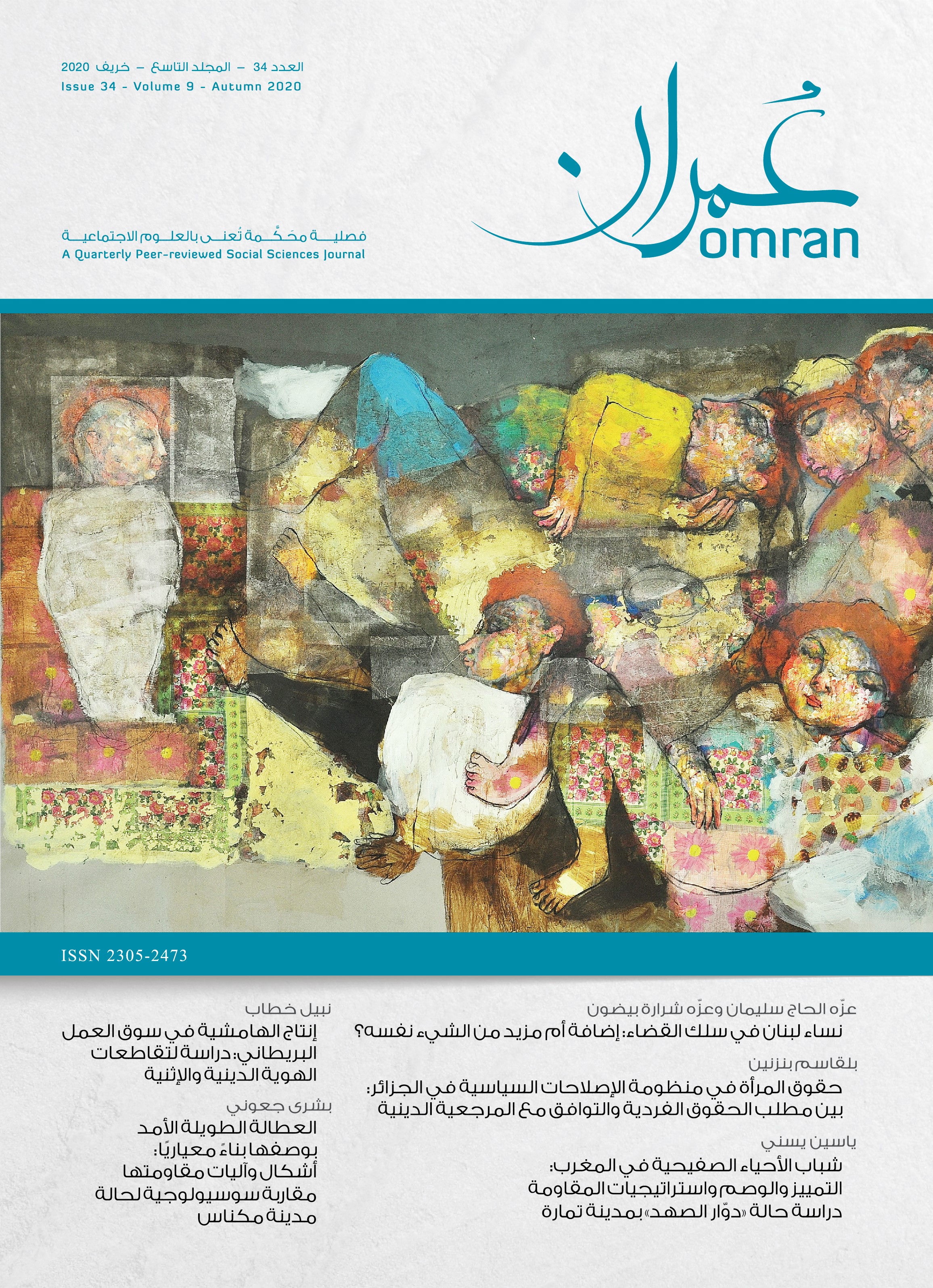
Shanty Town Youth in Morocco: Discrimination, Stigmatization, and Resistance Strategies (A Case Study of the "Duwar al–Sehd" in Temara City)
DOI:
https://doi.org/10.31430/ovix4842Keywords:
Stigma, Slums, Youth, Labeling SpaceAbstract
This paper aims to highlight the processes that produce spatial stigma in a poor neighborhood in Morocco, focusing on how spatial differences between a "shanty town" and other neighborhoods are constructed at the urban level. The process of stigmatization of shanty town areas becomes a social conviction that binds shanty town youth to stereotypes that set firm boundaries between "us" (ordinary youth), and "them" (shanty town youth), giving rise to multiple forms of social discrimination and stigma. Since representation of the other always entails an act of prevailing, this study also focuses on analyzing power relations. Finally, we look at forms of resistance adopted by the youth of the slums to confront labeling, stigmatization and socio–spatial discrimination.
References
- "الحي الصفيحي" أو "البَرّاكات" أو "البراريك" (جمع "بَرّاكَة"، وهي مَغْرَبة لكلمة Baraque في اللغة الفرنسية، التي تعني البناء الموقّت، المبني بالألواح أو السكن المبني بشكلٍ سيئ وغير صلب)، هو منطقةٌ سكنية عشوائية، ظهرت أول مرة في المغرب في عشرينيات القرن الماضي، في القرب من المركز الحراري في منطقة الصخور السوداء، مدينة الدار البيضاء. وبُنيت هذه "المنازل العشوائية" من بقايا مواد منوعة، البلاستيك والخشب والقصدير، وكان صانعو "البَرّاكات" الأوائل عمّال في أوراش بناء المركز الحراري في الدار البيضاء، الذين اختاروا نصب منازلهم البسيطة في القرب من ورشة عملهم المسماة آنذاك Carrière (وتعني "مقلع" أو "محجر")؛ ومن هنا ستأتي أول تسمية لأول حيٍّ صفيحي في المغرب Centrale Carrière، وهي تسميةٌ ستتمّ مَغْرَبتها لتعطي "كَرْيان سُنطْرال"، وهي من أشهر دور الصفيح التي عرفها المغرب. ولمزيد من التفصيل، يُنظر: Raffaele Cattedra, "Bidonville: Paradigme et réalité refoulée de la ville du XXe siècle," in: Jean–Charles Depaule, Les mots de la stigmatisation urbaine (Paris: Éditions de la Maison des sciences de l’homme, Éditions Unesco, 2006), pp. 123–163.
- Erving Goffman, Stigmate: Les usages sociaux des handicaps , traduit de l’anglais par Alain Kihm, collection: Le sens commun (Paris: Éditions de Minuit, [1963] 1975).
- بروس ج. لينك وجوك فيلان، "مفهمة الوصمة"، ترجمة ثائر ديب، مجلة عمران، العدد 31 (شتاء 2020)، ص.168–141
- Loïc Wacquant, Parias urbains: Ghetto, banlieues, etat (Paris: La découverte, 2006).
- يدلّمنح هذه الأحياء العشوائية أسماء إدارية جديدة تخفي حقيقتها الصفيحية على تحوّلها إلى مجالٍيتمتّع باعترافٍ وشرعية من لدُن السلطات المحلية، على الرغم من طبيعتها "الموقّتة"؛ وبتعبيرٍ آخر، إنها "الموقّت الدائم" dure qui provisoire Le.
- لأنّ المعاناة مضاعفة peine Double بالنسبة إلى ساكنة هذه الأحياء الصفيحية، فسرعان ما يتحول "دوّار الصهد" صيفًا إلى "دوّار البرد" شتاءً، كما قال لنا أحد المستجيبين الصفيحيين ساخرًا، بسبب طبيعة البناء غير الصلب وثقوب القصدير التي تتسرّب منها قطرات المطر. المصدر: الباحث.
- لهذه "البراريك" بابان، إما لكون مالكها قد قسّمها نصفين، وباع نصفًا منها، أو لأنّ أحد أبنائه كوّن أسرةً واستقلّ عن عائلته مجاليًا. وفي الأحوال كلها، الغاية من تقسيم المسكن الصفيحي وتحويله إلى دورين، ومطالبة السلطات المحلية لوزارة الداخلية بتحيين معلوماتها الإحصائية، هي الاستفادة من مسكنين في حال جرت إعادة الإسكان؛ وهذا ما يؤكّده انتشار كلمة "مكرّر" التي تلي الكثير من الأرقام المكتوبة على أبواب المسكن الصفيحي، حيث نجد مثلً مسكنًا صفيحيًا رقمه 23، وإلى جانبه مسكن آخر كتب عليه من طرف مالكه 23" مكرّر". وتحكي مقابلات المستجيبين عن استراتيجية تقسيم المسكن الصفيحي التي أصبحت توسعتها مسألةً ضرورية بعد تقزيمها، ويتمّ ذلك في الكثير من الأحيان على حساب الأزقة الفاصلة بين المساكن الصفيحية.
- Abderrahmane Rachik, Ville et pouvoirs au Maroc (Casablanca: Editions Afrique Orient, 1995); Réda Benkirane, Bidonville et recasement: Modes de vie à Karyan Ben M’sik (Casablanca) (Genève: Institut Universitaire d’Études du Développement/ Université de Genève, 1993).
- Lamia Zaki, "L’action publique au bidonville: L’état entre gestion par le manque, ‘éradication’ des kariens et accompagnement social des habitants," in: L’Année du Maghreb II , sous la direction de Karima Dirèche–Slimani, Dossier: Femmes, famille et droit (2005–2006), p. 307.
- Lamia Zaki, "La négociation d’une identité stigmatisée: Les modes de gestion du discrédit au bidonville," in: Villes reélles, villes projetées: Fabrication de la ville au Maghreb, Sous la direction de Nadir Boumaza (Paris: Maisoneuve et Larose, 2006), p. 123.
- الطوبونيمات جمع طوبونيم؛ هي تعريب للكلمة الفرنسية toponyme، ويمكن ترجمتها أيضًا ب "الاسم الجغرافي."
- المركز الحراري في حي الصخور السوداء في الدار البيضاء، كما أشرنا إلى ذلك.
- بيير بورديو، "في تأثيرات المكان"، في: بيير بورديو (إشراف)، بؤس العالم، ج 1: رغبة الإصلاح، ترجمة محمد صبح، مراجعة وتقديم فيصل دراج (دمشق: دار كنعان للدراسات والنشر، 2010)، ص.243
- Lamia Zaki, "De la représentation du pouvoir aux pratiques atomisées d’appropriation de l’espace dans les bidonvilles marocains: L’omniprésence de la référence au(x) droit(s)," in: Pierre–Robert Baduel (dir.), Chantiers et défis de la recherche sur le Maghreb contemporain (Tunis: IRMC; Paris: Karthala, 2009), p. 371.
- Zaki, "De la négociation...," p. 126.
- عزّزت أحداث 16 أيار/ مايو 2003 الإرهابية في الدار البيضاء هذه الصور النمطية القدحية الدارجة في المجال التداولي المغربي لوصم الحي الصفيحي، حيث ألحقت بها بشدّة وصمَي "التطرّف الديني" و"الإرهاب"، يُنظر في ذلك: Zaki, "L’action publique au bidonville," p. 304.
- لينك وفيلان، ص.149
- لينك وفيلان، ص.151
- Marcelo Otero, "Repenser les problèmes sociaux: Le passage nécessaire des populations ‘problématiques’ aux dimensions ‘problématisées’," SociologieS , 15/11/2012, accessed on 5/4/2020, at: https://bit.ly/3ag1D4K
- Jacques Donzelot, Quand la ville se défait: Quelle politique face à la crise des banlieues? (Paris: Éditions du Seuil,
- Sune Qvotrup Jensen & Ann–Dorte Christensen, "Territorial Stigmatization and Local Belonging: A Study of the Danish Neighbourhood Aalborg East," City , vol. 16, no. 1–2 (2012), p. 74.
- Zaki, "La négociation," p. 125.
- لينك وفيلان، ص.156
- Pierre Bourdieu, La distinction: Critique sociale du jugement (Paris: Editions de Minuit, 1979).
- Wacquant, p. 180.
- Abdelmajid Arrif, "Variations spatiales du privé et du public à travers les exemples de Ben M’sik et de Hay Moulay Rachid à Casablanca," Les Cahiers d’Urbama , no. 13 (1997), p. 76.
- عبد الرحمن المالكي، الثقافة والمجال: دراسة في سوسيولوجيا التحضر والهجرة في المغرب (فاس: منشورات مختبر سوسيولوجيا التنمية الاجتماعية، 2015)، ص.32
- "المجال التخومي" Limitrophe Espace هو المجال الحدودي بين المجال الخاص (المنزل)، والمجال العام (الشارع)، كعتبة المنزل مثً أو "الدّرب". مجالٌ يوجد بين العام والخاص، ويفصل بينهما. فنافذة المسكن الصفيحي وأبوابه، هي بمنزلة مجالات تخومية بهذا المعنى. ويحيل المجال التخومي إلى لعبة معقّدة بين الداخل (المغلق) والخارج (المفتوح)؛ إذ تفرض خاصية المجال التخومي شبه العمومي، في غالب الأحيان، الاشتراك والتدبير الجماعي بين أسرٍ متجاورة، بل يمكن أن يكون أيضًا موضوع نزاع مستمر. إنه المكان الذي يشهد على العلاقة بين الأسرة وعالمها الخارجي، يُنظر: Françoise Navez–Bouchanine, "L’espace limitrophe: Entre le privé et le public, un no man’s land? La pratique urbaine au Maroc," Espaces et Sociétés , numéro spécial intitulé, Espace public et complexité sociale, no. 62–63 (1991), pp. 135–158.
- Ibid., pp. 75–76.
- لينك وفيلان، ص.153
- Eva van Kempen, "‘Poverty Pockets’" and Social Exclusion: On the Role of Place in Shaping Social Inequality," in: Peter Marcuse & Ronald van Kempen (eds.), Of States and Cities: The Partitioning of Urban Space (Oxford: Oxford University Press, 2002), pp. 240–257.
- لينك وفيلان، ص.153
- كانت أغلبية المهاجمين تنحدر من الأحياء الصفيحية "كاريان طوما" و"دوار السكويلة" في منطقة سيدي مومن.
- Lamia Zaki, "Après le bidonville: Les relogés de Lahjajma (Casablanca): Entre déni et nostalgie," in: Sylvie Mazzella (dir.), L’enseignement supérieur dans la mondialisation libérale: Une comparaison libérale (Maghreb, Afrique, Canada, France) (Tunis: Institut de recherche sur le Maghreb contemporain, 2007), pp. 277–294.
- Francesco Vacchiano, "Du karian au hreg et retour: Spatialité subalterne et désir d’émigration au Maroc," in: Thomas Fouquet & Odile Georg (eds.), Citadinités subalternes en Afrique (Paris: Editions Khartala, 2018), p. 160.
- لينك وفيلان، ص.157
- المرجع نفسه، ص.151
- Jean–Michel Belorgey, "Préface," in: Dan Ferrand–Bechmann (ed.), Pauvres et mal logés: Les enjeux sociaux de l’habitat , Collection: Habitat et Sociétés (Paris: Editions L’Harmattan, 1990), p. 12.
- يتمّ ترحيل ساكنة أغلبية الأحياء الصفيحية في مدينة تمارة، بعيدًا عن مركز المدينة إلى هوامشها الحضرية التي كانت إلى عهدٍ قريب أراضيَ ف حااية، كما هي الحال بالنسبة إلى جماعة "عين عودة" التي تفتقد البنية التحتية والخدمات الاجتماعية الكافية لاستقبال هذه الساكنة الجديدة.
- Françoise Navez–Bouchanine, "Espaces publics des villes marocaines," Les Annales de la Recherche Urbaine , no. 57–58 (Décembre 1992–Mars 1993), pp. 185–190.
- غالبًا ما تتواصل الدولة مع الأحياء الصفيحية بشكلٍ أساس من خلال جهازها القمعي، خصوصًا الشرطة، أو القوات المساعدة التي تهيمن على المجال الحضري في الكثير من المدن المغربية. لكن قليلة هي الدراسات التي اهتمت بدراسة العلاقة القائمة بين شباب الأحياء الصفيحية والشرطة في المغرب، مع العلم أنّ الشرطة، إلى جانب أعوان السلطة ("لمقدمين")، هم من بين أهم المؤسسات التي تتفاعل مع شباب الأحياء الفقيرة، في الغالب بشكلٍ عقابي وسلبي.
- فضلً عن ضروب المعاناة المادية والمعنوية الأخرى التي تعانيها الساكنة المُرحَّلة، مثل فقدان الرابط الاجتماعي "السّاخن." يُنظر في ذلك: عبد الرحمن رشيق، "الإيكولوجيا العمرانية وعلاقات الجوار والهاجس الأمني: مدينة الدار البيضاء نموذجًا"، في: دفاتر السفير العربي – 2019، ملف "العشوائيات"، السفير العربي/ مؤسسة روزا لكسمبورغ – مكتب شمال أفريقيا (2019)، ص –71 77، شوهد في 2020/4/5، في: https://bit.ly/2KlG7kp
- جرى إط قاا البرنامج الوطني "مدن من دون صفيح" في عام 2004، في أعقاب تفجيرات 16 أيار/ مايو 2003 في الدار البيضاء. واستهدف البرنامج القضاء على السكن الصفيحي في 85 مدينة مغربية. غير أنّ الواقع يُظهر فشل هذا البرنامج، فعلى سبيل المثال، لا تزال توجد إلى غاية نهاية عام 2019، وبحسب بيانات وزارة الإسكان، أكثر من 20 ألف "برّاكة" في مدينة الصخيرات– تمارة، وهي ثاني تجمّعٍ صفيحي في المغرب بعد العاصمة الاقتصادية الدار البيضاء بأكثر من 36 ألف "برّاكة."
- هو ما يسمح بالقول إنّ الدولة هي في الآن ذاته غائبة عن "الكريان"، لأنها ترفض منحه أبسط التجهيزات والخدمات الأساسية (الماء الصالح للشرب، الكهرباء، الصرف الصحي، جمع النفايات، النقل العمومي، وما إلى ذلك)، وهي حاضرة أيضًا، لأنها تسعى للحفاظ على سلطتها وعلى هشاشة المكان. وهو ما تعبّر عنه لمياء زكي بقولها إنّ السلطات تنفّذ سياسة "الإدارة بالخصاص" manque le par Gestion، و"الوجود بالغياب" Présence par l’absence، ينظر: Zaki, "L’action publique au bidonville," p. 306.
- Fabien Truong, "La foudre et le tonnerre: Discrimination ou stigmatisation territoriale? La ‘discrimination territoriale’ au crible ethnographique des trajectoires scolaires en Seine–Saint–Denis," in: Claire Hancock et al. (dir.), Discriminations territoriales: Entre interpellation politique et sentiments d’injustice des habitants (Paris: L’Oeil d’Or, 2016), pp. 195–210.
- Zaki, "La négociation," p. 117.
- Vacchiano, p. 162.
- Cattedra, p. 31. المصدر: الباحث.
- ومع ذلك، لا يمكن أن تمنع السلطات، بشكلٍ كامل، محاولات ساكنة الأحياء الصفيحية تخصيص المكان، التي تتضاعف بشكلٍ شبه يومي في ما يسميه آصف بيات "التعدّي الصامت للمألوف" Ordinary the of Encroachment Quiet The. ينظر في ذلك: Assef Bayat, Sreet Politics, Poor People’s Movements in Iran (New York: Columbia University Press, 1997); Assef Bayat, Life as Politics: How Ordinary People change the Middle East , 2 nd ed. (Palo Alto, C A: Stanford University Press,
- Zaki, "L’action publique au bidonville."
- يمكن وضع هذا الصراع ضمن المنظور الأوسع للعدالة الاجتماعية في إطار "الصراع من أجل الاعتراف"، بمفهوم نانسي فرازر التي تربط الاعتراف بإعادة التوزيع وبالحقوق السوسيو–اقتصادية، أكثر منه بمفهوم أكسيل هونيث، يُنظر: Nancy Fraser, Qu’est–ce que la justice sociale? Reconnaissance et redistribution (Paris: La Découverte, 2005); Nancy Fraser, "Recognition without Ethic?" Theory, Culture and Society , vol. 18, no. 2–3 (2001), pp. 21–42; Axel Honneth, La lutte pour la reconnaissance (Paris: Editions du Cerf, [1992] 2000); Axel Honneth, La société du mépris: Vers une nouvelle théorie critique (Paris: La Découverte 2006).
- Loïc Wacquant, Tom Slater & Virgílio Borges Pereira, "Territorial Stigmatization in Action," Environment and Planning A , vol. 46, no. 6 (2014), p. 1270.
Citing articles in ACRPS journals (1)
- (2022) نمو سكان المناطق الحضرية في العراق وآثاره الاجتماعية والاقتصادية. https://doi.org/10.31430/qadz4986
Citing articles from external sources (1)
- يعقوب أمكاسو (2026) الشباب والوصم المجالي في الأحياء الصفيحية بالمغرب. https://doi.org/10.48185/sjhss.v2i6.1984
Sources: Crossref Cited-by, and the references (notes and reference lists) of the Center's own articles
Downloads
Published
Usage statistics
Issue
Section
License
Copyright (c) 2020 Omran for Social Sciences and Humanities

This work is licensed under a Creative Commons Attribution-NonCommercial 4.0 International License.