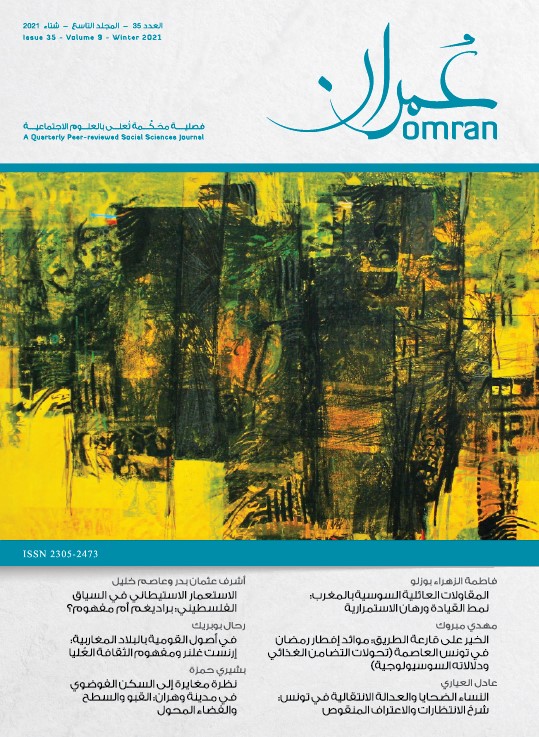
On the Origins of Nationalism in the Societies of the Maghreb: Ernest Guellner and the High Culture Concept
DOI:
https://doi.org/10.31430/obmu8934Keywords:
Anthropology of Islam, Nation, Nationalism, Salafi Reformist Movement, High CultureAbstract
This study outlines Ernest Gellner’s (1925–1995) anthropological conceptualisation of the Nation and Nationalism. It focuses on the notion of high culture pertaining to the study of Islam, contending that the emergence of nationalism and the Salafi reformist movement are the outcome of the same process. The study demonstrates the limits of this notion in studying the “Muslim society” as an essentialist conception of Islam as well as a transposition of a ready–made model. In his analysis of nationalism in Maghrebi societies, Gellner’s holistic approach results in some fundamental contradictions and may not stand the test of the historical experiences of these countries, especially in the case of Morocco.
References
- Ernest Gellner, Muslim Society (Cambridge: Cambridge University Press, 1981); إرنست غلنر، مجتمع مسلم، ترجمة أبو بكر أحمد باقادر (بيروت: دار المدار الإسلامي،.)2005
- Ernest Gellner, Saints of the Atlas (London: Weidenfeld & Nicolson, 1969).
- Ernest Gellner, Nations et nationalisme , Benedicte Pineau (trad.) (Paris: Payot, 1989).
- Ernest Gellner, Postmodernism: Reason and Religion (London: Routledge, 1992).
- Ernest Gellner, Conditions of Liberty: Civil Society and its Rivals (London: Penguin Press, 1994).
- Ernest Gellner, Nationalism (London: Weidenfeld & Nicholson, 1997).
- كانت في المغرب بداية تجربة أنثروبولوجية بالنسبة إلى غلنر، انطلقت من جبال الأطلس المتوسط الكبير، وشملت كل مناطق العالم الإس مااي. وعلى الرغم من غزارة فكره وغناه وتعدده، فإنه كان ضحية كتابه صلحاء الأطلسالذي طبق عليه النظرية الانقسامية، بل ضحية سياق علمي في الأنثروبولوجيا تجاوز الوظيفية الانقسامية التي عرفت أوجها في أربعينيات القرن الماضي. كانت الستينيات عصر النظريات البنيوية والماركسية والدينامية والتأويلية. ظل اسمه مرادفًا لدى الباحثين المغاربيين لكتاب صلحاء الأطلسوالانقسامية وقزّموا مساهماته الفكرية في حقول شتى تتمحور حول العلوم الاجتماعية والفلسفة والفكر السياسي، وهي كلها اجتهادات فكرية كتبها بعد صلحاء الأطلس.
- حتى لا نُقحم القارئ في تعريفات إبستيمولوجية وفلسفية، فإننا نستعمل مفهوم براديغم بمعنى النموذج Modèle المتكامل والمنسجم الذي يوظفه الباحث في تأويل المعطيات بحسب جهاز نظري ومفاهيمي معيّن. انتشر استعمال براديغم منذ بداية السبعينيات بعد صدور كتاب توماس صامويل كوهن Kuhn Samuel Thomas بنية الثورات العلمية، ونحيل على عمله هذا لمن يريد أن يتوسع في مختلف التعاريف التي أعطيت لمفهوم البراديغم: Thomas Kuhn, La structure des révolutions scientifiques (Paris: Flammarion, 1972).
- Gellner, Nations et nationalisme.
- لأسباب إجرائية ترجمنا مفهوم Nationalisme بالقومية، بدل من الوطنية، لأن المقابل الدقيق للوطنية بالفرنسية هو عبارة Patriotisme، وهي مشتقة من كلمة Patrie التي تعني الوطن. نعلم أن من الشائع في منطقة المغارب هو مفهوم الوطنية، وهو المعادل للقومية في الوسط العلمي المشرقي، لكن وجدنا من الأنسب استخدام مفهوم القومية بدلً من الوطنية في سياقات معيّنة، وسنستخدم مفهوم الوطنية أحيانًا حين الحديث عن "الحركة الوطنية" في المغرب، لأن تلك الحركة تسمي نفسها هكذا.
- Gellner, Nations et nationalisme , p. 19.
- Ernest Gellner, Encounters with Nationalism (London: Blackwell, 1994), p. VII.
- Gellner, Postmodernism , p. 4
- Gellner, Muslim Society , p. 170.
- Michael Lessnoff, "Islam, Modernity and Science," in: Sinisa Malesevic & Mark Haugaard (eds.), Gellner and Contemporary Social Thought (Cambridge: Cambridge University Press, 2007), p. 190.
- Gellner, Postmodernism , p. 19.
- Ernest Gellner, "The Unknown Apollo of Biskra: The Social Base of Algerian Puritanism," in: Gellner, Muslim Society , pp. 149–173.
- Ernest Gellner, "Studies on North Africa: Introduction to a New Series," Government and Opposition , vol. 26, no. 3 (1991), p. 329.
- نشر مثلً مقالتين: "القداسة والتطهرية والعلمانية والوطنية في شمال أفريقيا: دراسة حالة" في عام 1963، وأعاد نشرها في كتابه مجتمع مسلم، الفصل الخامس؛ Ernest Gellner, "Sanctity, Puritanism, Secularisation and Nationalism in North Africa: A Case Study," Archives de Sociologie des Religions , no. 15 (1963), pp. 71–86. ومقالة "أبولو بسكرة المجهول: الأساس الاجتماعي للسلفية الجزائرية" في عام 1974؛ Gellner, "The Unknown Apollo of Biskra," pp. 277–310. قبل أن يعيد نشرها في مجتمع مسلم، الفصل السادس.
- مقالة "البنطلون في تونس" التي نشرها في عام 1979، وأعاد نشرها في مجتمع مسلم، الفصل السابع. Ernest Gellner, "Trousers in Tunisia," Middle Eastern Studies , vol. 14, no. 1 (1979), pp. 127–130.
- Gellner, Mu s lim Society , p. 148.
- Ernest Gellner, "Le nationalisme en apesanteur," Terrain , vol. 17 (1991), pp. 7–16.
- Gellner, Nations et nationalisme , p. 113.
- Ernest Gellner, "Flux and Reflux in the Faith of Men," in: Gellner, Muslim Society , pp. 1–85.
- Ernest Gellner, "Cohesion and Identity: The Maghreb from Ibn Khaldun to Emile Durkheim," Government and Opposition , vol. 10, no. 2 (1975), pp. 203–218.
- سبق لغلنر أن تناول عناصر هذه النظرية في مقال نُشر في عام 1969، قبل أن يعود إليها في كتابه مجتمع مسلم، ينظر: Ernest Gellner, "Swing Pendulum Theory of Islam," in: Roland Robertson (ed.), Sociology of Religion: Selected Readings (London: Penguin, 1969).
- Gellner, Nations et nationalisme , p. 114
- Gellner, Muslim Society , p. 96.
- Gellner, Nations et nationalisme , p. 115.
- Gellner, Muslim Society , p. 99.
- Gellner, Nationalism , pp. 83–84.
- نتبنى هنا "الحركة الوطنية" بدلً من "القومية"، لأن هذه الحركة كانت تسمي نفسها هكذا في أدبياتها.
- ما يعرف بالظهير البربري هو قانون أصدرته إدارة الاستعمار الفرنسي من أجل محافظة القبائل الأمازيغية على تطبيق أعرافها القبلية، بدل من القانون المستمد من التشريع الإس مااي. اعتُبر مشروعًا تقسيميًا إثنيًا، يهدف إلى عزل جزء من ساكنة المغرب المتمثلة في القبائل الأمازيغية عن بقية مكوّنات الشعب المغربي وتفريق العرب عن البربر، واستهداف الإسلام.
- جورج سبيلمان، المغرب: من الحماية إلى الاستقال (1912–1956)، ترجمة محمد المؤيد (الدار البيضاء: أمل، 2014)، ص.74
- Daniel Rivet, Histoire du Maroc: De Moulay Idrîs à Mohammed VI (Paris: Fayard, 2012), p. 315.
- Abdallah Laroui, La crise des intellectuels arabes: Traditionalisme ou historicisme? (Paris: François Maspero, 1974), p. 51.
- عبد الله العروي، استبانة (الدار البيضاء: المركز الثقافي للكتاب، 2016)، ص.67
- المرجع نفسه، ص.68
- Gellner, Muslim Society , p. 5.
- Gellner, "Le nationalisme en apesanteur".
- Dale F. Eickelman, "From Here to Modernity: Ernest Gellner on Nationalism and Islamic Fundamentalism," in: John A. Hall (ed.), The State of the Nation: Ernest Gellner and the Theory of Nationalism (Cambridge: Cambridge University Press, 1998), p. 258.
- Gellner, Nationalism.
- Ernest Gellner, "La religion et le profane: Islam, nationalisme et marxisme au XXe siècle," Commentaire , vol. 22, no. 85 (1999), p. 111.
- Gellner, Postmodernism.
- Gellner, "La religion et le profane," pp. 106–112
- Ernest Gellner, Plough, Sword and Book: The Structure of Human History (Chicago: University of Chicago Press,
- John Davis, "An Interview with Ernest Gellner," Current Anthropology , vol. 32, no. 1 (1991), p. 83.
- Talal Asad, "The Idea of an Anthropology of Islam," Qui Parle , vol. 17, no. 2 (2009), pp. 1–30.
Downloads
Published
Usage statistics
Issue
Section
License
Copyright (c) 2021 Omran for Social Sciences and Humanities

This work is licensed under a Creative Commons Attribution-NonCommercial 4.0 International License.
