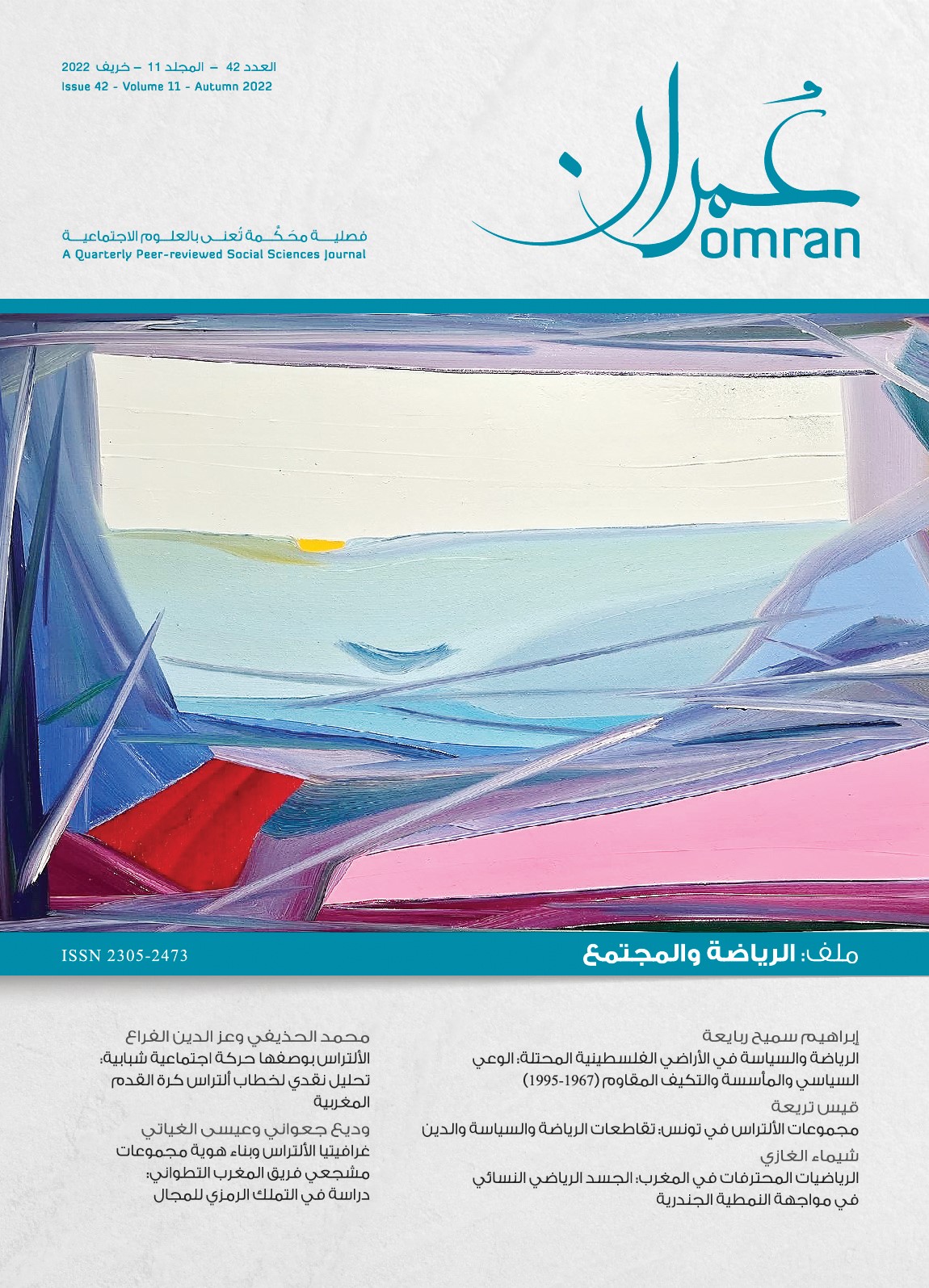
Female Professional Athletes in Morocco: Confronting Gender Stereotypes
DOI:
https://doi.org/10.31430/acdw9592Keywords:
Female Body, Athletic Body, Gender Identity, Gender Performance, MoroccoAbstract
This work argues that the physical experience of an athletic woman is shaped by the arduous labours of her gender identity construction. Furthermore, the features of this experience are created by the social and cultural environment, which depicts the female body with a specific template and inevitable roles. Secondly, the female body's penetration of a field that assumes strength, toughness, and ‘virility,’ leads to a collision with social representations that stigmatise the woman's body and the idea that she is somehow incorrectly performing her gender, leaving her in a state of constant negotiation with her body as both a biological female and as a performance athlete. The study seeks to discern the foundations of this tension experienced by Moroccan female athletes, as a magnified dimension of the cultural transformations and contradictions that Moroccan society as a whole is currently undergoing.
References
- Michel Foucault, Le souci de soi (Paris: Gallimard, 1984).
- نذكر من بينها: Michel Foucault, The History of Sexuality: An Introduction , Robert Hurely (trans.) (New York: Vintage, 1979); Joan Riviere, "Womanliness as a Masquerade," International Journal of Psycho–analysis , vol. 9 (1929), pp. 209–220; Luce Irigaray, Ce sexe qui n’en est pas un (Paris: Editions de Minuit, 1977); Julia Kristeva, Pouvoirs de l’horreur: Essai sur l’abjection (Paris: Seuil, 1980); Monique Wittig, The Lesbian Body , Peter Owen (trans.) (New York: Avon, 1973).
- التقاطعية نظرية نسوية في الأساس، عُرفت مع الباحثة القانونية النسوية كيمبرلي كرينشو Crenshaw Kimberlé، في محاولة لتحليل تجارب النساء الملونات، وذلك انط قااًا من إبراز التقاطع بين التفرقة العرقية والجندرية التي تخضع لها هؤلاء النساء. وتطورت النظرية فيما بعد لتشمل جميع أشكال القهر والهيمنة والتمييز وأنظمتها وتقاطعها مع الجندر والإثنية واللون والعرق والطبقة والتوجه الجنسي.
- خلود السباعي، الجسد الأنثوي وهوية الجندر (الرباط: دار القلم للطباعة والنشر والتوزيع، 2007)، ص.4
- بيار بورديو، الهيمنة الذكورية، ترجمة سلمان قعفراني (بيروت: المنظمة العربية للترجمة، 2009)، ص.29
- سيمون دي بوفوار، الجنس الآخر، ترجمة ندى حداد (عمّان: الدار الأهلية للنشر والتوزيع، 2008)، ص.19
- جوديت بتلر، "الأفعال الأدائية وتكوين الجندر: مقالة في الظاهراتية والنظرية النسوية"، ترجمة ثائر ديب، عمران، مج 7، العدد 25 (صيف 2018)، ص.131
- Maurice Merleau–Ponty, Phénoménologie de la perception (Paris: Gallimard, 1976).
- عائشة بلعربي [وآخرون]، الجسد الأنثوي (الدار البيضاء: دار الفنك، 1991)، ص.34
- Rahma Bourquia, Femmes et fécondité (Casablanca: Afrique Orient, 1996), p. 73.
- بلعربي [وآخرون]، ص.38
- ينظر في هذا الصدد: نوال السعداوي، المرأة والجنس، ط 4 (الإسكندرية: دار ومطابع المستقبل، 1990)، ص.26
- بلعربي [وآخرون]، ص.25
- المرجع نفسه، ص.48
- المرجع نفسه، ص.58
- Monia Lachheb, "Un corps de femme dans un sport d’homme, Regard sur l’expérience corporelle de judokas tunisiennes," Recherches féministes , vol. 21, no. 2 (2008), p. 57.
- Fabienne Martin–Juchat, "David le breton, conduites à risque: Des jeux de mort aux jeux de vivre," Questions de communication , no. 3 (2003), p. 2.
- بورديو، ص.104–103
- Christine Mennesson, Etre une femme dans le monde des hommes, socialisation sportive et construction du genre (Paris: L’harmattan, 2007), p. 69.
- Leslie Miller & Otto Penz, "Talking Bodies: Female Bodybuilders Colonize a Male Preserve," Quest , vol. 43, no. 2 (1991), pp. 156–157.
- Mennesson, pp. 342-344.
- Judith Butler, "Performative Acts and Gender Constitution: An Essay in Phenomenology and Feminist Theory," Theatre Journal , vol. 4, no. 4 (1988), pp. 527–528.
- اختبار وضعه الاتحاد الدولي لألعاب القوى عام 1966، وكان الهدف منه التأكد من الهوية الجنسية للمشارِكات، أو مدى احتمال أن تكون إحداهن رجلً بيولوجيًا أو ثنائية الجنس، وذلك لضمان تكافؤ الحظوظ والفرص بين المشارِكات. توقف الاعتماد رسميًا على هذا الاختبار عام 1999 بعد تمرير اللجنة الأولمبية الدولية قرار إيقافه، لكن ذلك لم يمنع مجالس أولمبية أخرى من الاستمرار في تطبيقه مثل المجلس الأولمبي الآسيوي.
- Alessandro Porrovecchio et al., Sport, sexe et genre représentations et narrations (Paris: L’Harmattan, 2017), pp. 29–30.
- حنان المنصوري (ممارسة لرياضة كمال الأجسام تبلغ من العمر 43 سنة)، مقابلة عبر تطبيق واتساب،.2022/5/24
- بشرى بورجيلة (لاعبة كرة قدم تبلغ من العمر 36 سنة)، مقابلة عبر تطبيق واتساب،.2022/5/29
- زينب الصادقي (لاعبة كرة قدم تبلغ من العمر 32 سنة)، مقابلة عبر تطبيق واتساب،.2022/6/2
- سهام بادي (لاعبة كرة يد تبلغ من العمر 21 سنة)، مقابلة عبر تطبيق واتساب،.2022/6/2
- فردوس الوراق (لاعبة كرة سلة تبلغ من العمر 36 سنة)، مقابلة عبر تطبيق واتساب،.2022/5/29
- أميمة عبيدة (لاعبة رياضة الكيك بوكسينغ تبلغ من العمر 24 سنة)، مقابلة عبر تطبيق واتساب،.2022/6/2
- ينظر في هذا الصدد: Jennifer K. Wesely, "Negotiating Gender: Bodybuilding and Natural/ Unnatural Continuum," Sociology of Sport Journal , vol. 18, no. 2 (2001), pp. 162–180.
- سمية نعمان جسوس، بلاحشومة: الجنسانية النسائية في المغرب، ترجمة عبد الرحيم حزل (الدار البيضاء/ بيروت: المركز الثقافي العربي، 2003)، ص.201
- ابتسام الجعيدي (لاعبة كرة قدم تبلغ من العمر 23 سنة)، مقابلة عبر تطبيق واتساب،.2022/6/3
- فرح الدامون (لاعبة كرة يد تبلغ من العمر 24 سنة)، مقابلة عبر تطبيق واتساب،.2022/6/5
- Judith Butler, Troubles dans le genre le féminisme et la subversion de l’identité , Cynthia Kraus (trans.) (Paris: La Découverte, 2006), p. 258.
- Thierry Terret et al., Hisoire du sport féminin (Paris: L’Harmattan, 1996), p. 247.
- عبارة في الدارجة المغربية تحيل إلى الشاب القادم من المداشر أو القرى، الذي يكون لباسه غير مطابق لنمط اللباس في المناطق الحضرية، وغالبًا ما يطلق هذا النعت في المجتمع المغربي على الفتيات اللواتي لا يهتممن بأنفسهن وهيئتهن، أو الفتيات اللواتي لا يتوافقن مع المواضعات الاجتماعية حول صورة المرأة في البيت أو الشارع.
- سكينة شجاع (لاعبة كرة سلة تبلغ من العمر 28 سنة)، مقابلة شخصية، الرباط،.2022/5/17
- بشرى بيبانو (ممارسة لرياضة تسلق الجبال تبلغ من العمر 52 سنة)، مقابلة شخصية، الرباط،.2022/5/20
- Elisabeth Badinter, L’un est l’autre (Paris: Odile Jacob, 1986), p. 285.
- Mennesson, p. 155.
- Mennesson, pp. 105–106.
- Lois Bryson, "Sport and the Maintenance of Masculine Hegemony," Women’s Studies International Forum , vol. 10, no. 4, (1987), pp. 349–360.
Downloads
Published
Article dates
Usage statistics
Issue
Section
License
Copyright (c) 2022 Omran for Social Sciences and Humanities

This work is licensed under a Creative Commons Attribution-NonCommercial 4.0 International License.
