الأرشيف - صفحة 3
-
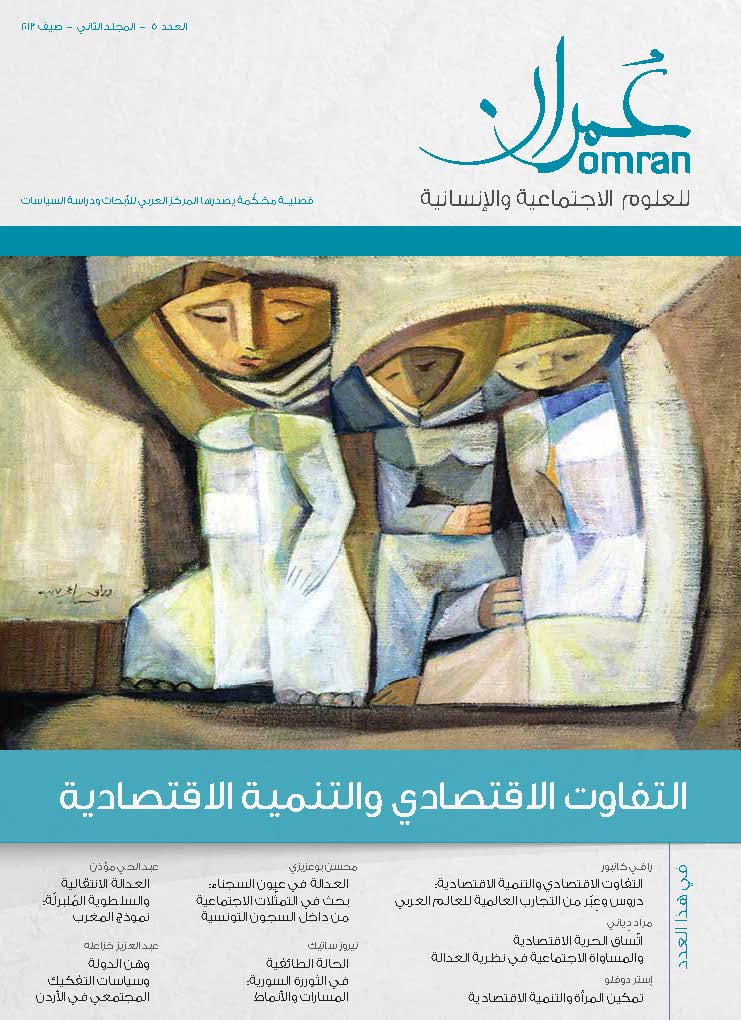
العدد 5
606 مشاهدة 777 تنزيل 4 اقتباسمجلد 2 عدد 005 (2013)صدر العدد 5 من دورية "عمران للعلوم الاجتماعية والإنسانية" (صيف 2013)، ويتضمّن الدراسات والمقالات الآتية: "التفاوت الاقتصادي والتنمية الاقتصادية: دروس وعِبَر من التجارب العالمية للعالم العربي" (رافي كانبور)؛ "اتّساق الحرية الاقتصادية والمساواة الاجتماعية في نظرية العدالة" (مراد دِياني)؛ "تمكين المرأة والتنمية الاقتصادية" (إستر دوفلو)؛ "العدالة في عيون السجناء: بحث في التمثّلات الاجتماعية من داخل السجون التونسية" (محسن بوعزيزي)؛ "الحالة الطائفية في الثورة السوريّة: المسارات والأنماط" (نيروز ساتيك)؛ "العدالة الانتقالية والسلطوية المُلبرلَة: نموذج المغرب" (عبد الحي مودن)؛ "وهن الدولة وسياسات التفكيك المجتمعي في الأردن" (عبد العزيز خزاعله)؛ "قراءة في أبحاث وجيه كوثراني في التجربة السياسية الإسلامية: علاقة المؤسسة السياسية بالمؤسسة الدينية" (شمس الدين الكيلاني)؛ "تقرير عن مؤتمر باريس 2013: مئوية المؤتمر العربي الأول في باريس 1913" (سيار الجميل)؛ "التجارة بالتعليم في الوطن العربي الإشكاليات والمخاطر والرؤية المستقبلية / محيّا زيتون" (هدى حوا)؛ "الإثنوقراطية: سياسات الأرض والهوية في إسرائيل/فلسطين/أورن يفتاحئيل" (عبّاد يحيى)؛ "مؤسسة المخزن في تاريخ المغرب/محمد جادور" (رضوان باتو)؛ ""لماذا تفشل الأمم؟"" (تانيا هاشم)؛ "تقديم لمجموعة من الكتب" (زياد منى).
-
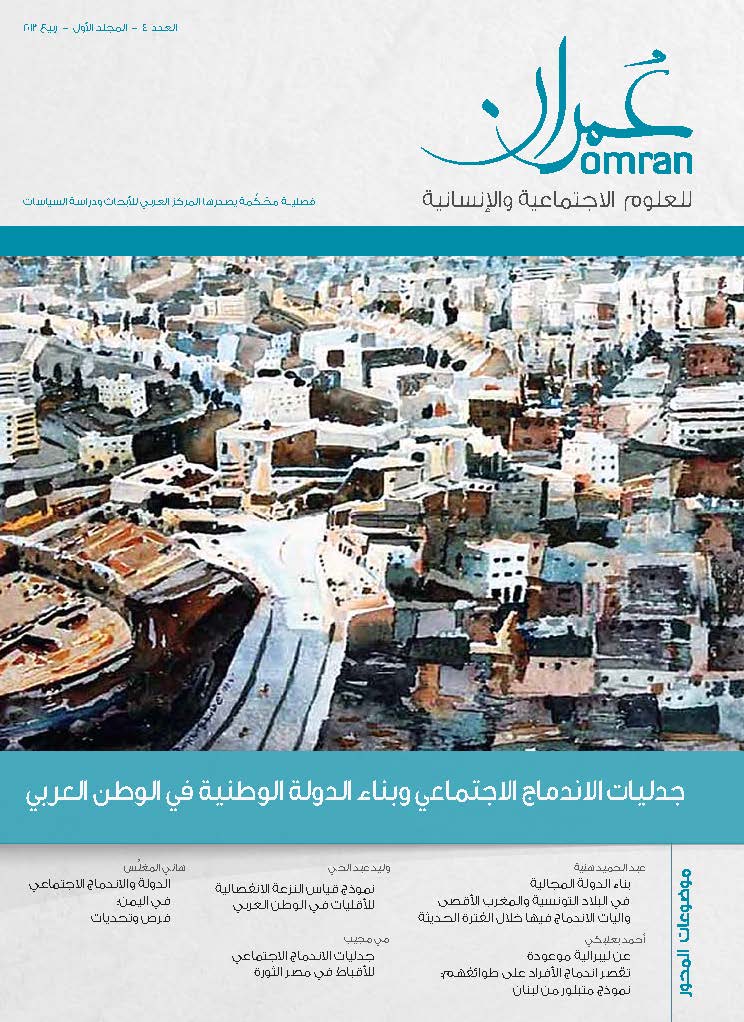
العدد 4
664 مشاهدة 901 تنزيل 6 اقتباسمجلد 1 عدد 004 (2013)صدر العدد 4 من دورية "عمران للعلوم الاجتماعية والإنسانية" (ربيع 2013)، ويتضمّن الدراسات والمقالات الآتية: "بناء الدولة المجالية في البلاد التونسية والمغرب الأقصى، وآليات الاندماج فيها خلال الفترة الحديثة" (عبد الحميد هـنية)؛ "عن ليبرالية موعودة تدمج الأفراد في طوائفهم نموذج متبلور في لبنان" (أحمد البعلبكي)؛ "نموذج قياس النزعة الانفصالية للأقليات في الوطن العربي" (وليد عبد الحي)؛ "الاندماج الاجتماعي للأقباط في مصر الثورة" (مي مجيب)؛ "الدولة والاندماج الاجتماعي في اليمن: الفرص والتحديات" (هاني عبادي محمد المُغلِّس)؛ "الإسلاميون وقضايا المرأة في تونس" (حمادي ذويب)؛ "الإسلاميّون في تونس وتحدّيات البناء السّياسي والاقتصادي للدّولة" (أنور الجمعاوي)؛ "الأزمة المالية الأوروبية ومعضلة اليورو: دراسة في إدارة الأزمات المالية" (هدى حوا)؛ "جدليات الاندماج الاجتماعي وبناء الدولة الوطنية في الوطن العربي (المؤتمر السنوي الثاني للعلوم الاجتماعية والإنسانية - المركز" (هيئة التحرير)؛ "العودة إلى الأسئلة: عزمي بشارة في مشروعه الفكري الجديد" (محمد جمال باروت)؛ "قصة الاقتصاد المصري: من عهد محمد علي إلى عهد مبارك" (علي عبد القادر علي)؛ "زمن القبيلة وإشكالية السلطة والعنف في المجتمع الصحراوي" (عبد الله هرهار)؛ "الثورة اليمنية: الخلفية والآفاق" (جمانة فرحات)؛ "صعود الأغنياء: رؤية جديدة للتاريخ العالمي" (حصة العطية)؛ "براديغما جديدة لفهم عالم اليوم" (رشيد جرموني).
-
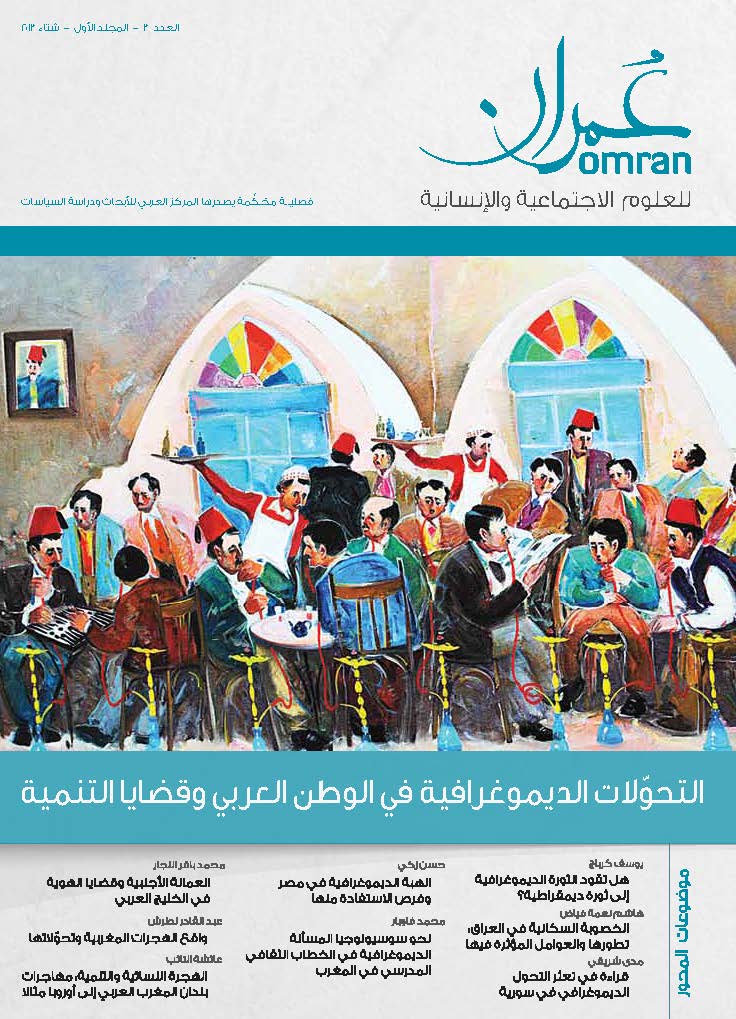
العدد 3
773 مشاهدة 964 تنزيل 1 اقتباسمجلد 1 عدد 003 (2013)صدر العدد 3 من دورية "عمران للعلوم الاجتماعية والإنسانية" (شتاء 2013)، ويتضمّن الدراسات والمقالات الآتية: "هل تقود الثورة الديموغرافية إلى ثورة ديمقراطية؟ نموذجا الشرق الأوسط وشمال أفريقيا" (يوسف كرباج)؛ "الخصوبة السكانية في العراق: تطورها والعوامل المؤثرة فيها" (هاشم نعمة فياض)؛ "قراءة في تعثر التحول الديموغرافي في سورية" (مدى شريقي)؛ "الهِبَة الديموغرافية في مصر وفرص الاستفادة منها" (حسن زكي)؛ "نحو سوسيولوجيا المسألة الديموغرافية في الخطاب الثقافي المدرسي في المغرب" (محمد فاوبار)؛ "العمالة الأجنبية وقضايا الهوية في الخليج العربي" (محمد باقر النجار)؛ "واقع الهجرات المغربية وتحوّلاتها" (عبد القادر لطرش)؛ "الهجرة النسائية والتنمية: مهاجرات بلدان المغرب العربي إلى أوروبا مثالاً" (عائشة التايب)؛ "تحديات التنمية البشرية المستدامة في المنطقة العربية" (تانيا علي فاعور)؛ "البنى السكانية في جبل لبنان (1250 – 1850): تحوّلات ونتائج" (نايل أبو شقرا)؛ "اقتصاد الظل في سورية: حجمه، أسبابه، وآثاره" (أسامة نجوم)؛ "قراءة في إصدارات الإسكوا: الهجرة من المنطقة العربية بعد "الربيع العربي"" (عبد الرحمن أياس)؛ "مؤتمر المركز العربي للأبحاث ودراسة السياسات: الإسلاميون ونظام الحكم الديمقراطي... تجارب واتجاهات" (هيئة التحرير)؛ "الديموغرافيا والطوائف اللبنانية" (ندى مكي)؛ "التحوّلات الاقتصادية والاجتماعية في جبل لبنان (1550 – 1900)" (جمانة فرحات)؛ "إدارة المصادر البترولية: النموذج النروجي" (سمير عبد الرسول العبيدي)؛ "التحوّل الديمقراطي: المدينة ومواطنيها في البرازيل" (دينا قدومي)؛ "هل يرث المتديّنون الأرض من خلال الديموغرافيا؟" (عبد الهادي عياد).
-
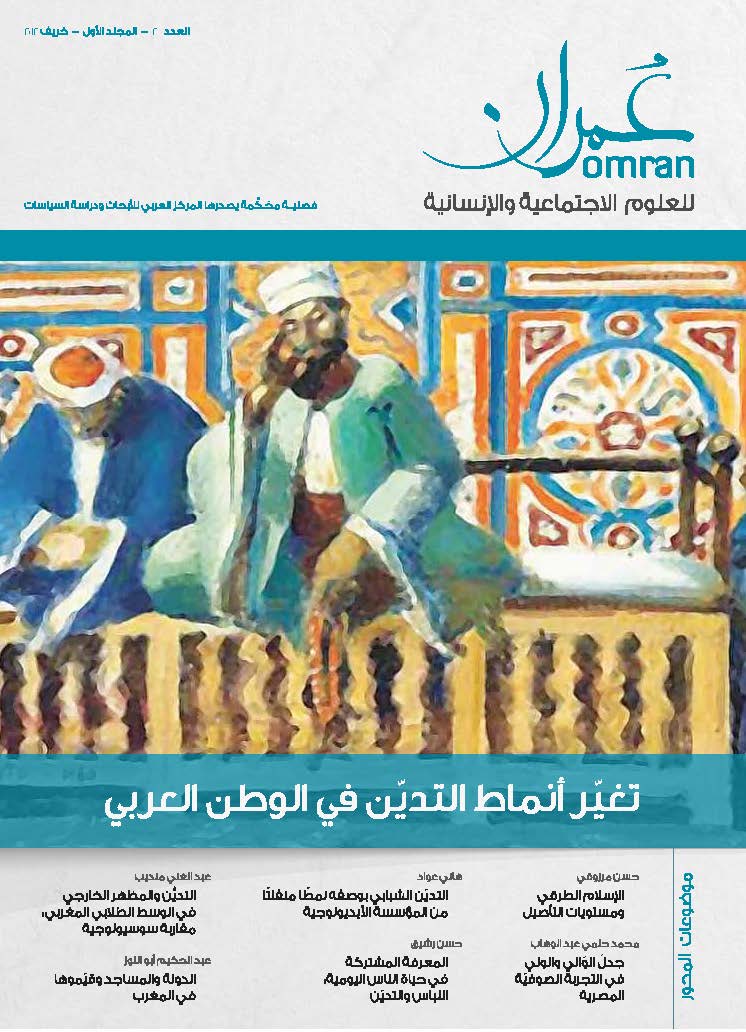
العدد 2
827 مشاهدة 1096 تنزيل 8 اقتباسمجلد 1 عدد 002 (2012)صدر العدد 2 من دورية "عمران للعلوم الاجتماعية والإنسانية" (خريف 2012)، ويتضمّن الدراسات والمقالات الآتية: "مدخل عام عن تغيّر أنماط التديّن في الوطن العربي" (هيئة التحرير)؛ "الإسلام الطرقي ومستويات التأصيل" (حسن مرزوقي)؛ "جدلُ الوَالي والوليْ في التجربة الصوفيَّة المصريّة" (محمد حلمي عبد الوهاب)؛ "التديّن الشبابي بوصفهِ نمطًا منفلتًا من المؤسسة الأيديولوجية" (هاني عوّاد)؛ "المعرفة المشتركة في حياة الناس اليوميّة: اللباس والتديّن" (حسن رشيق)؛ "التديّن والمظهر الخارجي في الوسط الطلابي المغربي: مقاربة سوسيولوجية" (عبد الغني منديب)؛ "الدولة والمساجد وقيّموها في المغرب" (عبد الحكيم أبو اللوز)؛ "التّمظهر السياسيّ للموت في السّودان: قراءة في الأقدار والمصائر" (حسام الدين صالح)؛ "ملاحظات حول تدريس علم الاقتصاد من واقع الخبرة الأكاديمية" (علي عبد القادر علي)؛ "العلوم السياسية في الجامعات العربية" (وليد عبد الحي)؛ "التنمية الأسيرة، سياسات التنمية في فلسطين وتأثيرها في فرص العمل" (صلاح الزرو التميمي)؛ "السلفيّون والثورة التونسية: الهوية والمواطنة" (عادل بلحاج رحومة)؛ "في الفصل بين الدين والثقافة: مدخل إلى تنظيم التنوع الثقافي" (يوسف بن الغياثية)؛ "الحركات الإسلامية في تونس وليبيا: عناصر أساسية للمقارنة" (المنصف وناس)؛ "الحداثة المحظورة: الحضارة والحجاب" (نيلوفر غول)؛ "العقد الأخير في تاريخ سورية: جدليّة الجمود والإصلاح" (نيروز ساتيك)؛ "اليهود المغاربة، من منبت الأصول إلى رياح الفرقة" (رشيد يلوح)؛ "السعي إلى أمن الطاقة وإعادة تشكيل العالم الحديث" (زهير الحامدي)؛ "في" (راتب شعبو).
-
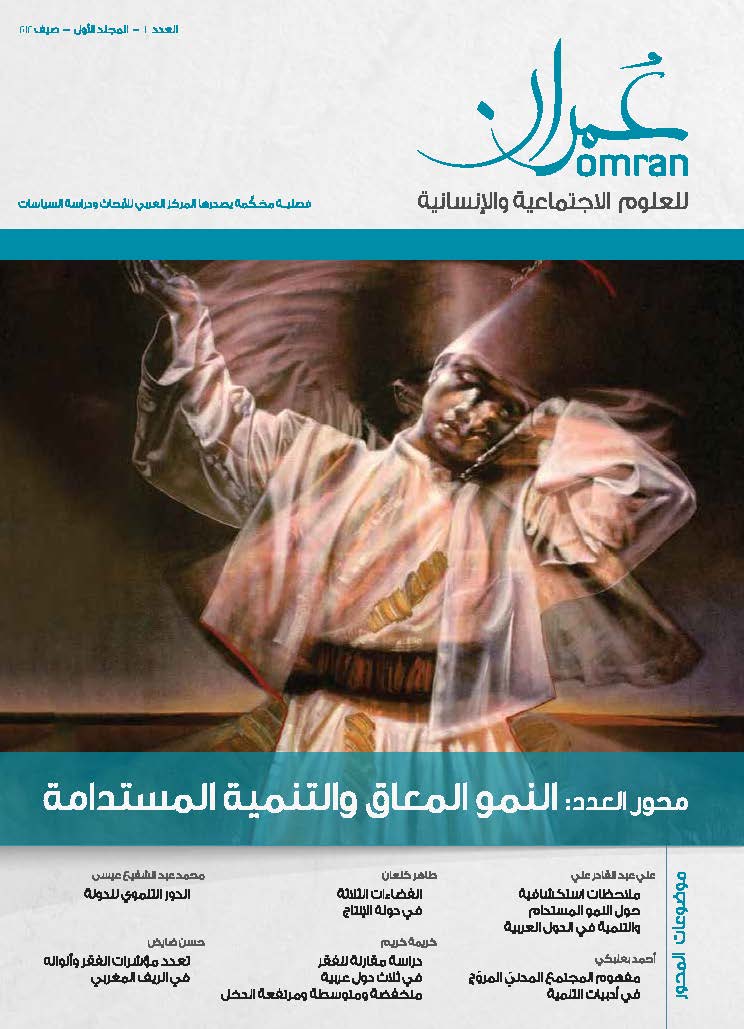
العدد 1
644 مشاهدة 873 تنزيل 1 اقتباسمجلد 1 عدد 001 (2012)صدر العدد 1 من دورية "عمران للعلوم الاجتماعية والإنسانية" (صيف 2012)، ويتضمّن الدراسات والمقالات الآتية: "ملاحظات استكشافية عن النمو المستدام والتنمية في الدول العربية" (علي عبد القادر علي)؛ "الفضاءات الثلاثة في دولة الإنتاج" (طاهر حمدي كنعان)؛ "الدّور التنمويّ للدولة: دراسة مقارنة للخبرة المصرية المعاصرة على مشارف ثورة 25 يناير" (محمد عبد الشفيع عيسى)؛ "مفهوم المجتمع المدنيّ المروّج في أدبيات التّنمية: نصوص من منظّمة الإسكوا نموذجًا" (أحمد البعلبكي)؛ "دراسة مقارنة للفقر في ثلاث دول عربية منخفضة، ومتوسطة، ومرتفعة الدخل (اليمن، مصر، البحرين)؛ أسبابه وسياسات مجابهته" (كريمة كريّم)؛ "تعدد مؤشرات الفقر وألوانه في الريف المغربي، أو الركود البنيوي للمجالات الريفية التقليدية: حال أرياف شمال مدينة فاس" (حسن ضايض)؛ "مخاطر الطائفيّة على الربيع العربيّ" (وجيه قانصو)؛ "التميّز القبطيّ واستبعاد الدولة في مصر" (مي مجيب)؛ "استطلاع مؤشّر الرّأي العام العربي 2011 – 2010: دراسة حالة لبنان" (أديب نعمة)؛ ""الرأي" و"العام" في مسوحات الرأي العام مراجعة لمشروع قياس الرأي العام العربي" (دارم البصام)؛ "تقرير المؤتمر السنوي الأول للعلوم الاجتماعية والإنسانية للمركز العربي للأبحاث ودراسة السياسات" (هيئة التحرير)؛ "تقرير نتائج المؤشّر العربي 2011" (هيئة التحرير)؛ "الثورة التونسية المجيدة: بنية ثورة وصيرورتها من خلال يومياتها" (عبد اللطيف الحناشي)؛ "حكم الخبراء: مصر، التكنو-سياسة، الحداثة" (هاني عوّاد)؛ "ثقافة الطائفية: الطائفة والتاريخ والعنف في لبنان القرن التاسع عشر تحت الحكم العثماني" (نيروز ساتيك).