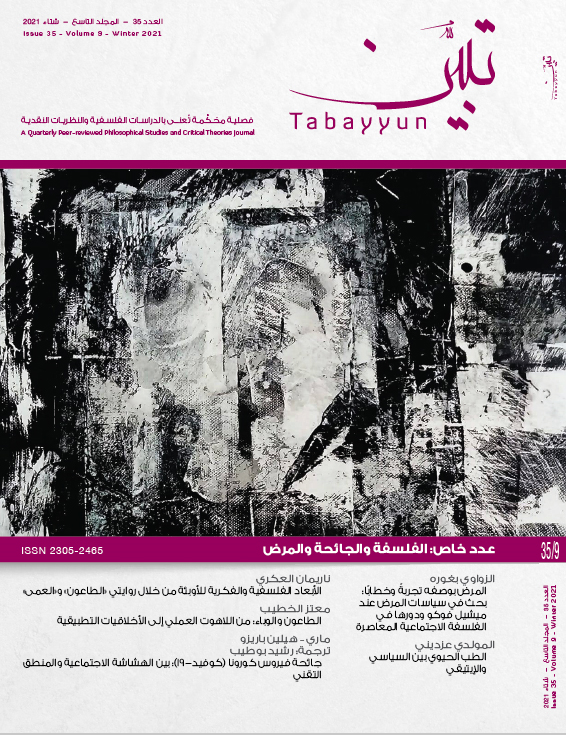
The COVID-19 Pandemic: Between Social Vulnerabilities and Technical Logics
DOI:
https://doi.org/10.31430/tqlt7052Keywords:
Covid-19, Theory of Care, Technic System, Vulnerability, Social Invisibility, Digital TurnAbstract
The COVID-19 pandemic brings out many forms of social, economic, political, and even environmental vulnerabilities. In many ways, the pandemic revealed the fragility of modern technological civilisation. This article analyses the tension between issues of care and technical responses in the pandemic context. The theoretical background relies on Joan Tronto theory of care and on Jacques Ellul conception of "technic system" which is characterized by its efficiency, speed, automatization and autonomy. Even if many governments have recognized how care giving (health, education, community service) is fundamental for a society, they have largely chosen technical solutions to maintain economical activities. The intensification of the digital turn had major impacts on higher education, arts and cultural production, work and democracy. Using many examples, this article shows how technical solutions short-circuit human relations - essentially relation of care (care about, caring for, care with each other) - that are specific to these activities, therefore inducing dehumanization, more inequalities and social exclusion.
References
- إنها الفكرة عينها التي سيعبّر عنها إدغار موران في كتابه حول الجائحة أيضًا، ينظر: Edgar Morin, Changeons de voie: Les leçons du coronavirus (Paris: Denoel, 2020).) (المترجم
- فيلسوف ولاهوتي وسوسيولوجي فرنسي. اشتهر بدراساته وأبحاثه النقدية التي تعالج أدوار التكنولوجيا وتأثيراتها في حياتنا الحديثة. من أهم كتبه المجتمع التكنولوجي (المترجم).
- Hans Jonas, Le principe responsabilité: Une éthique pour la civilisation technologique (Paris: Cerf, 1990).
- Ulrich Beck, La société du risque: Sur la voie d’une autre modernité (Paris: Aubier, 2001).
- Nurock Vanessa (ed.), Carol Gilligan et l’éthique du care (Paris: PUF, 2010).
- Joan Tronto, Le risque ou le care? (Paris: PUF, 2012).
- Ibid., pp. 31–32
- ناقشت نظريات الرعاية، على نحو خاص، نظرية لورانس كولبيرغ للتطور الأخلاقي ونظرية العدالة التي تتضمنها، والتي كان لها تأثير في نظرية العدالة لجون راولز. إن مراحل التطور الأخلاقي لكولبيرغ تعبّر عن نفسها في تراتبية للأحكام الأخلاقية المحايدة والمجردة على نحو متزايد، وهي تقود إلى أخلاق للعدالة تمثلها نخبة اجتماعية تمتلك مسبقًا إمكانية الوصول إلى الميكانزمات المؤسساتية للعدالة في ديمقراطية ليبرالية، وذلك على العكس مثلً، من الأقليات أو المهمشين داخل المجتمع في الولايات المتحدة. غير أن كارول غيليغان Carol Gilligan أظهرت في كتابها صوت مغاير (1982)، بطريقة بارعة على المستويين الإمبيريقي والنظري، وجود صوت أخلاقي مختلف، غالبًا ما تمثله النساء، "يصر على أفضل طريقة للمحافظة على العلاقات الإنسانية موضع النقاش في مشكلة أخلاقية"، ينظر: Tronto, p. 117. وبالنسبة إلى غيليغان، فالأمر يتعلق، في غالب الأحيان، بتضارب في المسؤوليات أكثر من تعلّقه بمعضلة للحقوق المتضاربة. ومن هذه الزاوية، فإن حل الصراع سيمر عبر نموذج للتفكير أكثر سياقية وسردية، وليس عبر نموذج التفكير الصوري والمجرد.
- إن نظريات الرعاية التي تنخرط في حراك النظريات النسوية، توثق بشكل واسع أشكال التمييز والاحتقار الاجتماعي إزاء مهن الرعاية. وتوضح جوان ترونتو (0092) أنه في الولايات المتحدة مثلً، تُسند المهن المتعلقة بالصيانة (البيت، المكاتب)، أو تلك المتعلقة برعاية المسنين على نحو واسع إلى الرجال والنساء "الملونين". إن هذا النوع من العمل الذي يتطلب مهارات منخفضة، ولا يرتبط بالتقنية (الأقل تخصصًا، ولذلك فهو من دون قيمة اقتصادية مضافة)، منخفض القيمة بسبب الأجر المنخفض ومكانته الاجتماعية المتدنية؛ ما يقلل، في الآن نفسه، من قيمة الأشخاص الذين يزاولونها، مؤكدة أشكال التمييز الحاضرة أصلً في المجتمع والتاريخ الأميركيين. إننا هنا أمام رهان لإعادة التوزيع والاعتراف. ينظر: Nancy Fraser & Axel Honneth, Redistribution or Recognition? A Political–Philosophical Exchange (New York: Verso,
- Martin Heidegger, Essais et conférences (Paris: Gallimard, 1958).
- إن ظاهرة "هنا بالفعل"، أو "الموجود هنا بالفعل"، مدهشة على نحو خاص في المجال الرقمي. وعلى سبيل المثال، فإن الأطفال الذين ولدوا قبل خمس سنوات منغمسون في أشياء رقمية (الكمبيوتر اللوحي، والهاتف الخلوي، والألعاب المتصلة بهما)، وهذه الأشياء لا تشكل سلوكهم فحسب، بل عقولهم أيضًا، وذلك من خلال تعزيز أنماط تعلم معيّنة.
- Jacques Ellul, Le système technicien (Paris: Cherche–midi, 2012).
- Catherine Larrère & Raphaël Larrère, Bulles technologiques (Paris: Wildproject, 2017).
- Marie–Hélène Parizeau, "Du développement au développement durable: L’environnement en plus. Analyse éthique et politique," dans: L. Guay et al. (éds.), Les enjeux et les défis du développement durable: Connaître, décider, agir (Quebec: Les Presses de l’Université Laval, 2004).
- Larrère & Larrère.
- Philippe Bihouix, L’âge des low tech: Vers une civilisation techniquement soutenable (Paris: Seuil, 2014).
- أشكر مؤسسة ماليت للثقافة الخيرية في كيبك التي سمحت لي بالوصول إلى العمل البحثي الذي قام به طالب الدكتوراه في شعبة الفلسفة بجامعة لافال، ماثيو غانون Gagnon Mathieu. إن العمل البيبليوغرافي لهذا البحث لا يدعي الشمولية. فلقد زاد عدد المنشورات زيادة كبيرة منذ أيلول/ سبتمبر 0202، وخصص العديد من المجلات أعدادًا خاصة للعواقب الاجتماعية والسياسية والاقتصادية المتعلقة بالجائحة. أما فيما يتعلق بالمنشورات في الولايات المتحدة، فقد اهتمت خصوصًا بالقضايا السياسية والصحية المرتبطة بنهاية فترة حكم الرئيس دونالد ترامب.
- Josep Borel, "COVID–19, le monde d’après est déjà là," in: Josep Borel et al., COVID–19: Choc sanitaire et géopolitique: Trump, et après? (Paris: Politiques étrangères, 2020), p. 18.
- Thomas Gomart, "Le COVID–19 et la fin de l’innocence technologique," in: Borel et al., pp. 25–38.
- Didier Houssin, "La coopération sanitaire internationale à l’épreuve de la COVID–19," in: Borel et al., pp. 33–45.
- 2يُنظر: على سبيل المثال افتتاحية صحيفة لوموند حول التنافس السياسي المحموم بين القوى العظمى على اللقاحات في: "Covid–19: les risques de la course au vaccine," Lemonde , 25/8/2020, accessed on 18/1/2021, at: https://bit.ly/3ir4IVw
- Élie Cohen, "La souveraineté industrielle au révélateur du COVID–19," in: Borel et al., p. 75.
- Colleen Flood et al., "Overview of COVID–19: Old and New Vulnerabilities," in: Colleen Flood et al., Vulnerable: The Law, Policy and Ethics of COVID–19 (Ottawa: University of Ottawa Press, 2020).
- Martin Dichter et al., "COVID–19: It Is Time To Balance Infection Management And Person–Centered Care To Maintain Mental Health Of People Living In German Nursing Homes," International Psychogeriatrics , vol. 32, no. 12, pp. 1157–1160.
- Martine Lagacé et al., "COVID–19 et âgisme: Crise annoncée dans les centres de soins de longue durée et réponse improvisée?" in: Flood et al., p. 331.
- Ibrahima Fall, "Une crise peut en cacher une autre: Comprendre la crise du management pour comprendre la crise sanitaire du coronavirus. Quelques pistes de refondation du management," Question(s) de management , vol. 3, no. 29 (2020), p. 62.
- Gina Adams & Margaret Todd, Meeting The School–Age Child Care Needs Of Working Parents Facing COVID–19 Distance Learning: Policy Options To Consider (Washington: Urban Institute Press, 2020).
- Joseph Crawford et al., "COVID–19: 20 Countries’ Higher Education Intra–period Digital Pedagogy Response," Journal of Applied Learning and Teaching , vol. 3, no. 1 (2020), pp. 9–28.
- Laura Gelles et al., "Compassionate Flexibility and Self–Discipline: Student Adaptation to Emercy Remote Teaching in an integrated Engineering Energy Course during CVID–19," Education Sciences , vol. 10, no. 11 (2020), p. 304, accessed on 18/1/2021, at: https://bit.ly/3qveI2H
- Tasha Dunn, "When Professor Guilt and Mon Guilt Collide: Pandemic Pedagogy from a Precarious Place," Communication Education , vol. 69, no. 4 (2020), pp. 491–501.
- Marek Tesar, "Towards a Post–Covid–19: ‘New Normality?’: Physical and Social Distancing, the Move to Online and Higher Education," Policy Futures in Education , vol. 18, no. 5 (2020), pp. 556–559.
- Mark Gozlan, "Visons, furets, chats: Les animaux infectés par le SARS–CoV–2 représentent–ils un risque pour l’être humain?" Le Monde , 13/11/2020, accessed on 18/1/2021, at: https://bit.ly/3oQynts
- "Au Danemark, des carcasses de visons euthanasiés en masse refont surface," le soleil , 25/11/2020, accessed on 18/1/2021, at: https://bit.ly/3ikB6cg
- Elisabeth de Fontenay, Sans offenser le genre humain: Réflexions sur la cause animale (Paris: Albin Michel, 2008), p. 206.
- Pat Armstrong et al., "Privatization and COVID–19: A Deadly Combination for Nursing Homes," in: Flood et al., pp. 447–462.
- Antonio Casilli, "Le travail à inégale distance," Par ici la sortie! , no. 1 (2020), pp. 147–153, accessed on 18/1/2021, at: https://bit.ly/2Kvzb8k
- Anne Lambert et al., "Le travail et ses aménagements: Ce que la pandémie du COVID–19 a changé pour les français," Population et Sociétés , vol. 7, no. 579 (2020), pp. 1–14.
- Gilbert Cette, "Télétravail et croissance économique: Une opportunité à saisir," Futuribles , no. 437 (Juillet–Août 2020), pp. 77–82.
- Nathalie Sarthou–Lajus, "En ‘télétravail’ ou ‘présentiel’?" Études , no. 11 (Novembre 2020), pp. 5–6.
- Valerie Flohimont & Marie–Aline Fauville, "En quoi la crise de la COVID–19 repose–t–elle la question du sens du travail? Chronique 4–covid–19," HR. Square , 15/5/2020, accessed on 18/1/2021, at: https://bit.ly/367RVlZ
- Edith Archambault, "Quel monde associatif en période de Covid–19? Un panorama des situations et des enjeux issus du confinement," Revue Internationale de l’Économie Sociale , no. 357 (Juillet 2020), pp. 100–108.
- Olga Tarasov, "In a moment of Crisis, Philanthropy is Showing its Unique Value," Inside Philanthropy , 26/3/2020, accessed on 18/1/2021, at: https://bit.ly/3qv5BiC
- Diana Betzler et al., "COVID–19 and the Arts and Cultural Sectors: Investigating Countries’ Contextual Factors and Early Policy Measure," International Journal of Cultural Policy , 11/11/2020, accessed on 18/1/2021, at: https://bit.ly/3imDuiw
- Françoise Benhamou, "Crise de l’archipel culturel," Esprit , septembre 2020, accessed on 18/1/2021, at: https://bit.ly/2KnF2wa
- Jean–François Lucas, "La COVID–19, accélératrice et amplificatrice des fractures numériques," SciencesPo, 24/10/2020, accessed on 18/1/2021, at: https://bit.ly/3sBTB0A
- Didier Fassin et al., "La démocratie à l’épreuve de l’épidémie?" Esprit (Octobre 2020), p. 4, accessed on 18/1/2021, at: https://bit.ly/3qtKVHv
- Andreu Casero–Ripollés, "Impact of Covid–19 on the Media System. Communicative and Democratic Consequences of News Consumption During the Outbreak," El profesional de la informacion , vol. 29, no. 2 (2020).
- Luke Cooper & Guy Aitchison, "The Dangers ahead. Covid–19, Authoritarism and Democracy," LSE Conflict and Civil Society Research Unit, June 2020.
- Fassin et al., p. 12.
Downloads
Published
Article dates
Usage statistics
Issue
Section
License
Copyright (c) 2021 Tabayyun

This work is licensed under a Creative Commons Attribution-NonCommercial 4.0 International License.
