Third Space in the Novels of Waciny Laredj: Effacing the Boundaries
DOI:
https://doi.org/10.31430/jvig4770Keywords:
Waciny Laredj, Effacing the Boundaries, Translation, Third SpaceAbstract
This study looks at post-colonial theory as a frame of discourse developed by theoreticians beginning in the last quarter of the twentieth century. It sees the ideas of post-colonialism as ideas based on the concept of representation as the quintessentially political act, the central concept introduced by Edward Said in his work Orientalism . However, the Indian critic Homi Bhabha developed other concepts through his critique of Said, such as hybridity, mimicry, cultural difference and 'third space.' The last critique, the issue of 'third space,' generated a great deal of criticism, but it remains among the most important of Bhabha's ideas. It is to this concept that the current study turns.
References
- عبد الله العروي، الإيديولوجيا العربية المعاصرة، ط 3 (بيروت؛ الدار البيضاء: المركز الثقافي العربي، 0062)، ص.240
- واسيني الأعرج: شرفات بحر الشمال، ط 2 (بيروت: دار الآداب، 007 2)؛ سيدة المقام: مراثي الجمعة الحزينة، رواية، ط 6 (دمشق: ورد للطباعة والنشر والتوزيع، 006 2)؛ أصابع لوليتا، رواية (بيروت: دار الآداب، 012 2)؛ مملكة الفراشة: نحن أيضًا نحب التانغو، ونرقص على جسر الموتى، رواية. بيروت: دار الآداب،.2013
- Wen-chin Ouyang, Politics of Nostalgia in the Ara- bic Novel: Nation-State, Modernity and Tradition (Edin- burgh: Edinburgh University Press, 2013), p. vi.
- Fatema Mernissi, L’Amour dans les pays musul- mans à travers le miroir des textes anciens (Casablanca: Le Fennec, 1984), p. 111.
- Robert J. C. Young, "The Void انظر على سبيل المثال:(2) of Misgiving," in: Karin Ikas and Gerhard Wagner, eds., Communicating in the Third Space , Routledge Research
- Passerini, Ellena and Geppert, p. 21.
- 9(1) المصدر نفسه، ص 1، و Mernissi, p. 32. (20) Goody, p. 21.
- in Cultural and Media Studies; 18 (New York: Routledge, 2009), pp. 81-95. وانظر كذلك النقد الذي وجهه عالم الجغرافيا الأميركي إدوارد سوجا إلى مفهوم هومي بابا للفضاء الثالث في كتابه: Edward W. Soja, Thirdspace: Journeys to Los Angeles and Other Real-and-Imagined Places (Cambridge, Mass.: Blackwell, 1996), pp. 139-144 esp.
- György Lukács, The Theory of the Novel; a His- torico-Philosophical Essay on the Forms of Great Epic Literature , Translated from the German by Anna Bostock (Cambridge, Mass.: M.I.T. Press, 1971), p. 113.
- Anthony Giddens, The Transformation of Intimacy: Sexuality, Love, and Eroticism in Modern Societies (Stan- ford, Calif.: Stanford University Press, 1992), p. 40.
- انظر: هومي ك. بابا، موقع الثقافة، ترجمة ثائر ديب (الدار البيضاء: المركز الثقافي العربي، 0062)، ص 351 وما بعدها.
- انظر: روجر ألن، "نشأة الرواية العربية"، ترجمة لمياء باعشن، في: عبد العزيز السبيل [وآخرون]، تحرير، الأدب العربي الحديث (جدة: النادي الأدبي الثقافي، 0022)، ص 265 – 726 خصوصًا. 4(2) لأجل رؤية نقدية تاريخية لع قااة الحب بين العرب والآخر في الرواية العربية كما تشكلت في المرحلة الكولونيالية وما بعد الكولونيالية، يمكن الرجوع إلى: Rasheed El-Enany, Arab Representations of the Occi- dent: East-West Encounters in Arabic Fiction , Culture and Civilisation in the Middle East (London ; New York: Routledge, 2006).
- Jonathan Rutherford, "The Third Space: Interview with Homi Bhabha," in: Jonathan Rutherford, ed., Iden-
- tity: Community, Culture, Difference (London: Lawrence and Wishart, 1990), p. 218.
- انظر مدخل كتاب: بابا، ص 37.67 –
- المصدر نفسه، ص 86. وكذا نص الحوار الذي أجراه جوناثان روثرفورد Jonathan Rutherford) (مع هومي بابا (بالإنكليزية، وستُستعمل جملة "نص الحوار" للإحالة إليه): Rutherford, p. 207.
- نص الحوار، في: Rutherford, p. 208..
- Debbie Cox, "The Novels of Tahar Wattar: Com- mand or Critique?," Research in African Literatures , vol. 28, no. 3 (Autumn 1997), p. 95.
- المصدر نفسه، ص.208
- المصدر نفسه، ص.208
- بالنسبة إلى ديبي كوكس، انبنت الثورة الثقافية في الجزائر على شيئين: السلفية والتعريب، وهو ما كان يهدف في نظرها إلى تدعيم بناء الدولة الوطنية. انظر: المصدر نفسه، ص 95 خصوصًا. (27) Rita Salam, "Le Roman politique des écrivains al- gériens de langue arabe," Mots , no. 54 (Mars 1998), pp.
- المصدر نفسه، ص.210
- المصدر نفسه، ص.211
- Erich Fromm, The Art of Loving , Planned and Ed- ited by Ruth Nanda Anshen, World Perspectives; 9 (New
- York: Harper and Row, 1956), pp. 20-21.
- Eva Illouz, Consuming the Romantic Utopia: Love and the Cultural Contradictions of Capitalism (Berkeley: University of California Press, 1997), p. 6.
- من بين الخصائص الثلاث للأدب الأقلّوي التي يحددها دولوز وغواتاري، هناك مسألة العلاقة بين اللغة وهذا النوع من الأدب؛ فالأدب الأقلّوي لا يوجد من خلال لغة الأقليات، بل يُبنى من داخل لغة الأكثرية. إن الحديث عن أدب جزائري أقلّوي مكتوب باللغة العربية في مقابل "أدب الأغلبية" المكتوب بالفرنسية، لا يستوي كلّيًا ما دام مكتوبًا بلغته لا بلغة الأغلبية. ومع ذلك تبقى فكرة الأدب الأقلّوي بهذا المعنى مقبولة إذا ما نُظِر إلى البُعد التغريبي deterritorialization) (الذي ينحو
- انظر الكتاب الجماعي: Luisa Passerini, Liliana Ellena and Alexander C.T. Geppert, New Dangerous Liaisons: Discourses on Europe and Love in the Twentieth Century , Making sense of history; 13 (New York: Berghahn Books, 2010). وخصوصًا، في ما يتعلق بالعلاقة بين الحب والدِّين، مقالة: Jack Goody, "Love and Religion" (pp. 21-32).
- الأدب الأقلّوي نحوه. انظر: Gilles Deleuze and Félix
- Guattari, Kafka: Toward a Minor Literature , Translation by Dana Polan; Foreword by Réda Bensmaïa, Theory and History of Literature; 30 (Minneapolis: University of Minnesota Press, 1986), p. 16.
- Marie Virolle, "Ecrivains algériens: Le Troisième pays," dans: Anissa Talahite-Moodley, dir., Probléma-
- tiques identitaires et discours de l’exil dans les littéra-
- tures francophones , Transferts culturels (Ottawa: Presses de l’Université d’Ottawa, 2007), p. 67.
- Muhsin Jassim Al-Musawi, The Postcolonial Ara- bic Novel: Debating Ambivalence , Studies in Arabic Lit- erature; 23 (Leiden; Boston: Brill, 2003), p. 5.
- كاتب ياسين، نجمة: رواية، ترجمة محمد قوبعة (تونس:
- دار سراس، 9841)، و , Points. Nedjma Kateb Yacine, Roman; 31 (Paris: Éditions du Seuil, 1956).
- Edward W. Said, Reflections on Exile and Other Es- says , Convergences (Cambridge, Mass.: Harvard Univer- sity Press, 2000), p. 176.
- واسيني الأعرج، طوق الياسمين: رسائل في الشوق والصبابة والحنين: رواية، ط 2 (بيروت؛ الدار البيضاء: المركز الثقافي العربي،.)2006
- إدوارد سعيد، المثقف والسلطة، ترجمة وتقديم محمد عناني (القاهرة: رؤية للنشر والتوزيع، 0062)، ص.100 (49) المصدر نفسه، ص.95 (05) المصدر نفسه، ص.100 (51) المصدر نفسه، ص.107
- يرى محمد مصطفى علي حسانين أن تقنية الواقعية السحرية حاضرة في روايات واسيني الأعرج، وبالخصوص في
- روايات رمل الماية والمخطوطة الشرقية وجملكية آرابيا. انظر:
- محمد مصطفى علي حسانين، "الرواية والتأريخ السِّحري
- للحاضر،" في: الرواية العربية: الذاكرة والتاريخ: أبحاث ملتقى الباحة الأدبي الخامس، 1433 ه (بيروت: مؤسسة الانتشار العربي، 0132)، ص – 22.9
- Theodor Adorno, Minima Moralia: Reflections on a Damaged Life , Translated from the German by E. F. N. Jephcott, Radical Thinkers (London ; New York: Verso, 2005), p. 87.
- Eric J. Hobsbawm, Nations and Nationalism Since 1780: Programme, Myth, Reality , Wiles Lectures (Cam- bridge, [England]; New York: Cambridge University Press, 1990), p. 10; Ernest Gellner, Nations and Nation-
- سعيد، ص.108 (54) Said, p. 177. (55) المصدر نفسه، ص.182 (56) المصدر نفسه، ص 1.82
- alism , New perspectives on the Past (Oxford: Blackwell,
- 1983), p. 35, and Benedict Anderson, Imagined Commu-
- nities: Reflections on the Origin and Spread of National- ism , Rev. and Extended ed. (London ; New York: Verso, 1991), p. 4.
- Paul A. Silverstein, Algeria in France: Transpoli- tics, Race, and Nation , New Anthropologies of Europe (Bloomington: Indiana University Press, 2004), p. 2.
- المصدر نفسه، ص.134
- المصدر نفسه، ص.36
- المصدر نفسه، ص.7
- آمنة بلعلي، "الرواية الجزائرية بين تخيل التاريخ وتأويله،" في: الرواية العربية: الذاكرة والتاريخ: أبحاث ملتقى الباحة الأدبي الخامس، 1433 ه (بيروت: مؤسسة الانتشار العربي، 0132)، ص 273 2.74 –
- Ernest Renan, "What Is a Nation," Translated and Annotated by Martin Thom, in: Homi K. Bhabha, ed., Nation and Narration (London; New York: Routledge, 1990), p. 19. (42) Hobsbawm, p. 53. (43) Benjamin Stora, La Guerre invisible: Algérie, an- nées 90 , la bibliothèque du citoyen (Paris: Presses de Sciences po, 2001), p. 39, et Rabah Aissaoui, Immigra- tion and National Identity: North African Political Move- ments in Colonial and Postcolonial France (London; New York: Tauris Academic Studies, 2009), pp. 17 et 46. (44) Al-Musawi, p. 8. (45) محمد برادة، "الرواية العربية بين المحلية والعالمية، الرواية العربية: الكونية أفقًا" في: محمد برادة [وآخرون]، الرواية العربية.. ممكنات السرد: ندوة مهرجان القرين الثقافي الحادي عشر، عالم المعرفة؛ 357 (الكويت: المجلس الوطني للثقافة والفنون والآداب، 008 2)، ج 1، ص 52. (46) المصدر نفسه، ص 2.4
- Volume One of Religion and Secularism Wajih Kawtharani In his landmark texts, Azmi Bishara calls for the development of a new epistemological and methodological standpoint in Arab research into religion and types of religiosity, urging this as an alternative to the secularist Arab tendency to ignore or disregard these topics. The study of religion and religiosity ultimately connects with the study of secular- ism and secularization in Azmi Bishara’s The Transition from the Study of Religion and Religiosity to the Study of Secularism , in the fifth and final chapter of the first volume. He concludes his prolegomenon – a book in its own right – with a summary of his starting point before proceeding to the second volume of his project: The Intellectual Process of Secularization and Secularism. This project examines Bishara’s thinking and explores its ramifications. **Azmi Bishara, Religion and Secularism in Historical Context , in two volumes: Vol. 1: Religion and Religiosity , 2nd Revised Edition (Beirut: Arab Center for Research and Policy Studies 2013); Vol. 2: Part One: Secularism and Secularization, The Intellectual Process (Beirut: Arab Center for Research and Policy Studies 2015), Part Two: Theories of Secularism and Secu- larization (Beirut: Arab Center for Research and Policy Studies, 2015).
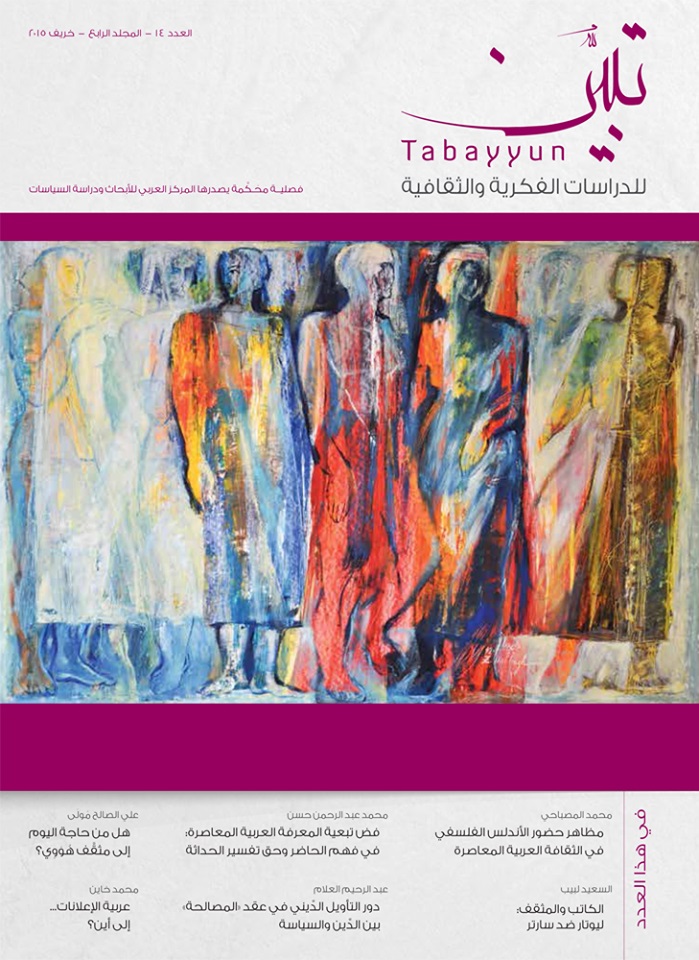
- Azmi Bishara, Religion and Secularism in Historical Context , in two volumes: Vol. 1: Religion and Religiosity , 2nd Revised Edition (Beirut: Arab Center for Research and Policy Studies 2013); Vol. 2: Part One: Secularism and Secu- larization, The Intellectual Process (Beirut: Arab Center for Research and Policy Studies 2015), Part Two: Theories of Secularism and Secularization (Beirut: Arab Center for Research and Policy Studies, 2015). Third Space in the Novels of Waciny Laredj: Effacing the boundaries Khalid al-Arif This study looks at post-colonial theory as a frame of discourse developed by theoreti- cians beginning in the last quarter of the twentieth century. It sees the ideas of post-co- lonialism as ideas based on the concept of representation as the quintessentially political act, the central concept introduced by Edward Said in his work Orientalism. However, the Indian critic Homi Bhabha developed other concepts through his critique of Said, such as hybridity, mimicry, cultural difference and ‘third space.’ The last critique, the issue of ‘third space,’ generated a great deal of criticism, but it remains among the most important of Bhabha’s ideas. It is to this conceot that the current study turns. Manifestations of the Philosophical Presence of al-Andalus in Contemporary Arab Culture Mohammad al-Misbahi The distinguishing feature of the Andalusian philosophical model is its openness to all forms of rational thought – evidential, doctrinal, jurisprudential, historical and mysti- cal – by virtue of its dialectical nature and its propensity for dialogue in search of com- mon ground. Some cultural currents in the contemporary Arab world feel that drawing upon the Andalusian model is not enough, and that it is imperative to open up a new model developed through the needs of the present. Yet, Andalusian rationality did not limit itself to considering reason alone to be the natural light that illuminates both our inner being and the world; it was also open to the light of faith and soulful passion, of history and urbanity. The Andalusian model teaches us that we need to take advantage of multiple sources of enlightenment. Deconstructing Arab Epistemological Dependency Mohammad Abdul Rahman Hassan In the past fifty years such projects that have deconstructed contemporary Arab epis- temological dependency have given rise to a great deal of discussion. Deconsructing contemporary Arab epistemological dependency involves taking on a project to critically assess a noteworthy group of Arabic writings, evaluating or refuting their main theses. The findings of such projects have often been criticized, and criticism falls into two categories. The first is an assumption that the intellectual starts out reading texts from a preset position informed by a particular ideology, and therefore reads set of texts in a particular way. The second assumption is that the intellectual makes use of concepts and methodological frameworks developed by modern Western thought, and does not re-cre-
Downloads
Published
Usage statistics
Issue
Section
License
Copyright (c) 2015 Tabayyun

This work is licensed under a Creative Commons Attribution-NonCommercial 4.0 International License.
