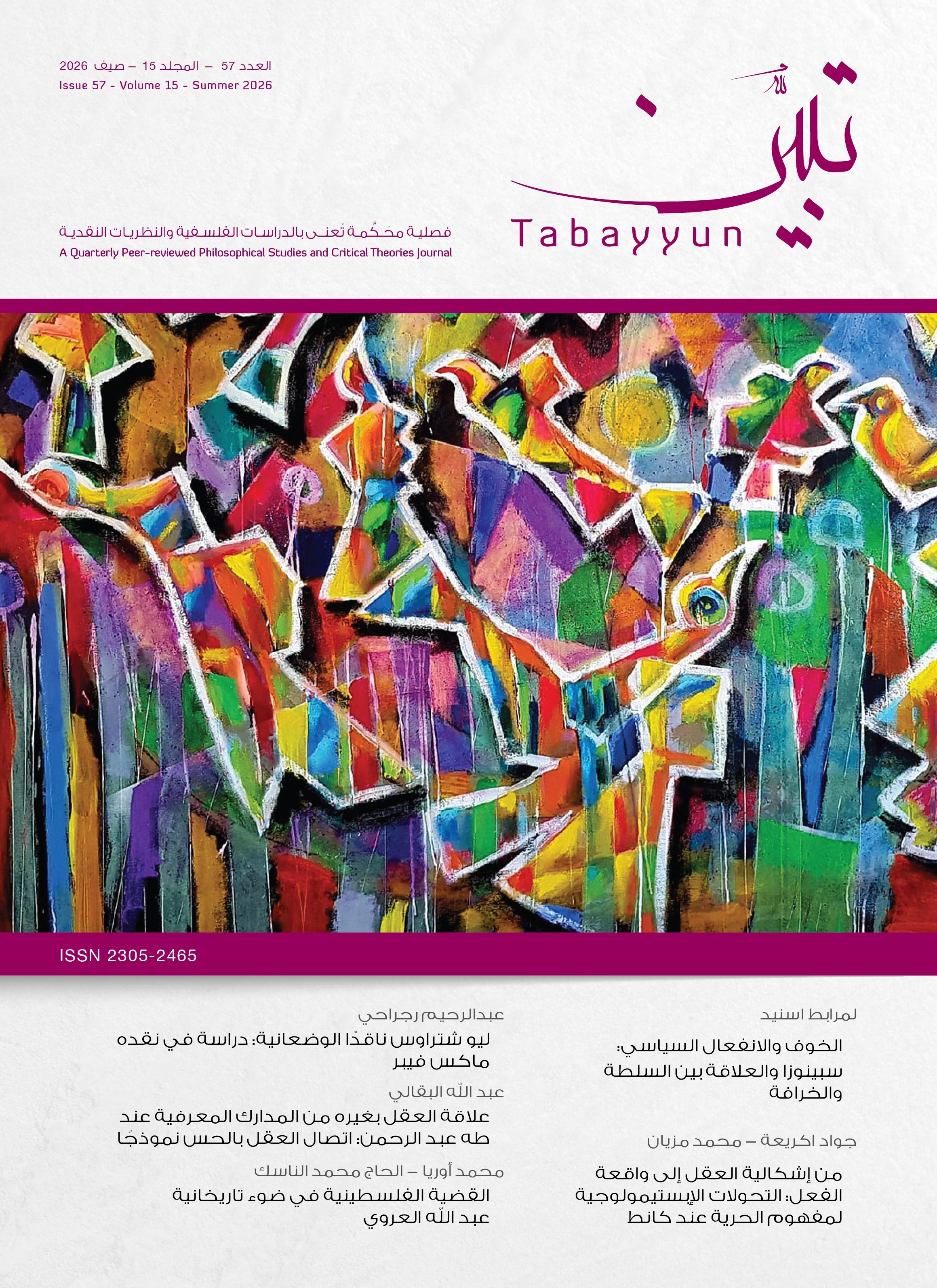
Fear and Political Emotion: Spinoza and the Relationship between Authority and Superstition
DOI:
https://doi.org/10.31430/guxb2069Keywords:
Spinoza, Democracy, Superstition, Political Emotions, Historical AnalysisAbstract
This study explores the political question in Spinoza’s philosophy by examining his critique of superstition as a form of political metaphysics and his understanding of politics through the lens of psychological reality, particularly the role of political affects. Situated within the realist context that shaped political theory in the sixteenth and seventeenth centuries, Spinoza develops a political account deeply informed by psychological and historical analyses of the evolution of political thought. This perspective draws attention to his early defence of democracy as a system grounded in reflections on human nature and the historical development of political life. The study therefore focuses on the role of superstition as a tool of political domination and argues that freedom of thought and expression constitutes a necessary condition for the formation of a democratic order in which individuals can overcome the condition of fear that characterizes their relationship with political authority.
References
- حنة أرندت، ما السياسة؟ ترجمة وتحقيق زهير الخويلدي وسلمى بالحاج مبروك (الجزائر: منشورات ضفاف؛ بيروت: منشورات الاختلاف، 2014)، ص 9، شوهد في 2026/6/28، في: https://acr.ps/hBy2sfy
- Etienne Balibar, Spinoza et la poltique: Le transindividuel (Paris: Presse Universitaires de France, 1985), p. 63.
- Ibid., pp. 63–64.
- Leo Strauss, Spinoza’s Critique of Religion , E. M. sinclair (trans.) (New York: Schoken books Inc., 1965 [1930]), p. 15, accessed on 28/6/2026, at: https://acr.ps/hBy2sw9
- باروخ سبينوزا، مقالة في السياسية، ترجمة وتقديم عبد الله العروي (الدار البيضاء: المركز الثقافي للكتاب، 2023)، ص.31
- Gonzalo Ricci Cernadas, The Multitude in Spinoza, From Physics to Politics (New York/ London: Bloomsburg Academic, 2024), p. 149.
- يعرفّ سبينوزا الكوناتوس بأنه الجُهد الذي يبذله كل موجود من أجل الاستمرار في كيانه. ينظر: باروخ سبينوزا، الإتيقا، ترجمة وتقديم وتعليق أحمد العلمي (الدار البيضاء: دار أفريقيا الشرق، 2010)، الباب الثالث، القضية.7
- سبينوزا، مقالة في السياسة، ص.60
- المرجع نفسه، ص.18
- المرجع نفسه، ص.17
- ليو شتراوس وجوزيف كروبسي، تاريخ الفلسفة السياسية، الجزء الأول: من ثيوكيديديدس إلى اسبينوزا، ترجمة محمود سيد أحمد، مراجعة وتقديم إمام عبد الفتاح إمام (القاهرة: المجلس الأعلى للثقافة، 2005)، ص 671، شوهد في 2026/6/28، في: https://acr.ps/hBy2sMK
- André Tosel, Spinoza ou le Crépuscule de la servitude: Essai sur la Traité Theologico–Politique (Paris: Aubier, 1985), p. 41, accessed on 28/6/2026, at: https://acr.ps/hBy2t3l
- سبينوزا، الإتيقا، الباب الرابع، القضية،.19
- Strauss, p. 207.
- يقدّم سبينوزا دولة الإسكندر نموذجًا لتسرّب الخرافة إلى النظام السياسي في أوقات الضعف، حيث لم يلجأ الإسكندر إلى الخرافة والعرّافين إّلا في لحظات ضعفه، بعد أن بات يخاف على مصيره، وهو على أبواب سوس.
- باروخ سبينوزا، رسالة في اللاهوت والسياسة، ترجمة حسن حنفي، مراجعة فؤاد زكريا (بيروت: دار التنوير للطباعة والنشر، 2005)، ص 111، شوهد في 2026/6/28، في: https://acr.ps/hBy2sfS
- المرجع نفسه، ص.112
- المرجع نفسه، ص.113
- Sylvain Zac, Spinoza et lʼintrepretation de lʼecriture (Paris: Press Universitaires de France, 1965), p. 129, accessed on 28/6/2026, at: https://acr.ps/hBy2swt
- Suzan James, Spinoza on Philosophy: Religion and Politics: The Theologico–Political Treatise (Oxford: Oxford University Press, 2012), p. 20.
- سبينوزا، مقالة في السياسة، ص.29
- Antonio Negri, The Savage Anomaly, The Power of Spinoza’s Metaphics and Politics , Michael Hardt (trans.) (Oxford: University of Minessota Press, 2000), p. 99, accessed on 28/6/2026, at: https://acr.ps/hBy2sNo
- سبينوزا، مقالة في السياسة، ص.38
- فاطمة حداد الشامخ، الفلسفة النسقية ونسق الفلسفة السياسية عند سبينوزا، ترجمة جلال الدين سعيد، مراجعة صالح مصباح (تونس: معهد تونس للترجمة؛ الرباط: مؤسسة مؤمنون بلا حدود للدراسات والأبحاث، 2017)، ص 12، شوهد في 2026/6/28، في: https://acr.ps/hBy2swN
- Brayton Polka, Between Philosophy and Religion: Spinoza, the Bible, and Modernity , vol. 1: Hermeneutics and Ontology (New York/ London: Lexington Books, 2007), p. 143.
- سبينوزا، مقالة في السياسة، ص.48
- المرجع نفسه، ص.24
- سبينوزا، رسالة في اللاهوت والسياسة، ص.137
- Guy Watch, Spinoza, L’immanence: "Et rien d’autre" (Paris: L’Harmattan, 2024), p. 218.
- سبينوزا، مقالة في السياسة، ص.26
- Lewis Feuer, Spinoza and The Rise of Liberalism (New Jersey: Transaction Publishers, 1987), p. 107.
- جان توشار، تاريخ الأفكار السياسية: من عصر النهضة إلى عصر الأنوار، ترجمة ناجي الدراوشة، ج 2 (دمشق: دار التكوين للنشر، 2010)، ص 493، شوهد في 2026/6/28، في: https://acr.ps/hBy2sgc
- سبينوزا، مقالة في السياسة، ص.59
- فريدريك لنوار، المعجزة السبينوزية: فلسفة لإنارة حياتنا، ترجمة عادل مطيمط (بيروت: دار التنوير للنشر والتوزيع، 2020)، ص 117، شوهد في 2026/6/28، في: https://acr.ps/hBy2sNo
- المرجع نفسه، ص.121
- سبينوزا، الإتيقا، الباب الثاني، القضية.42
- جوناثان إزرايل، التنوير متنازعًا فيه: الفلسفة والحداثة وانعتاق الإنسان 1752–1676، ترجمة محمد زاهي المغيربي ونجيب الحصادي، مراجعة صالح مصباح (المنامة: هيئة البحرين للثقافة والآثار، 2020)، ص 200، شوهد في 2026/6/28، في: https://acr.ps/hBy2t3Z
- سبينوزا، مقالة في السياسة، ص.48
Downloads
Published
Article dates
Usage statistics
Issue
Section
License
Copyright (c) 2026 Tabayyun

This work is licensed under a Creative Commons Attribution-NonCommercial 4.0 International License.
