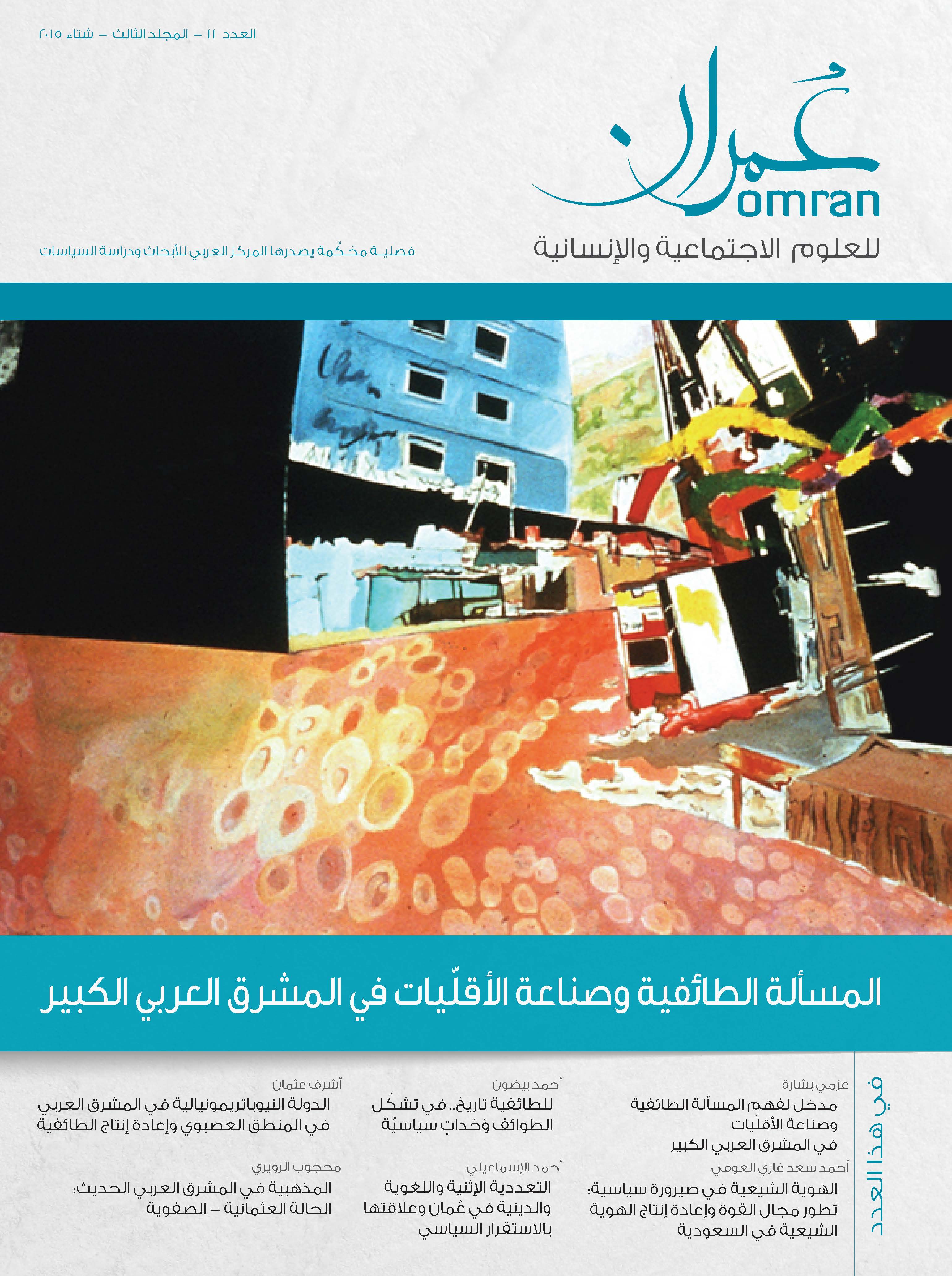
Shiite identity in a Political Process: The Field of Power Evolution and the Reproduction of Shiite Identity in Saudi Arabia
DOI:
https://doi.org/10.12816/0008580Keywords:
Shiite Identity, Identity Policies, Field of Power, Sect, Qatif, Civil Society InstitutionsAbstract
Using a socio-historical approach to the study of Shiites in Saudi Arabia, this analysis demonstrates how Shiite identity took its present shape by constructing a relatively independent power field through a network of relations that allow the sect to exist as a space for political action separate from its environment, and where actors compete to represent it and assume positions of influence. This field emerged and changed through a historical process of interaction between actors within it and between them and external influences (principally the state). Focusing on the Qatif region in Saudi Arabia, the study shows that sectarian hierarchy and relations of power tend to preserve their bounds by the same act of competition. This study puts forward a relational paradigm for understanding sectarian identity by dealing with it as a dynamic result of relationships and not as a discrete analytical category. This draws attention to the fact that sectarian identity is inseparable from an infrastructure of power relations within the sect and that the phenomenon of sectarianism may at root be a precursor to the production of sectarian discourse, a discourse which when dealt with relationally will reveal its link with power relations. This conception adds a new dimension to the understanding of identity, and consequently reorders the research agenda on the subject of sectarianism. It also contributes to a rethinking of the solutions to confront the crises of identity. The author proposes that best way to changes this sectarian reality is to create alternative networks of relationships by means of civil society institutions that create fields outside the sectarian field.
References
- Vali Nasr, The Shia Revival: How Conflicts within Islam will Shape the Future , with a New Afterword (New York: W. W. Norton, 2007).
- Bernard Lewis, The Multiple Identities of the Middle East (New York: Schocken Books, 1999).
- وهو ما لاحظه غريغوري غاوس في ما يخص تعاطي وسائل الإعلام المعتبرة في الغرب مع الطائفية في الشرق الأوسط، انظر: http://www.brookings.edu/blogs/up-front/posts/2013/06/08-sectarianism-politics-new-middl. شتاء 2015
- F. Gregory Gause III, The International Relations of the Persian Gulf (Cambridge: Cambridge University Press, 2010), p. 3012 [Kindle Version].
- Nasr, The Shia Revival.
- Laurence Louer, Shiism and Politics in the Middle East , Translated from French by John King (New York: Columbia University Press, 2012), p. 3.
- Fouad Ibrahim, The Shi’is of Saudi Arabia (London: Saqi, 2006).
- بدر الإبراهيم ومحمد الصادق، الحراك الشيعي في السعودية: تسييس المذهب ومذهبة السياسة (بيروت: الشبكة العربية للأبحاث والنشر،.)2013 الهوية الشيعية في صيرورة سياسية: تطور مجال القوة وإعادة إنتاج الهوية الشيعية في السعودية
- Laurence Louer, Transnational Shia Politics: Religious and Political Networks in the Gulf , Series in Comparative Politics and International Studies (New York: Columbia University Press, 2008). 1توبي ماثيسن، الخليج الطائفي والربيع العربي الذي لم يحدث (بيروت: الشبكة العربية للأبحاث والنشر،.)2014
- Frederic M. Wehrey, Sectarian Politics in the Gulf: From the Iraq War to the Arab Uprisings , Columbia Studies in Middle East Politics (New York: Columbia University Press, 2014).
- Madawi Al-Rasheed, "Sectarianism as Counter-Revolution: Saudi Responses to the Arab Spring," Studies in Ethnicity and Nationalism , vol. 11, no. 3 (December 2011), pp. 513-526. شتاء 2015
- Francesca Polletta and James M. Jasper , " Collective Identity and Social Movements," in: Annual Review of Sociology (Palo Alto, Calif., Annual Reviews Inc., 2001).
- Rogers Brubaker and Frederick Cooper, "Beyond "Identity"," Theory and Society, vol. 29, no. 1 (February 2000), pp. 1 - 47.
- (1 ترجع جذور هذا السؤال إلى الانقسام الإبستيمولوجي الأهم، ربما، في التراث الغربي لعلم الاجتماع بين النزعة الفيبيرية (نسبة إلى ماكس فيبر) التي تركز على المعنى الاجتماعي وبين الماركسية الكلاسيكية في اعتبار البناء العلوي (Superstructure) مجرد انعكاس للقاعد الاقتصادية) Base (. الهوية الشيعية في صيرورة سياسية: تطور مجال القوة وإعادة إنتاج الهوية الشيعية في السعودية
- لعل أحد أهم تطبيقات هذا الاهتمام هو الطفرة في الدراسات الإمبيريقية المهتمة بالشبكات الاجتماعية.
- Mustafa Emirbayer, "Manifesto for a Relational Sociology," American Journal of Sociology , vol. 103, no. 2 (September 1997), pp. 281-317.
- Charles Tilly, Trust and Rule , Cambridge Studies in Comparative Politics (New York: Cambridge University Press, 2005), p. 24. شتاء 2015
- من الصعب أن نفكر علائقيًا بشكل كامل، أو أن نتجنب أي حديث عن وحدة ثابتة، فمع تشديد البحث على التحليل بشكل علائقي، لن يخلو الحديث من تعامل مع وحدات يتم افتراضها، فالمهم هو التركيز على رؤية ديناميكية العلاقات في تكوين الوحدات بالقدر الممكن. يفسر ذلك ما لاحظه نوربرت إلايس من أن اللغات البشرية تنحاز في تركيبها إلى نسبة الحركة كصفة الأشياء، ولا تصف بسهولة الحركة المستمرة في ذاتها كما ندركها ذهنيًا؛ فنحن نرى النهر تدفقًا مستمرًا للمياه لكننا نصفه: "انظر النهر يجري" ولا نقول بشكل عفوي: "انظر إلى الماء المتدفق باستمرار"، انظر: , Translated by Stephen What Is Sociology? Norbert Elias, Mennell and Grace Morrissey; with a Foreword by Reinhard Bendix, European Perspectives (New York: Columbia.University Press, 1984), p. 112
- Tilly, Trust and Rule. الهوية الشيعية في صيرورة سياسية: تطور مجال القوة وإعادة إنتاج الهوية الشيعية في السعودية
- Pierre Bourdieu, The Field of Cultural Production: Essays on Art and Literature , Edited and Introduced by Randal Johnson (New York: Columbia University Press, 1993), pp. 29-73.
- ينبغي أال يُخلط الاستقلال هنا ب"السيادة"؛ إذ إن معناه هنا أن تفاعلاته الداخلية تخضع لقواعد خاصة به وتنشئ هذه التفاعلات ذاتها.
- Pierre Bourdieu and Loïc J. D. Wacquant, An Invitation to Reflexive Sociology (Chicago: University of Chicago Press, 1992), pp. 100-101. شتاء 2015
- James Mahoney, "Path Dependence in Historical Sociology," Theory and Society , vol. 29, no. 4 (August 2000), pp. Fouad Ibrahim, The Shi’is, and Annual Report of the U.S. Commission on International Religious Freedom, 2(انظر:April 2013 (Covering January 31, 2012 – January 31, 2013) (Washington: U.S. Commission on International Religious Freedom, [2013]), on the Web: <http://www.uscirf.gov/sites/default/files/resources/2013%20USCIRF%20Annual%20 Report%20(2).pdf>. الهوية الشيعية في صيرورة سياسية: تطور مجال القوة وإعادة إنتاج الهوية الشيعية في السعودية
- 2عثمان بن عبدالله بن بشر، عنوان المجد في تاريخ نجد، حققه وعلق عليه عبد الرحمن بن عبد اللطيف بن عبدالله آل الشيخ، 2 ج، ط 4 (الرياض: مطبوعات دارة الملك عبد العزيز، 9821)، ص.178
- Antonio Gramsci, Selections from the Prison Notebooks of Antonio Gramsci , Edited and Translated by Quintin Hoare and Geoffrey Nowell Smith (New York, International Publishers, 1971), p. 12. يصف غرامشي الدور الثقافي الذي يقوم به المثقف بتعبيرات علائقية؛ إذ إنها، في تقديره، وظائف "اتصالية" و"تنظيمية" ترتبط بعلاقات الهيمنة الطبقية.
- Alexei Vassiliev, The History of Saudi Arabia (London: Saqi, 2013), p. 2305 [Kindle Edition].
- خالد الدخيل، الوهابية بين الشرك وتصدع القبيلة (بيروت: الشبكة العربية للأبحاث والنشر،.)2013 شتاء 2015
- Vassiliev, p. 4512.
- المصدر نفسه، ص.4965
- Jacob Goldberg, "The Shi ’ i minority in Saudi Arabia," in: Juan R. I. Cole and Nikki R. Keddie, eds., Shi’ism and social protest (New Haven: Yale University Press, 1986).
- Vassiliev, p. 5140.
- Albert Hourani, "Ottoman Reform and the Politics of Notables," in: William R. Polk and Richard L. Chambers, eds., Beginnings of Modernization in the Middle East: The Nineteenth Century, Publications of the Center for Middle Eastern Studies; no. 1 (Chicago: University of Chicago Press, 1968), pp. 41-68. الهوية الشيعية في صيرورة سياسية: تطور مجال القوة وإعادة إنتاج الهوية الشيعية في السعودية
- حمزة الحسن، الشيعة في المملكة العربية السعودية (بيروت: دار الساقي، 0102)، ص.14
- يبدو أن هذا الاتفاق كان لفظيًا؛ إذ لم يطلع الباحث على أي دلائل على وثيقة مكتوبة تواضع عليها الطرفان
- لتفصيلات أكثر عن هذا الخطاب، انظر ما ينقله: الحسن، ص ٤١ و ٦١.
- Guido Steinberg, "The Shiites in the Eastern Province of Saudi Arabia," in: Rainer Brunner and Werner Ende, eds., The Twelver Shia in Modern Times: Religious Culture and Political History, Social, Economic, and Political Studies of the Middle East and Asia; v. 72 (Leiden: Boston: Brill, 2001), pp. 236-254.
- للمزيد من التفصيلات بشأن الفترة، ودور إخوان من طاع الله في التصعيد ضد الشيعة، انظر:.Steinberg, pp. 236-254 شتاء 2015
- استخدام كلمة تقليدية هنا للتمييز بين حقبتين فحسب، من دون تحميل الكلمة أي دلالات أوسع.
- سيد علي السيد باقر العوامي، الحركة الوطنية في السعودية، 1973-1953، 2 ج (بيروت: رياض الريس، 0112)، ج.1
- مفيد الزيدي، التيارات الفكرية في الخليج العربي، 1971-1938، سلسلة أطروحات الدكتوراه؛ 35 (بيروت: مركز دراسات الوحدة العربية، 0002)، ص.176
- الإبراهيم والصادق، ص 64، والعوامي، ص.245
- العوامي، ص.250 الهوية الشيعية في صيرورة سياسية: تطور مجال القوة وإعادة إنتاج الهوية الشيعية في السعودية
- الإبراهيم والصادق، ص.67
- Ibrahim, p. 111.
- ستتضح هذه المحدودية إذا قارنا الحراك العلماني في تلك الفترة بعمق تأثير الإسلاميين من حيث التغلغل في الحياة الاجتماعية، ومن حيث القدرة على الحشد، إذ لم يتمكن ذلك الحراك من تعبئة احتجاجية يمكن أن توضع في مقارنة بأحداث سنة 9791 على سبيل المثال.
- العوامي، ص.189-149
- المصدر نفسه، ص.249
- في هذا السياق، لا يحمل الاندماج دلالة إيجابية بالضرورة. وربما يساهم دمج شبكات الثقة في المجال العمومي للدولة في التحول الديمقراطي، لكنه يمثّل في الوقت ذاته نزعة الدولة الحديثة إلى السيطرة واستغلال الموارد. انظر:.Tilly, pp. 100-124 شتاء 2015
- أتحفظ هنا عن استخدام مفردة "تسييس المذهب" التي يشيع توظيفها في هذا الموضع، إذ حتى العلماء التقليديون لا تنفصل رؤاهم عن السياسة فتوظف النص بشكل أو بآخر لمنع التعبئة السياسية "تسييس" أيضًا.
- الإبراهيم والصادق، ص.134
- Toby Craig Jones, " Rebellion on the Saudi Periphery: Modernity, Marginalization and the Shia Uprising of 1979 ," International Journal of Middle East Studies, vol. 38, no. 2 (May 2006), pp. 213-233.
- الإبراهيم والصادق، ص.132
- Jones, " Rebellion on the Saudi Periphery ". الهوية الشيعية في صيرورة سياسية: تطور مجال القوة وإعادة إنتاج الهوية الشيعية في السعودية
- Ibrahim, p. 121.
- الإبراهيم والصادق، الحراك الشيعي في السعودية. شتاء 2015
- يفسر ذلك باستراتيجية النظام السعودي لاحتواء وتقليل جبهات التهديد مع نشاط المعارضة السنية داخليًا.
- أحمد عدنان، السعودية البديلة: ملامح الدولة الرابعة (بيروت: دار التنوير،.)2012 الهوية الشيعية في صيرورة سياسية: تطور مجال القوة وإعادة إنتاج الهوية الشيعية في السعودية
- انظر الموقع الرسمي لمركز الملك عبد العزيز للحوار الوطني:.>http://www.kacnd.org/first_national_meeting.asp<
- الإبراهيم والصدق، ص.228
- المصدر نفسه، ص.118
- Toby Matthiesen, "A Saudi Spring?: The Shi ’ a Protest Movement in the Eastern Province 2011–2012," Middle East Journal , vol. 66, no. 4 (Autumn 2012), pp. 628-659. شتاء 2015
Downloads
Published
Usage statistics
Issue
Section
License
Copyright (c) 2015 Omran for Social Sciences and Humanities

This work is licensed under a Creative Commons Attribution-NonCommercial 4.0 International License.
