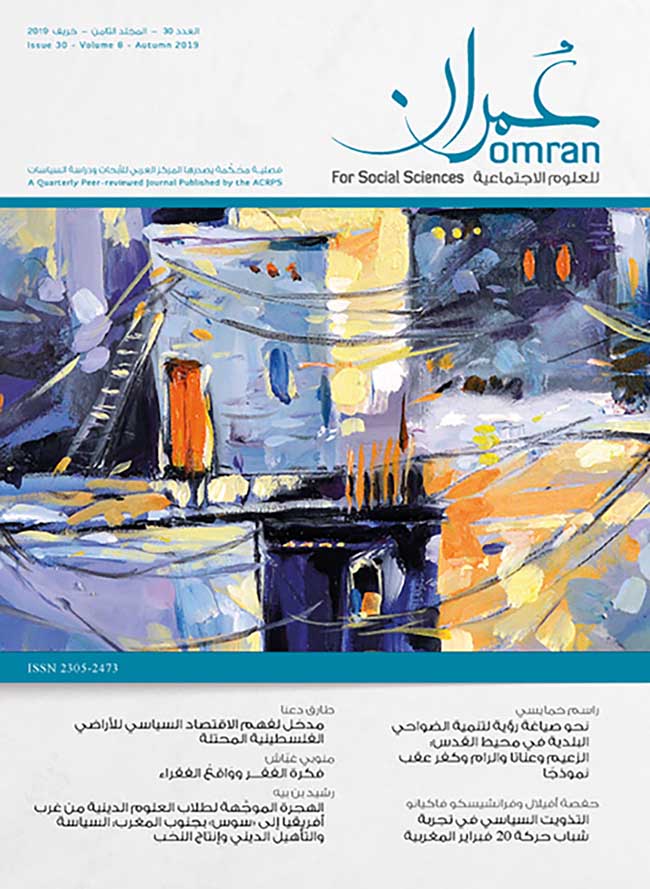
Political participation in the experience of the youth of the 20th February Movement Morocco
DOI:
https://doi.org/10.31430/qlkl9627Keywords:
Morocco, February 20 Movement, Political Subjectification, ActivismAbstract
This paper explores the individual transformation of a group of young activists from the Moroccan February 20 Movement through their involvement in protest. The paper focuses on different development milestones in each individual path, by identifying the personal experiences of the activists and analysing their interactions with the national and regional environment. Based on an anthropological approach, the paper addresses the idea of political subjectification as a concept aimed at absorbing and investigating the forms and stages in which the interlocutors decided to engage in "action". It also focuses on the course of producing their own transformations, which helped them understand new representations of their surroundings.
References
- تمثل هذه المساهمة جزءًا من العمل الإثنوغرافي الذي صاحب أحداث 0112، وقام به المؤلفان منفردين منذ بداية الأحداث، ثم مشتركين منذ عام 0172، في إطار البحث الممول من طرف مؤسسة العلوم والتكنولوجيا البرتغالية: Globally Sensitive Revolt, Citizenship and Expectations for the Future in North Africa.
- عبد السلام بنعبد العالي، "الشباب: التشبيك وثقافة التواصل والتغيير السياسي" في: إمحمد مالكي [وآخرون]، إعداد كمال عبد اللطيف ووليد عبد الحي، الانفجار العربي الكبير: في الأبعاد الثقافية والسياسية (الدوحة/ بيروت: المركز العربي للأبحاث ودراسة السياسات، 0122)، ص 77–76.
- مفهوم التذويت عند ميشيل فوكو: "الذات اﻟﺘﻲ ﺗﺼﻨﻌﻬﺎ السلطة ﻓﻲ اﻟﺴﻴﺎق الاجتماعي، لكن، ﻣﻊ ذلك ﻣﻦ الممكن داﺋﻤًﺎ اﻹﻼﻓت ﻣﻦ هذه الذات بابتكار ذاتية جديدة، وإنشائها، وبالتالي نفهم هنا إمكانية المقاومة"، ينظر: حسين يوسف بوكبر، "مفهوم المجتمع المدني عند ميشيل فوكو بين تقنيات الحكم وإمكان المقاومة"، تبيّن، مج 5، العدد 81 (خريف 0122)، ص.25
- يقول هايمن في كتابه التنشئة السياسية: إنها "عملية تعلم الفرد المعايير الاجتماعية عن طريق مؤسسات المجتمع المختلفة"، والتنشئة السياسية جزء من التنشئة الاجتماعية، ومن خلالها يكتسب الفرد الاتجاهات والقيم السائدة في المجتمع، وتعتبر التنشئة السياسية وسيلة لتصحيح الثقافة السياسية المنحرفة في المجتمع، وخلق ثقافة مدنية جديدة ومتحضرة؛ للعبور بالمجتمع من حالة التخلف إلى التقدم، ينظر: ناجي الغزي، "مفهوم التنشئة الاجتماعية" جريدة الأيامالجزائرية،.2016/8/8
- Igor Petrovic, Jacquelien van Stekelenburg & Bert Klandermans, "Political Socialization and Social Movements. Escaping the Political Past?" in: H. Dekker et al., the Palgrave Handbook of Global Political Psychology (New York: Palgrave Macmillan, 2014), p. 404.
- للاستفاضة حول النقاش المطروح في الأنثروبولوجيا والتحليل النفسي، ينظر: Henrietta L. Moore, The Subject of Anthropology: Gender, Symbolism and Psychoanalysis (Cambridge: Polity, 2007), pp. 23–41.
- Etienne Tassin, "De la subjetivación política: Althusser/Rancière/Foucault/Arendt/Deleuze," Revista de estudios sociales , no. 43 (August 2012), pp. 39–47; Federico Tarragoni, "Du rapport de la subjectivation politique au monde social," Raisons politiques , no. 62 (2016), p. 115, accessed on 10/7/2019, at: https://bit.ly/2NGG3jQ
- Hannah Arendt, The Human Condition. 2 nd Revised edition (Chicago: University of Chicago Press, 1958), p. 246.
- Michel Foucault, Histoire de la sexualité: Le Soucis de soi (Paris: Gallimard, 1984), p. 304.
- Judith Butler, The Psychic Life of Power: Theories in Subjection (Stanford: Stanford University, 1997), p. 10.
- التعبير مأخوذ من موريس بلانشو في معرض حديثه عن جورج باتاي وعن أوليفيي. Lawrence Olivier, "Michel Foucault, éthique et politique," Politique et Sociétés , no. 29 (1996), p. 57.
- Michel Foucault, "Technologies of the Self," in: Luther H. Martin, Huck Gutman & Patrick H. Hutton (eds.), Technologies of the Self: A Seminar with Michel Foucault (Amherst: University of Massachusetts, 1988), p. 45.
- 1للاستفاضة في موضوع الوعي وممارسة الحريات السياسية، ينظر: عزمي بشارة، مقالة في الحرية (الدوحة/ بيروت: المركز العربي للأبحاث ودراسة السياسات، 0162)، ص.112–109
- المرجع نفسه، ص 83.1
- Federico Tarragoni, "La Prise de parole comme processus de subjectivation politique," Tumultes , no. 43 (2014), p. 176, accessed on 10/7/2019, at: https://bit.ly/2LegPqZ
- Ernesto Laclau, On Populist Reason (London: Verso, 2005), pp. 232–242.
- Mounia Bennani–Chraïbi, Soumis et rebelles: Les Jeunes au Maroc (Paris: CNRS Editions, 1994), pp. 20–21.
- Nadia Hajji, "Mobilisation et désamorçage du mouvement du 20 février au Maroc: La Théorie des cadres à l’épreuve d’un contexte autoritaire," Mémoire de maitrise en Sciences Politiques, Université du Québec, Montréal, 2015, p. 16.
- World Bank, Promouvoir les opportunités et la participation des jeunes. Rapport no. 68731 (2012), p. xi.
- Irene Bono, "Une lecture d’économie politique de la ‘participation des jeunes’ au Maroc à l’heure du Printemps arabe," Revue internationale de politique comparée , vol. 20, no 4 (2013), pp.165–166; Irene Bono, "La Démographie de l’injustice sociale au Maroc," in: Béatrice Hibou et al. (eds.), L’État d’injustice au Maghreb, (Bayarat: Karthala, 2015), pp. 23–29.
- Mounia Bennani–Chraïbi, Soumis et rebelles: Les Jeunes au Maroc (Paris: CNRS Editions, 1994), p. 284.
- Navtej Dhillon, Paul Dyer & Tarik Yousef, "Generation in Waiting: An Overview of School to Work and Family Formaitons Transition," in: Navtej Dhillon & Tarik Yousef (eds.), Generation in Waiting: The Unfulfilled Promise of Young People in the Middle East (Washington DC: Brookings Institution Press, 2009), pp. 11–20; Thierry Desrues, "Moroccan Youth and the Forming of a New Generation: Social Change, Collective Action and Political Activism," Mediterranean Politic , vol. 17, no. 1 (2012), pp. 24–30; Jörg Gertel, "Arab Youth: A Contained Youth?" Middle East – Topics and Arguments , vol. 9 (2017), pp. 30–31.
- المندوبية السامية للتخطيط (المغرب)، ينظر: Haut–Commissariat au Plan, Enquête nationale sur les jeunes. Les jeunes en chiffres (Rabat: HCP., 2012), accessed on 11/7/2019, at: https://bit.ly/2JskAXY
- Dhillon, Dyer & Youssef, p. 11.
- المندوبية السامية للتخطيط (المغرب)، ينظر: Haut–Commissariat au Plan, Principaux indicateurs du marché du travail au deuxième trimestre 2017 (Rabat: HCP, 2017), accessed on 11/7/2019, at: https://bit.ly/2xGNMn8
- لاحظنا نوعًا من الاستمرارية الكبيرة بين الأسرة والنشاط السياسي لبعض فئة الشباب، ممن حاورناهم، فحتى إن لم يكن دور العائلة حتميًا في نقل توجهات معينة، فإنه بدا لنا بوضوح أن تعاملهم مع بعض الإشكالات الاجتماعية كان أكثر هيكلة من وجهة نظر تحليلية (مفاهيم، التطور التاريخي للعمل النضالي... إلخ). بينما لمسنا في خطاب بعض فئة الشباب، من مرجعية عائلية غير مسيسة، نوعًا من العمق المرتبط أساسًا بالتراكمات والتجارب النابعة من القهر اليومي المعيش.
- 3هو الإهانة والمعاملة الحاطّة من كرامة شخص ما؛ بسبب مستواه المادي أو الاجتماعي أو العلمي... إلخ.
- حركة 20 فبراير: محاولة في التوثيق (الرباط: الوسيط من أجل الديمقراطية وحقوق الإنسان، 0152)، ص.102
- بنعبد العالي، ص.80
- للاطلاع على الفيديو، ينظر: " Maroc 20 Fév شباب حركة 02 فبراير المغربية المطالبة بالتغيير"، موقع يوتيوب، 011/2/162، شوهد في 019/7/10:2، في https://bit.ly/2HEYR00
- كمال عبد اللطيف، "مدخل إلى قراءة الأبعاد الثقافية للثورات العربية"، في: مالكي [وآخرون]،.31–30 ص
- حركة 20 فبراير، ص.104
- Michel De Certeau, L’Invention du quotidien: 1 Arts de faire. Nouv éd. (Paris: Gallimard, 1990), p. XLVI.
- عبارة مغربية تحيل إلى وضع مهني أو اجتماعي، يعكس نوعًا من المعاناة والاستغلال، أو العبودية المعاصرة، يكون مقرونًا، مثلً، بالعمل في أوضاع غير لائقة، بمقابل مادي زهيد.
- Toshihiko zutsu, Ethico–Religious Concepts in the Qur’an (Montreal/ Kingstone: McGill–Queen’s Press, 2002), pp. 210–211.
- 3مما عكسته حادثة انتحار "البوعزيزي"، بحسب بن س مااة، نقلة راديكالية حادة من براديغم الهوية إلى براديغم الحرية – المساواة الذي هو تدمير للذات، احتجاجًا على التفاوت والظلم. الانتحار هنا هو تعبير عن مفارقة انتصار العجز على القوة المطلقة، تغلب الشخص المحترق الذي لم يعد له وجه، على الحاكم الذي تنتشر صوره في كل مكان. الانتحار بهذا المعنى هو تحدٍ لمنطق تسيير الحياة الجماعية الذي يعد من أدوات الحكم، وخروج بالموت عن دلالته الذاتية الفردية؛ ليغدو الإنسان المهمش رمزًا للبشرية بأكملها. إنه تضحية بالنفس لأجل ما هو أسمى من حب الذات، أي: فعل إنقاذ المحبوب أغلى من النفس، أو نقل لحب الذات لنفسها إلى حب شامل يُتماهى من خلاله بين الحب النرجسي والحب الجماعي.
- Fethi Benslama, Soudain la révolution! De la Tunisie au monde arabe: La Signification d’un soulèvement (Paris: Denoël, 2011), p. 16. Arendt, Hannah. The Human Condition. 2 nd Revised edition. Chicago: University of Chicago Press, 1958. Bennani–Chraïbi, Mounia. Soumis et rebelles: Les Jeunes au Maroc. Paris: CNRS Editions, 1994. Bennani–Chraïbi, Mounia & Mohamed Jeghllaly. "La Dynamique protestataire du Mouvement du 20 février à Casablanca." Revue française de science politique. vol. 62, no. 5–6 (2012). Benslama, Fethi. Soudain la révolution! De la Tunisie au monde arabe: la signification d’un soulèvement. Paris: Denoël, 2011. Bono, Irene. "Une lecture d’économie politique de la ‘participation des jeunes’ au Maroc à l’heure du Printemps arabe." Revue internationale de politique comparée. vol. 20, no. 4 (2013). Hibou, Béatrice et al. (eds.). L’État d’injustice au Maghreb. Bayarat: Karthala, 2015. Butler, Judith. The Psychic Life of Power: Theories in Subjection. Stanford, Stanford: Stanford University, 1997. De Certeau, Michel. L’Invention du quotidien: 1 Arts de faire. Nouv éd. Paris: Gallimard, Desrues, Thierry. "Moroccan Youth and the Forming of a New Generation: Social Change, Collective Action and Political Activism." Mediterranean Politics , vol. 17, no. 1 (2012). Dhillon, Navtej & Tarik Yousef (eds.). Generation in Waiting: The Unfulfilled Promise of Young People in the Middle East. Washington DC: Brookings Institution Press, Foucault, Michel. Histoire de la sexualité: Le Soucis de soi. Paris: Gallimard, 1984.
Citing articles in ACRPS journals (2)
- (2020) الأحزاب السياسية في المغرب ومأزق التوترات الاجتماعية الجديدة.
- (2020) قراءة نقدية في الأسس الإيديولوجية للفردانية وراهنيتها في المجتمعات العربية. https://doi.org/10.31430/ohsn1109
Sources: Crossref Cited-by, and the references (notes and reference lists) of the Center's own articles
Downloads
Published
Usage statistics
Issue
Section
License
Copyright (c) 2019 Omran for Social Sciences and Humanities

This work is licensed under a Creative Commons Attribution-NonCommercial 4.0 International License.
