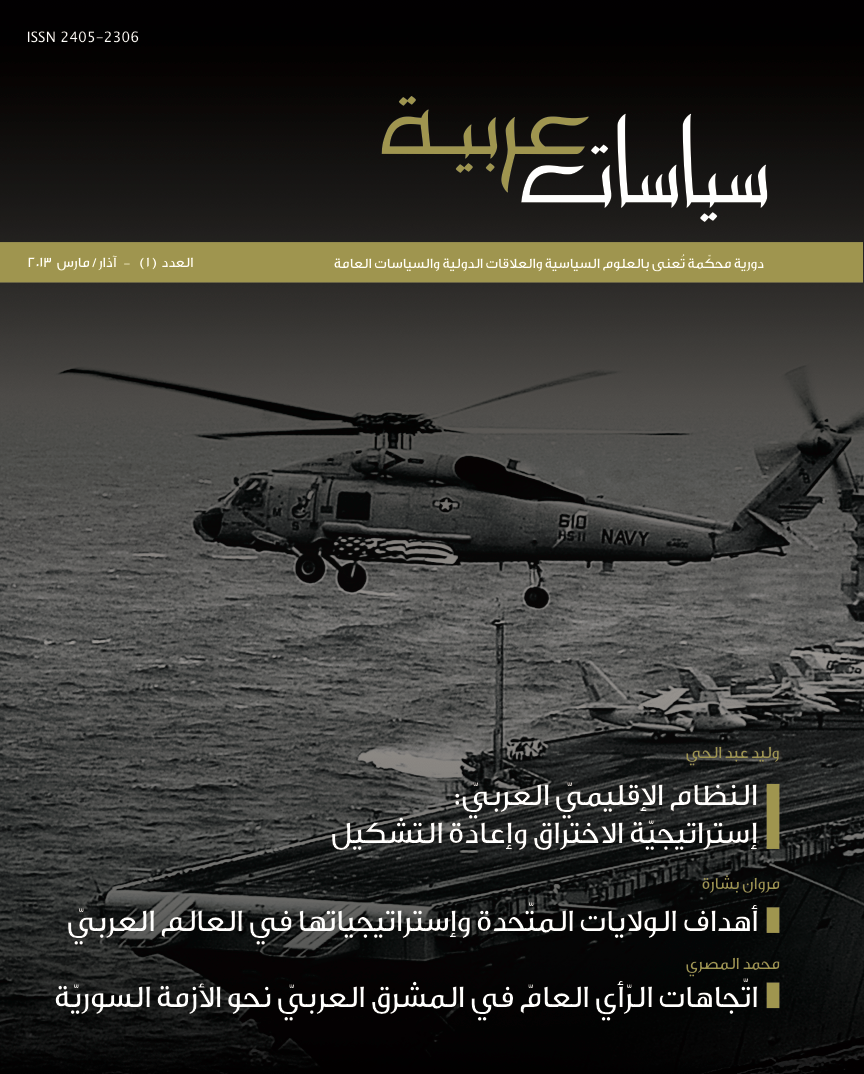
American Aims and Strategies in the Arab World
DOI:
https://doi.org/10.12816/0000612Keywords:
United States, Arab Spring, Barack ObamaAbstract
This study aims to define the interests and goals of the United States in the Arab region by answering two main questions: how does the Obama administration differ from its predecessors in view of its promises of change, particularly following the tragic transformations raging in the Arab region at present? And to what extent does the strategy of this administration reflect its public diplomacy regarding democracy, freedom, and justice in the region? The study explains how Obama raised the ceiling of expectations when he did not limit his promises to a change in American policy only, but included putting an end to the mentality that had pushed the United States into war. Despite the difference in style and method between the Obama and Bush Junior administrations, the overall goals and the regional strategy can be summarized in terms of three key interests: the priority of ensuring free access to energy supplies in the region; maintaining American supremacy over all other global powers; and the containment of all Arab objections to ensure the dominance of the US strategic agenda in the Arab region, including the guarantee of Israel's security.References
- الإيرانيون يفضّلون علاقات دبلوماسية مع الولايات المتحدة، ولكن ثقتهم بأوباما ضعيفة"، استطلاع رأي أجرته جامعة ميريلاند، الرأي العام العالمي، 9 1 أيلول/سبتمبر.2009 (باللغة الإنكليزية) http://www.worldpublicopinion.org/pipa/articles/brmiddleeastnafricara/639. php
- نيويورك تايمز، 12 حزيران/يونيو.1966
- Green Stephen, Taking Sides , (1984), pp. 168-169, 174.
- Kissinger Henry, White House Years, (Boston: Little Brown, 1979), p. 564, Department of State Bulletin 17/2/1969,p.142-143
- Steven Spiegel, The other Arab-Israeli conflict, (1985), pp. 196-203.
- Kissinger Henry, White House Years, (Boston: Little Brown, 1979), pp. 371; p. 570-571.
- Mansour Camille, Beyond Alliance, (New York: Columbia University Press, 1994), pp. 99, 104-105.
- Kissinger Henry, Years of Upheaval , (Boston: Little Brown, 1982), pp.
- Stein Janice Gross, in David Welch (ed.) The Middle East and the United States, (Westview, Colorado, 1999), pp. 213-216.
- Mansour, Camille, Beyond Alliance, (New York: Columbia University Press, 1994), pp. 116.
- Traub, James, “The Myth of a Useful Dictator”, Foreign Polic y, (March http://www.foreignpolicy.com/articles/2011/03/18/the_myth_of_the_useful_ dictator1
- Puschel Karen. U.S.-Israeli Strategic Cooperation in the Post-Cold War Era: An American Perspective, (Boulder, CO: Westview Press 1993). pp. 105
- من اللافت أنّ بعض الخرباء والمثقفين قدّروا "برنامج الديمقراطية" الخاصّ بالرئيس جورج دبليو بوش، و ادّعى أنصاره أنه هو من زرع بذور التغيير عندما جعل قضيّة الديمقراطية في الشرق الأوسط إحدى أولويّات الأمن القومي الأميركي، وتعهّد بأن تبذل الولايات المتحدة كلّ ما يلزم من أجل قضيّة الحرّية. وكتب إليوت أبرامز مساعد بوش السابق لشؤون الأمن القومي في الشرق الأوسط في صحيفة الواشنطن بوست Washington Post الأميركية: "إن الثورة في تونس وموجة التظاهرات العملاقة في مصر والمسريات الأخيرة في اليمن تثبت بوضوح أنّ بوشكان محقًّا". فكتب صاحب العمود الصحفي تشارلز كراوثمر Charles Krauthammer الذي ينتمي إلى مجموعة المحافظين الجدد: "اليوم، يدعم الجميع من دون استثناء "برنامج الحرّية". بالطبع، لم يدعمها بالأمس سوى جورج بوشوتوني بلير وعصبة من المحافظين الجدد الذين يملكون طاقة استثنائية خالّقة، إذ تحدّوا المفهوم السائد عن الوضع الاستثنائي للعرب". (تشارلز كراوثمر "من برنامج الحرية إلى عقيدة الحرية"، واشنطن بوست، 0 1 شباط/فبراير 011 2. على الرابط التالي: http://www.washingtonpost.com/wp-dyn/content/article/2011/02/10/ AR2011021005339.html. وعقّب على الموضوع نفسه مجموعة معلّقين أمثال فريد زكريا من شبكة السي أن أن CNN الذي قال: "ولكن لا بدّ من إعطاء الرئيس جورج دبليو بوشحقّه. فقد لمس المشكلة، وآمن أنّ العرب ليسوا عاجزين وراثيًّا عن تحقيق الديمقراطية. وقد دعم القضيّة الكبرى للإصلاح العربيّ بواسطة القيم الأخلاقيّة الأميركية". (فريد زكريا، "مقابلة مع هنري كيسنجر وزبيغنيو بريجنسكي"، نصوص من شبكة السي أن أن، 23 كانون الثاني/يناير 011 2). على الرابط التالي: http://www.cnnstudentnews.cnn.com/TRANSCRIPTS/1101/23/fzgps.01. html. وبدورها ردّدت مجلّة الإيكونوميست Economist البريطانية الفكرة أعلاه في مقالة بعنوان "هل جورج بوشعلى حقّ؟ مع اندلاع انتفاضة مصر، بدا فجأة ‘البرنامج العربي للحرّية’ أكر حكمة قليالً".
- حسام الحملاوي، "الوقت المناسب، المكان الخطأ"، نيويورك تايمز، (2 حزيران / يونيو 0092)، على الرابط التالي: http://www.nytimes.com/2009/06/03/opinion/03alHamalawy.html.
- الرئيس أوباما عن التظاهرات في إيران: ‘ بالنسبة إليّ، من الخطأ التزام الصمت تجاه ما يجري في إيران‘"، موقع شبكةآي بي سي ABC News، 15 /6/ 009.2 على الرابط التالي: http://abcnews.go.com/blogs/politics/2009/06/president-obama-on-protests- in-iran-it-would-be-wrong-for-me-to-be-silent/
- بايدن: مبارك ليس دكتاتورًا، ولكن للشعب الحقّ في التظاهر"، شبكة بي بي إس الإخبارية PBS "برنامج نيوزآور"، 72 كانون الثاني/يناير.2011 http://www.pbs.org/newshour/bb/politics/jan-june11/biden_01-27.html.
- برايان مونتوبولي، "البيت الأبيض: نحن لا ننحاز إلى أحد في مصر"، شبكة سي بي اس نيوز الإخبارية CBS News، 31 كانون الثاني/يناير.2011 http://www.cbsnews.com/8301-503544_162-20030108-503544.html.
- روجر كوهين: "الدافع الأوّل للنزعة التدخّلية"، نيويورك تايمز، 92 آب/أغسطس.2011 http://www.nytimes.com/2011/08/30/opinion/30iht-edcohen30.html.
- انظر العرض الممتاز لماكسيميليان سي فورت في "الأساطير العشر الأولى في الحرب على ليبيا"، كاونتر بانش، Counterpunch، 31 آب/أغسطس.2011
Downloads
Published
2013-03-01
Usage statistics
26 views 47 downloads
Issue
Section
Studies and Analytical Papers
License
Copyright (c) 2013 Marwan Bishara (Author)

This work is licensed under a Creative Commons Attribution-NonCommercial 4.0 International License.
