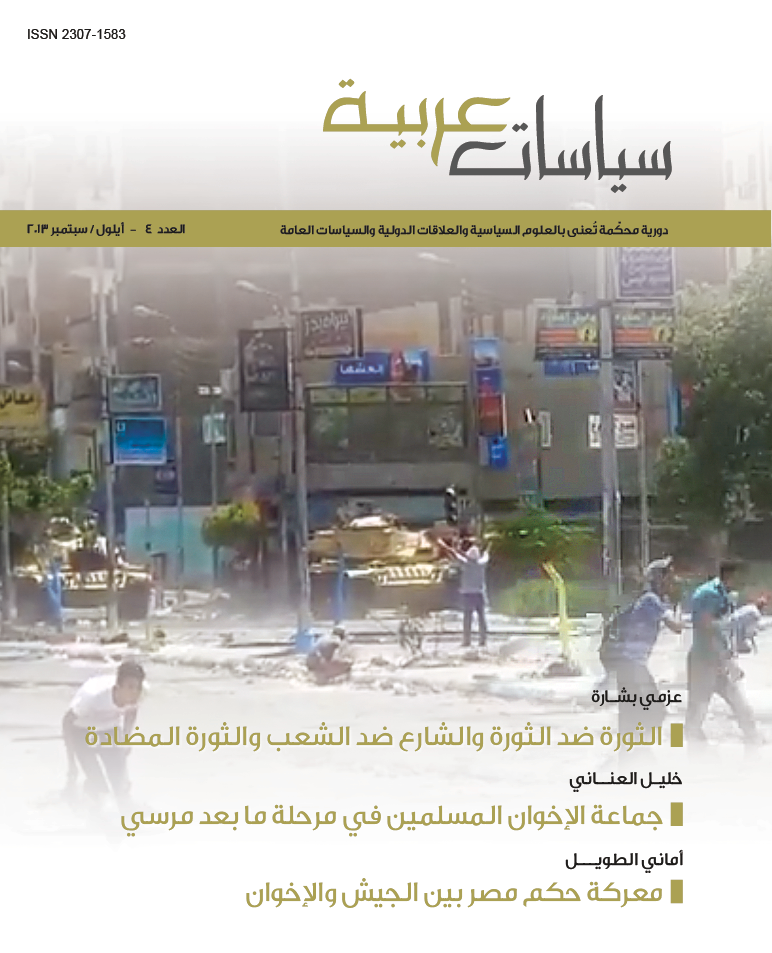
The Muslim Brotherhood in the post-Morsi Era
DOI:
https://doi.org/10.12816/0005251Keywords:
Post-Morsi era, the January 25 Revolution, Post-CoupAbstract
The author here examines the experience of the Muslim Brotherhood in the Egyptian political process after the victory of the January 25 Revolution with a focus on former president Mohamed Morsi's one year in office. The paper begins by analyzing the structural developments and accompanying political strategies of the Muslim Brotherhood while it was a force in the country's political opposition, and how the party reflected on its behavior after the January Revolution in general, but especially during Morsi's reign. The paper focuses on what is considered an exceptional moment in the history of the Muslim Brotherhood: when it went from being an opposition group to taking power in a formal government setting. It examines this extraordinary shift in light of the major challenges of managing the Egyptian state. The paper concludes that the Muslim Brotherhood will not disappear from the political scene given its deep integration into the Egyptian social fabric, and discusses strategies and paths that the organization could adopt in the post-coup era.References
1Total citations
1From ACRPS journals
0External sources
Citing articles in ACRPS journals (1)
- (2014) دور المرأة الإخوانية: دراسة في المحددات والتحولات بعد عزل محمد مرسي. https://doi.org/10.12816/0007100
Sources: Crossref Cited-by, and the references (notes and reference lists) of the Center's own articles
Downloads
Published
2013-09-01
Usage statistics
33 views 58 downloads
Issue
Section
Studies and Analytical Papers
License
Copyright (c) 2013 Khalil al-Anani (Author)

This work is licensed under a Creative Commons Attribution-NonCommercial 4.0 International License.
