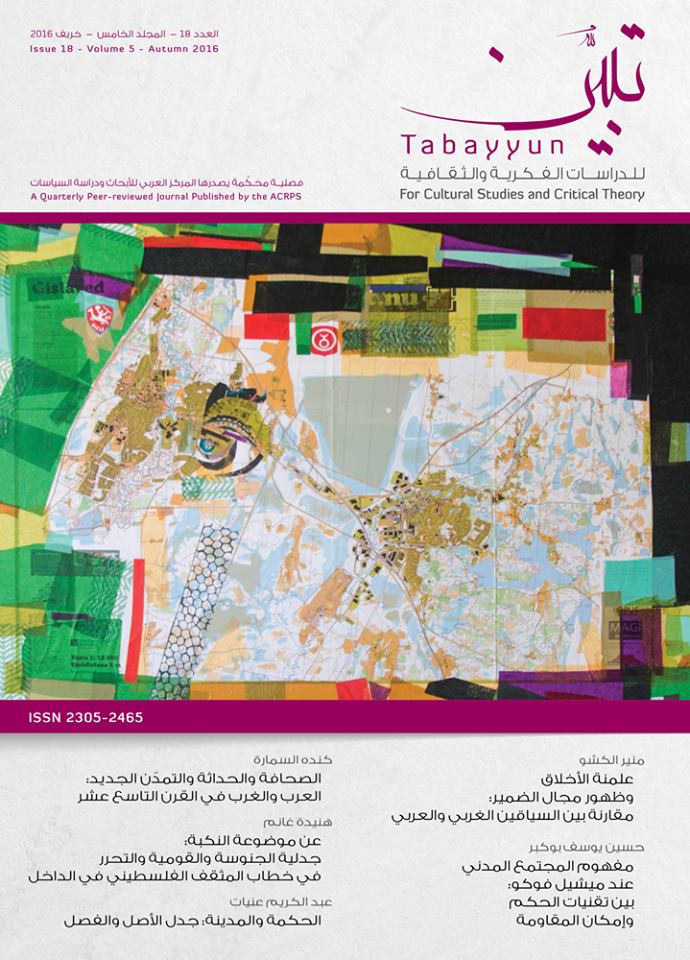
The Secularization of Morality and the Emergence of Conscience: A Comparison between the Western and Arab Contexts
DOI:
https://doi.org/10.31430/qndu2437Keywords:
Morality, Freedom of Will, Morals, Secularism, SecularizationAbstract
This article explores the relationship between religion, religiosity and morals. It highlights the deep differences between ancient and modern moral theories that can be summed up as follows: the first assumption is that modern morals are built on the basis of rules of conduct that govern individual behavior in opposite to ancient morals that seek for virtue as inclination to do good and for happiness as the ultimate end of the action. The second is that modern morals assume that a human being is able to figure out the meaning of moral rule without any help or external command from God or any other timeless or worldly authority. This development has been the result of an intellectual process where the concept of conscience as inner motivation and free will held great importance. All this has required the recognition of individual freedom and the right of the subject to govern him/herself and to be the master of his/her own action. In contrast to this progress in the field of Western modern moral theories, and which has led to the secularization of values and norms of moral action, in the Arab context such progress in the same direction has not been seen.
References
- G. E. M. Anscombe, "Modern Moral Philosophy," Philosophy , vol. 33, no. 124 (January 1958), in: G. E. M. Anscombe, Collected Philosophical Papers of G.E.M. Anscombe , vol. 3: Ethics, Religion, and Politics , Cited by: Jérome B. Schneewind, "La Philosophie morale au XXe siècle," dans: K.-O. Apel [et al.], Un siècle de philosophie: 1900-2000, folio. Essais; 369 (Paris: Gallimard; Centre Pompidou, 2000), pp. 146-147.
- Jerome B. Schneewind, The Invention of Autonomy: A History of Modern Moral Philosophy (Cambridge; New York: Cambridge University Press, 1998), p. 8.
- هذا الموقف المتسرّع من هابرماس يتجلى في حديثه عن المجتمعات الحديثة والليبرالية بقوله إنها باتت اليوم ما بعد علمانية، وهو ما ينم في نظرنا عن ضرب من الخفّة النظرية لا ينسجم، في رأينا، مع مقتضيات الرصانة الأكاديمية المحمولة عادة على كبار J ü rgen Habermas , Entre naturalisme et religion: Les Défis de la démocratie , traduit de: ساافة والأكاديميين. انظر الف l ’ allemand par Christian Bouchindhomme et Alexandre Dupeyrix , NRF essais (Paris: Gallimard , 2008), p. 166.
- Charles Taylor, A Secular Age (Cambridge, Mass.: Belknap Press of Harvard University Press, 2007), pp. 315-318, esp. pp. 428-435.
- Pippa Norris and Ronald Inglehart, Sacred and Secular: Religion and Politics Worldwide , Cambridge Studies in Social Theory, Religion and Politics (Cambridge: Cambridge University Press, 2004), p. 4.
- روبرت د. بوتنام، كيف تنجح الديمقراطية: تقاليد المجتمع المدني في إيطاليا الحديثة، ترجمة إيناس عفت (القاهرة: الجمعية المصرية لنشر المعرفة والثقافة العالمية، 2006)، الفصل.4
- تبدو أطروحة الاتصال والاستمرارية في تاريخ النظريات والمذاهب الأخلاقية الأكثر شيوعًا؛ فالمراوحة بين القديم والحديث، حيث تُعرض أفكار اسبينوزا وكانط مثلً إلى جانب أفكار ابن باجة أو أرسطو أو الماوردي أو الرازي أو الفارابي على سبيل إبراز أن النظريات الأخلاقية الفلسفية الحديثة عمّقت ودقّقت مع ما وجِد في الفلسفة الأخلاقية القديمة، وأنها لم تقطع مع الخلفيات الدينية التي تسندها وإنما قامت بإعادة صوغها على نحو مغاير، نجدها رائجة في كثير من الكتابات.
- John Rawls, Lectures on the History of Moral Philosophy , Edited by Barbara Herman (Cambridge, Mass.: Harvard University Press, 2000).
- Henry Sidgwick, The Methods of Ethics (London: Macmillan, 1907).
- بشأن هذه النقطة، انظر: Charles , Natural Right and History , Strauss Leo: in ," Right Natural Classic , " Strauss Leo R. Walgreen Foundation Lectures (Chicago: University of Chicago Press, 1953), pp. 83-87.
- ج. ف. ف. هيجل، أصول فلسفة الحق، ترجمة وتقديم وتعليق إمام عبد الفتاح إمام (القاهرة، مكتبة مدبولي، 1996)، ص.528
- يقول سكنر: "فقبل القرن السادس عشر لم تستعمل لفظة status، من قبل الكتاب السياسيين إلا لإشارة إلى أحد شيئين: إما الوضع والحالة التي يجد عليها الحاكم نفسه فيها principis status the أو "وضع الأمة" العام، أو حالة المملكة، ككلّ regni status the، فما كانت تفتقر إليه تلك الاستعمالات هو فكرة حديثة واضحة عن الدولة بوصفها شكلً من السلطة العمومية منفصلً عن الحاكم والمحكوم كليهما، ومؤلفا السلطة السياسية العليا داخل فكر محدّد معيّن. وقد قيل، وكان القول معقولً، إن هذا المعنى الحديث والمجرد، قد يكون نشأ، مباشرة، من أبحاث سابقة تتعلق بحاجة الأمير "أن يحافظ على دولته"، بمعنى المحافظة على مجموعة سلطاته القائمة". انظر: كوينتن سكنر، أسس الفكر السياسي الحديث: عصر الإصلاح الديني (الجزء الثاني)، ترجمة حيدر حاج إسماعيل (بيروت: المنظمة العربية للترجمة، 0122)، ص 577 -.578
- Schneewind, The Invention of Autonomy , p. 8.
- 1يرى شنويند أن هذا المفهوم لذات حاكمة لنفسها استقاه صاحب كتاب نقد العقل العمليمن الفكر السياسي للقرنين السابع عشر والثامن عشر؛ فالمفهوم هذا كان متداول في النقاش بشأن الدولة الحديثة ذات السيادة المطلقة، إذ كانت الدولة تعرّف حينها بالكيان الذي يحكم نفسه بنفسه: Schneewind , The Invention of Autonomy , pp. 514-515.
- John Locke, A Letter Concerning Toleration , Edited and Introduced by James H. Tully, HPC Classics Series (Indianapolis: Hackett Pub. Co., 1983), p. 51.
- إمانويل كانط، نقد العقل العملي، ترجمة غانم هنا (بيروت: المنظمة العربية للترجمة، 0082)، ص.255
- Harold J. Berman, Droit et révolution , trad. française Raoul Audouin (Aix-en-Provence: Librairie de l’Université d’Aix-en-Provence, 2002), p. 18.
- Schneewind, The Invention of Autonomy , p. 63.
- ورد ذكره في: توبي أ. هف، فجر العلم الحديث: الإس ماا – الصين – الغرب، ترجمة محمد عصفور، عالم المعرفة؛ 260 (الكويت: مجلس الوطني للثقافة والفنون والآداب، 0002)، ص.125
- Schneewind, The Invention of Autonomy , p. 63.
- يشير الدارسون إلى أن كلمة الضمير "سندريسس" في فكر بولس لم تأته من العهد القديم والتراث اليهودي بل من الفكر الشعبي والهلينستي، راجع: هف، ص.125
- المرجع نفسه، ص.162
- انظر: منير الكشو، "حرية الضمير في الجدل الفكري المعاصر،" موقع مؤمنون بلا حدود للدراسات والأبحاث، 2015/11/27، في: http://www.mominoun.com/articles/ وكذلك: منير الكشو، "حرية الضمير بين الإطلاق والتقييد"، الحياة، 013/11/2:2، في http://www.alhayat.com/Details/567599 Anscombe, G. E. M. Collected Philosophical Papers of G. E. M. Anscombe , vol. 3: Ethics , Religion , and Politics. Apel, K.-O. [et al.]. Un si è cle de philosophie: 1900-2000. Folio. Essais; 369. Paris: Gallimard; Centre Pompidou, 2000. Berger, Peter L. (ed.). The Desecularization of the World: Resurgent Religion and World Politics. Washington, DC: Ethics and Public Policy Center; Grand Rapids, Mich.: W. B. Eerdmans Pub. Co., 1999. Berman, Harold J. Droit et r é volution. Trad. française Raoul Audouin. Aix-en-Provence: Librairie de l’Université d’Aix-en-Provence, 2002. Habermas, Jürgen. Entre naturalisme et religion: Les D é fis de la d é mocratie. Traduit de l’allemand par Christian Bouchindhomme et Alexandre Dupeyrix. NRF essais. Paris: Gallimard, 2008. Locke, John. A Letter Concerning Toleration. Edited and Introduced by James H. Tully. HPC Classics Series. Indianapolis: Hackett Pub. Co., 1983. Martin, David. On Secularization: Towards a Revised General Theory. Aldershot, England; Burlington, VT: Ashgate, 2005. Norris, Pippa and Ronald Inglehart. Sacred and Secular: Religion and Politics Worldwide. Cambridge Studies in Social Theory, Religion and Politics. Cambridge: Cambridge University Press, 2004. Rawls, John. Lectures on the History of Moral Philosophy. Edited by Barbara Herman. Cambridge, Mass.: Harvard University Press, 2000. Rosenblum, Nancy L. (ed.). Liberalism and the Moral Life. Cambridge, Mass.: Harvard University Press, 1989. Schneewind, Jerome B. The Invention of Autonomy: A History of Modern Moral Philosophy. Cambridge; New York: Cambridge University Press, 1998. Sidgwick, Henry. The Methods of Ethics. London: Macmillan, 1907. Strauss, Leo. Natural Right and History. Charles R. Walgreen Foundation Lectures. Chicago: University of Chicago Press, 1953. Taylor, Charles. A Secular Age. Cambridge, Mass.: Belknap Press of Harvard University Press, 2007. Anscombe, G. E. M. "Modern Moral Philosophy." Philosophy. vol. 33, no. 124 (January 1958).
Downloads
Published
Article dates
Usage statistics
Issue
Section
License
Copyright (c) 2016 Tabayyun

This work is licensed under a Creative Commons Attribution-NonCommercial 4.0 International License.
