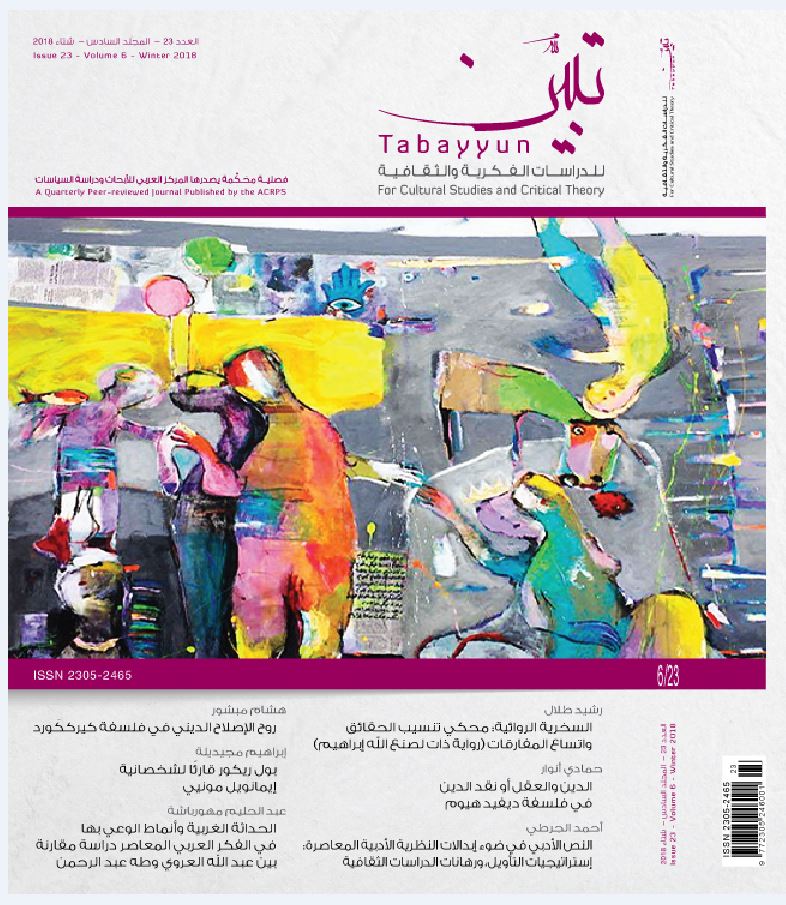
Allegorical Fiction: on the Novel Self (“That”) by Sonallah Ibrahim
DOI:
https://doi.org/10.31430/owje3819Keywords:
Allegorical Fiction, The Irony, Paradox, Vision of the narrator, Narrative discourseAbstract
This paper attempts to analyze the ironic fiction of self, by Sonallah Ibrahim, through the rhetorical devices and literary techniques available to the writer of ironic fiction. The author applies these devices both in commentary within the narrative itself and with meta-narratives. The research does not focus on the sequencing or alternation of these structural forms but rather looks at the structure of the narrative discourse, which dwarfs every aspect of the narrative text, thus taking a macro-narrative approach. The text has been criticized for the contradictions used by the author as a technique to highlight the illusions of his characters; illusions that ultimately led to the deterioration of their lives. The novel shakes the structures of power discourses to challenge claims of truth.
References
- Beda Alemann, "De l’Ironie en tant que principe littéraire," Poétique , no. 36 (1978), p. 338.
- Oswald Ducrot, Le Dire et le dit (Paris: Les Éditions de Minuit, 1984), p. 210.
- Simone Licointe, "Humour: Ironie," Langue Français , vol. 103, no. 1 (Septembre 1994); Linda Hutecheon, "Ironie et parole: stratégie et structure," Poétique, no. 36 (1978).
- D.C. Muecke, "Analyse en Ironie," Poétique , no. 36 (Novembre 1978), p. 478.
- D. Sperber & D. Wilson, "Les ironies comme mentions," Poétique, no. 36 (1978), p. 400.
- Jean Milly, Poétique des textes , Nathan (ed.), (Paris: Armand Colin, 1992).
- Licointe, p.105.
- صنع الله إبراهيم، ذات (القاهرة: دار المستقبل العربي، 1992)، ص.9
- يرتبط استهلاك الصورة بهيمنة "نظام من القراءة [...] إذ لا تطرح مسألة واقعية العالم وتاريخه، بل فقط الانسجام الداخلي لنظام القراءة، فكل وسيلة إعلامية لا تهتم سوى بمنطقها الخاص، الذي يتميز بتجريده، وانسجامه" عن: Jean Boudrillard, Société de consommation (Paris: Gallimard, 1970), p. 190.
- المرجع نفسه، ص.10
- المرجع نفسه، ص 12،.13
- المرجع نفسه، ص.13
- المرجع نفسه، ص.14
- المرجع نفسه، ص.15
- المرجع نفسه، ص 12، 14،.15
- المرجع نفسه، ص.14
- المرجع نفسه، ص.10
- لا يمكن مماثلته بالمؤلف الواقعي، لأنه يتميز عنه باعتباره مؤلفًا مجردًا Abstrait Auteur ليس له حياة أو وجود خارج العمل الأدبي، انظر: J. Lentvelt, Essais de Typologie Narrative: Le point de vue (Paris: José Corti, 1981), pp. 17-23.
- J. Rousset, Littérature, no. 5 (Février 1972), p. 5.
- المرجع نفسه، ص.10
- التي تحكي قصة "ذات."
- Gérard Genette, Figure III (Paris: Seuil, 1972), p. 191.
- يمكن الجملةَ أن تنبني على دينامية خاصة، كأن تستند إلى لعبة التضمين الداخلي أو التسلسل في التعيينات وهذه الأخيرة بدورها تعين بواسطة افتراضات جديدة فتصبح الجملة طويلة وممتدة، ما يجعلها لا تتقيد بأي تعريف أو تحديد. انظر هنا: Laurent Jenny, "La phrase et l’expérience du temps," Poétique , no. 79 (Septembre 1989).
- إبراهيم، ص 332، 333، 346،.347
- المرجع نفسه، ص.233
- قد ترفق السخرية أحيانًا بتغيير في سجل التعبير.
- وظفتها أيديولوجيات سياسية ووطنية.
- المرجع نفسه، ص.69
- François van Rossum- Guyon, Critique du Roman (Paris: Gallimard, 1970), p. 72.
- يتشكل الموازي-الأدبي من تلك الاستشهادات المختلفة التي تعبر النص أو تخترقه، ولا يمكن أن ينحصر فقط في الشذرات المجتزأة من نصوص أخرى مكتوبة، بل يهم أيضًا العلاقات المباشرة التي يقيمها النص مع واقعه من دون وسيط لغوي أو أسلوبي، انظر: W. Krysinski, Carrefours de signe: Essais sur le roman moderne (La Haye: Mouton, 1981), pp. 295-309.
- André Topia, "Contre points joyciens," Poétique , no. 27 (1976), p. 353.
- Roland Barthes, "L’effet de réal," Communication , no. 11 (1968).
- Krysinski, p. 299.
- يكاد لا ينفصل التوليف عن "الإلصاق Collage ويختلف التوليف الروائي عن التوليف السينمائي في كونه يأخذ في الاعتبار خصوصية النص الروائي، ويمكن الرجوع في هذا الصدد إلى ما قدمه ف. كريزنسكي في المبحث العاشر "الأدبي والموازي الأدبي" في: Ibid., pp. 307-309. وخاصة التوضيحات التي وردت في الهامش.37
- Krysinski, p. 303.
- 5سعيد يقطين، انفتاح النص الروائي: النص والسياق (بيروت: المركز الثقافي العربي، 1989)، ص.91
- 5اعتمدنا "التفاعل النصي" باعتباره مقابلً "للتناص " Intertextualité آخذين بالاقتراح الذي قدمه سعيد يقطين في: الفصل الثاني من انفتاح النص الروائي، ص.1
- إبراهيم، ص 263،.272
- المرجع نفسه، ص.211
- المرجع نفسه، ص.279
- المرجع نفسه، الفصل الأخير، ص.343034،
- المرجع نفسه، ص.316
- المرجع نفسه، ص.318
- المرجع نفسه، ص.126-125
- المرجع نفسه، ص 113،.114
- المرجع نفسه، ص 223، 233، 235،.236
- 6صنع الله إبراهيم، بيروت بيروت، ط 4 (القاهرة: دار المستقبل العربي،.)1984
- السخرية "تغضب Irrite ليس لأنها تستهزئ أن تهاجم، بل لأنها تسلبنا من كل اليقينيات في كشفها عن العالم باعتباره متناقضًا"، عن: Milan Kundera, L’art du roman (Paris: Gallimard, 1986), p. 159.
- Barthes, Roland. "L’effet de réal." Communication. no. 11 (1968) Boudrillard, Jean. Société de consummation. Paris: Gallimard, 1970. Ducrot, Oswald. Le Dire et le dit. Paris: Les Éditions de Minuit, 1984. Genette, Gérard. Figure III. Paris: Seuil, 1972. Hutecheon, Linda. "Ironie et parole: stratégie et structure." Poétique. no. 36 (1978). Jenny, Laurent. "La phrase et l’expérience du temps." Poétique. no. 79 (Septembre Krysinski, W. Carrefours de signe: Essais sur le roman modern. La Haye: Mouton, Kundera, Milan. L’art du roman. Paris: Gallimard, 1986.
Downloads
Published
Article dates
Usage statistics
Issue
Section
License
Copyright (c) 2018 Tabayyun

This work is licensed under a Creative Commons Attribution-NonCommercial 4.0 International License.
