Vol. 3 No. 014 (2015): Issue 014
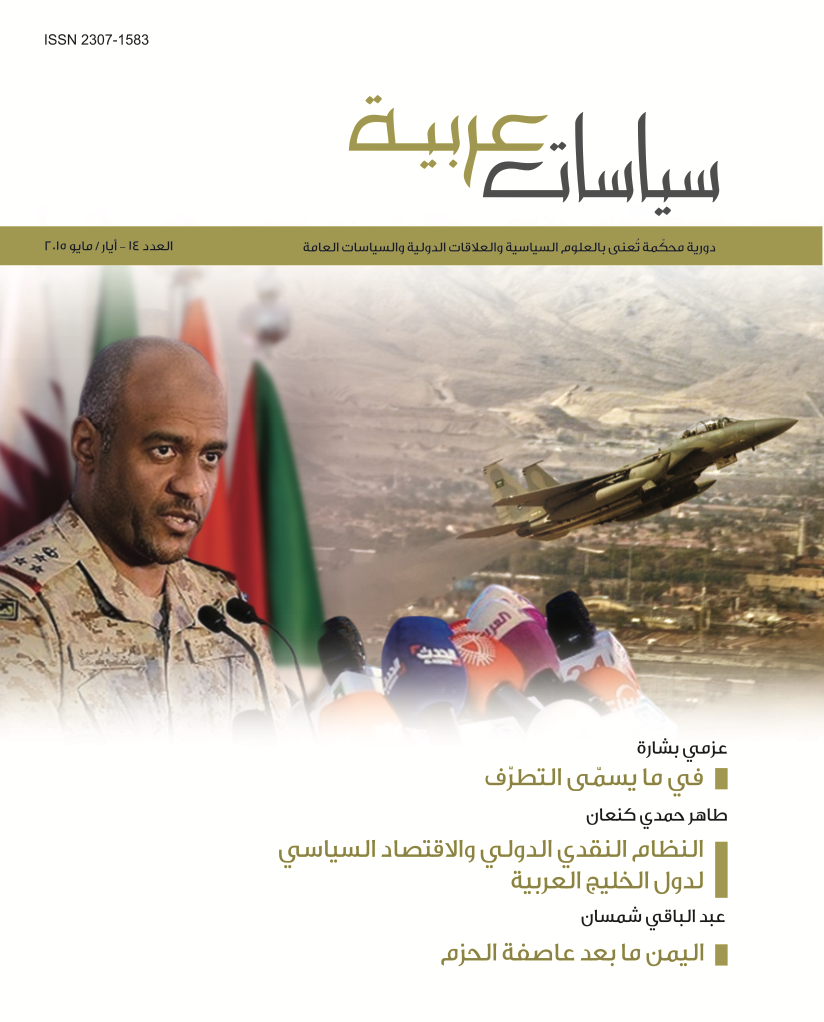
​ACRPS has published issue 14 of the bi-monthly peer-reviewed academic journal Siyasat Arabia, a journal devoted to political science and international relations. This issue includes the following studies and articles: “On So-Called Extremism” (Azmi Bishara); “The International Monetary System and the Political Economy of the Arab Gulf States” (Taher Kanaan); “The Israeli Parliamentary Elections 2015: Towards the Formulation of the Hegemonic Party System” (Muhannad Mustafa); “The Sudanese Elections between Democratic Transformation and the Institution of One-Man Rule” (Elnour Hamad); “The Peaceful Rise of China” (Hikmat al-Abd al-Rahman); “Foreign Aid between Strategic Goals and Actors, and Domestic Effects in the Donor States” (Musa Alaya); “The Yemeni Assembly for Reform (al-Islah): the Current Scene” (Essam al-Qaysi); “Morocco and Decisive Storm: Transformations in Military Doctrine” (Ihsan al-Hafizi); “Yemen after Decisive Storm: Requirements for Reconstruction of the Political Field” (Abdulbaqi Shamsan); “The Future of the Houthi Movement” (Abdul Nasser Al Muwaddah); and “Trends in Arab Public Opinion on Russia”.In the section on book reviews and notices there are Hazim Nahar’s review of “The Question of the Syrian Kurds” and Al-Sadiq al-Faqih’s review of 22 Ideas to Fix the World. The journal also covers the most important milestones of democratic transformation and events in Palestine during March and April 2015. In the reports section there is the testimony of Rajih Badi, official spokesman of the Yemeni government, on “The political track in Yemen form the Gulf initiative to Decisive Storm”.

Original Website (English) | Original Website (Arabic)

Published: 2015-05-01

Articles

  • On So-Called Extremism

    Author: Azmi Bishara
    5-18

    Hardly a day passes without seeing or hearing the terms 'extremism' or 'extremists.' Used today to describe political views and attitudes, or methods in political action

  • The International Monetary System and Political Economy of the Gulf States

    Author: Taher Kanaan
    19-32

    This paper examinesg the negative effects on the economies of oil-exporting Arab countries as a result of the current imbalance in the international monetary system

  • Israeli Parliamentary Elections 2015: Crystallization of a Dominant Party System

    Author: Muhannad Mustafa
    33-44

    The paper argues that the current stage may be a prelude to the dominant-party stage, especially if Israeli policies continue down their current path.

  • Sudanese Elections: Between Democratization and Perpetuating Individual Authoritarianism

    Author: Elnour Hamad
    45-56

    Looking at the results of the mid-April 2015 presidential and parliamentary elections in Sudan, the paper reviews the changes that have occurred amid the last presidential cycle under al-Bashir...

  • China's Peaceful Rise

    Author: Hikmat al-Abd al-Rahman
    57-72

    Analyzing China's regional and global influence, the study follows the historical context of its rise and growth in a record period of time, making it a major global economic and military...

  • Foreign Aid between Strategic Objectives, Actors, and Internal Influences in Donor Countries

    Author: Musa Alaya
    74-87

    This paper asks the following questions: Why do donor entities provide aid to poor countries? What are the most important objectives of these donors? Are humanitarian motives the main factor...

  • Al-Islah: The Current Landscape

    Author: Essam al-Qaysi
    88-93

    This paper discusses the issue of foreign aid and the strategic objectives behind it. The paper considers that with the expansion of the donor map and the increase in its various activities

  • Morocco and Decisive Storm: Shifts in Military Doctrine

    Author: Ihsan al-Hafizi
    94-100

    This study gives an overview of the factors that led to the expansion of the geopolitical and geostrategic depth of the Gulf States to include a number of Arab countries, all the way to the...

  • Yemen after Decisive Storm: Requirements of Rebuilding the Political Sphere

    Author: Abdulbaqi Shamsan
    101-107

    This paper will highlight the groups' most important wagers in managing the conflict. The many groups, each carrying out vendettas against past acts, create complex intersections.

  • Future of the Houthi Movement

    Author: Abdul Nasser Al Muwaddah
    108-112

    It is not easy to talk about the future of the Houthi movement given the current circumstances in Yemen. The facts on the ground are changing rapidly, making it difficult to predict the course...

  • Milestones in Democratic Transition in Arab World

    125-138

    This report highlights some of the major milestones of the Arab democratic transition.

  • Palestine Over Two Months

    139-150

    This report chronicles some of the most significant developments relating to the Arab-Israeli conflict during 28/2/2015-30/4/2016.

  • The GCC and the Conflict in Yemen: from the Gulf Initiative to “Decisive Storm”

    Author: Rajih Badi
    169-174

    A convergence of interests between the Houthi militia and former Yemeni president Ali Abdullah Saleh have served to undermine the National Dialogue for the country

  • The Question of the Syrian Kurds: Fact, History, Myth

    Author: Hazim Nahar
    153-157

    The Question of the Syrian Kurds

  • 22 Ideas to Fix the World

    Author: Al-Sadiq al-Faqih
    158-166

    22 Ideas to Fix the World [English]