Vol. 1 No. 002 (2012): Issue 002
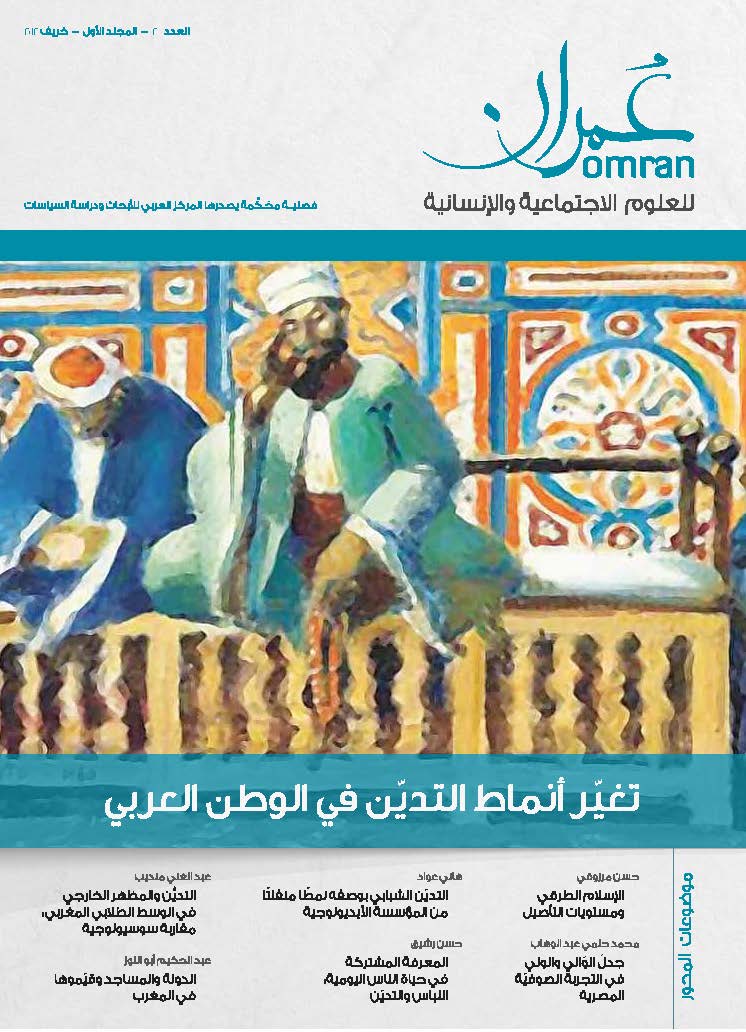
غلاف العدد 2 من دورية عمران

Issue 2 of Omran for Social Sciences and Humanities (Autumn 2012) includes the following studies and articles: “Change of Religiosity Patterns in the Arab World” (Omran Editorial Board); “Tariqa Islam: Layers of Authentication” (Hassan Marzouqi); “The Dialectic of Master and Disciple in the Egyptian Sufi Experience” (Mohammed Hilmi Abdel-Wahab); “Youth Religiosity: A Phenomenon Independent of the Ideological Establishment” (Hani Awad); “Shared Knowledge in Daily Life: Dress Codes and Religiosity” (Hassan Rashik); “Religiosity and Outward Appearance in the Moroccan Student Community: A Sociological Approach” (Abd al-Ghani Moundib); “State, Mosques, and their Custodians in Morocco” (Abdel-Hakim Abul Loz); “The Political Manifestation of Death in Sudan: A Reading in Destiny and Fate” (Hussam Uddin Saleh); “Observations on the Teaching of Economics Based on Academic Experience” (Ali Abdulqadir Ali); “Political Science in the Arab universities: A Proposed Model” (Walid Abdulhay); “Restricted Development: Development Policies in Palestine and their Effect on Employment Opportunities” (Salah al-Zaru al-Tamimi); “The Salafists and the Tunisian Revolution: Identity and Citizenship” (Adel Belhaj Rhouma); “On the Divide between Religion and Culture: An Entryway to Organizing Cultural Diversity” (Youssef Ben al-Ghiathia); “The Islamic Movements in Tunisia and Libya: Key Points of Comparison” (Al-Munsif Wannas); “The Forbidden Modern: Civilization and Veiling” (Nilufer Gole); ““The Past Decade in Syria: The Dialectic of Stagnation and Reform” by Mohammed Jamal Barout” (Nerouz Satik); ““Moroccan Jewry from Origins to Winds of Departure” by Ahmed Chahlan” (Rachid Yalouh); “The Quest: Energy, Security, and the Remaking of the Modern World by Daniel Yergin” (Zuheir Hamidi); ““The Sectarian Question and the Problem of Minorities” by Burhan Ghalioun” (Rateb Chaabo).

Published: 2012-10-01

Studies

  • The Political Manifestation of Death in Sudan: A Reading in Destiny and Fate

    Author: Hussam Uddin Saleh (Author)
    127-142

    Far removed from a narrative review of the literature on the philosophy of death, a subject that has long been of concern to philosophers and continues to be so, this study goes deeply into...

  • Observations on the Teaching of Economics Based on Academic Experience

    Author: Ali Abdulqadir Ali (Author)
    143-152

    This paper gives a condensed rapid review of the main components of economics typically taught in universities in the various states of the world, including universities in the Arab states. The...

  • Political Science in the Arab universities: A Proposed Model

    Author: Walid Abdulhay (Author)
    153-169

    This research paper proposes a model for teaching political science in Arab universities, one that is built on the needs of the Arab world in the political field. The model sets out its main...

  • Restricted Development: Development Policies in Palestine and their Effect on Employment Opportunities

    Author: Salah al-Zaru al-Tamimi (Author)
    171-192

    This study investigates development policies in Palestine and their effect on the creation of job opportunities. It looks into national development strategies, explains the degree of influence...

Issue Focus

  • Change of Religiosity Patterns in the Arab World

    Author: Omran Editorial Board (Author)
    7-14

    The Arab Center for Research and Policy Studies (ACRPS) has published the second issue of its quarterly peer-reviewed journal Omran, a journal dedicated to the social sciences and humanities....

  • Tariqa Islam: Layers of Authentication

    Author: Hassan Marzouqi (Author)
    15-44

    What does Sufism mean in its Tariqa form? How is Tariqa rationality formed between textual authentication and practical spiritual striving? These questions cannot be answered without returning...

  • The Dialectic of Master and Disciple in the Egyptian Sufi Experience

    Author: Mohammed Hilmi Abdel-Wahab (Author)
    45-64

    Sufi groups in Egypt play a role on the political, social, and development level given their firm link with society and the effects they produce on religion and culture in daily life, especially...

  • Youth Religiosity: A Phenomenon Independent of the Ideological Establishment

    Author: Hani Awad (Author)
    65-84

    This paper presents a reading of a new form of religiosity that emerged in the squares of the Arab revolutions: the religiosity of young people. The approach of the study rests on the...

  • Shared Knowledge in Daily Life: Dress Codes and Religiosity Cited 4 times

    Author: Hassan Rashik (Author)
    85-98

    Sociological studies have focused on the political and ideological uses of religion and have only rarely concerned themselves with the religious phenomena of daily life linked to ordinary...

  • Religiosity and Outward Appearance in the Moroccan Student Community: A Sociological Approach

    Author: Abd al-Ghani Moundib (Author)
    99-110

    External appearance in Moroccan society until the end of the nineteenth century was largely associated with local culture, geographic region, or social group practicing a specific profession or...

  • State, Mosques, and their Custodians in Morocco Cited once

    Author: Abdel-Hakim Abul Loz (Author)
    111-124

    What role do mosques play in people’s daily lives, and how is it possible to institute a reading that observes the relationship between the powers that run them and the authorities? This...

Discussions

  • The Salafists and the Tunisian Revolution: Identity and Citizenship

    Author: Adel Belhaj Rhouma (Author)
    195-207

    The coming to power of Islamic forces in Tunisia and other Arab countries that witnessed popular uprisings in 2011 has raised a cultural problem connected to social behavior and the question of...

  • On the Divide between Religion and Culture: An Entryway to Organizing Cultural Diversity

    Author: Youssef Ben al-Ghiathia (Author)
    209-222

    The path to the extraction of religion from culture is a long one because of the intervention of popular culture which combines legend and delusions with texts that are memorized and not...

  • The Islamic Movements in Tunisia and Libya: Key Points of Comparison

    Author: Al-Munsif Wannas (Author)
    223-228

    The topic of this articles is how to construct the key elements for comparison between the Islamic movements in Libya and Tunisia. Such a problem takes us to the need to refer to the difficulty...

  • The Forbidden Modern: Civilization and Veiling

    Author: Nilufer Gole (Author)
    229-247

    This study examines the significance of the movement for the veil in Turkey by means of a multilevel analysis of power relations that range from the most private relations between the sexes to...

Book Reviews

  • “The Past Decade in Syria: The Dialectic of Stagnation and Reform” by Mohammed Jamal Barout

    Author: Nerouz Satik (Author)
    251-257

    Book Title: The Last Decade in Syria’s History: Dialectic of Stagnation and Reform Author: Mohammed Jamal al-Barout Place of publication: Doha/Beirut Publisher: ACRPS Date of publication: 2012...

  • “Moroccan Jewry from Origins to Winds of Departure” by Ahmed Chahlan

    Author: Rachid Yalouh (Author)
    259-266

    Book Title: Moroccan Jewry from Origins to Winds of Departure Author: Ahmed Chahlan Place of publication: Rabat Publisher: Dar Abi Raqraq Date of publication: 2009 Number of pages: 328

  • The Quest: Energy, Security, and the Remaking of the Modern World by Daniel Yergin

    Author: Zuheir Hamidi (Author)
    267-270

    Book Title: The Quest: Energy, Security, and the Remaking of the Modern World Author: Daniel Howard Yergin Place of publication: London Publisher: Penguin Date of publication: 2011 Number of...

  • “The Sectarian Question and the Problem of Minorities” by Burhan Ghalioun

    Author: Rateb Chaabo (Author)
    271-276

    Book Title: On the Sectarian Question and the Problem of Minorities Author: Burhan Ghalioun Place of publication: Doha/Beirut Publisher: ACRPS Date of publication: 2012 Number of pages: 176